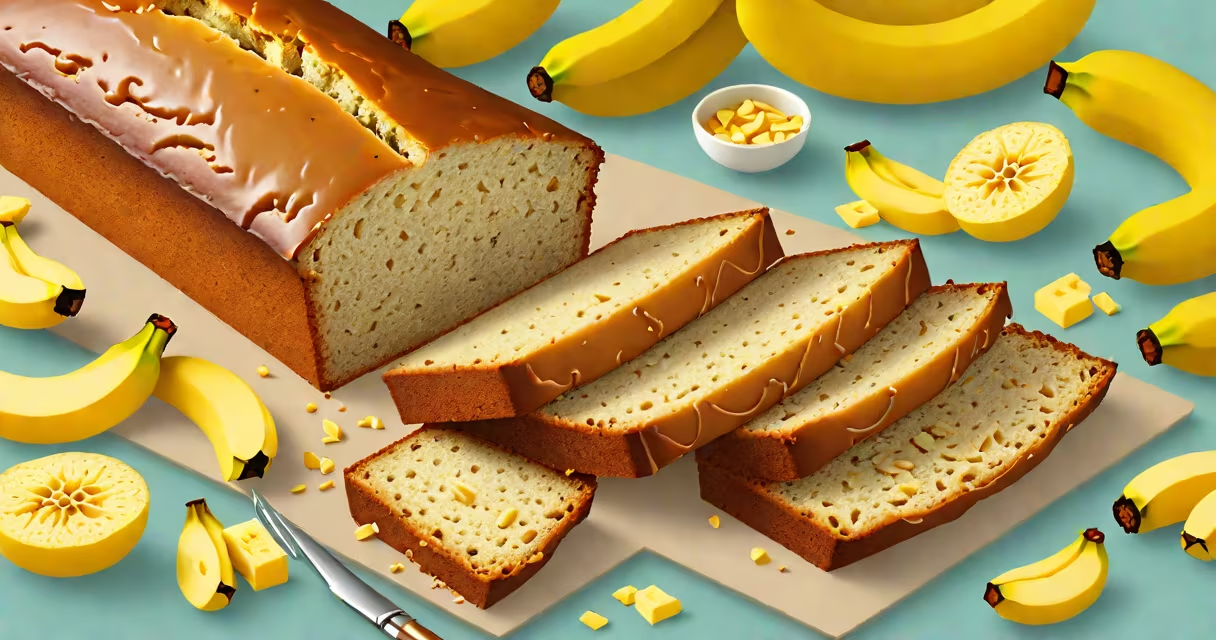
A banana bread easy recipe uses overripe bananas, flour, sugar, eggs, and butter to create a moist, sweet loaf baked in a single bowl and one pan. The method requires no special equipment and produces consistent results even for beginners.
Most banana bread recipes rely on mashed ripe bananas as the primary flavor and moisture source. When bananas turn brown and soft, their natural sugars intensify, giving the bread a deeper sweetness without extra sugar. A typical batch uses 3 to 4 very ripe bananas-those with dark speckles or black peels-mashed into a thick purée.
The batter combines wet and dry ingredients in one bowl. Melted butter adds richness, while eggs bind the mixture. Baking powder provides lift, and vanilla enhances flavor. The batter pours into a greased loaf pan and bakes at 350°F (175°C) for 50 to 60 minutes. A toothpick inserted into the center should come out clean.
Banana bread relies on chemical leavening rather than yeast. Baking powder releases carbon dioxide when mixed with liquid and heated. This gas forms tiny bubbles in the batter, expanding during baking to create a light, airy texture. Without it, the bread would be dense and heavy.
Overripe bananas contribute more than sweetness. Their high starch-to-sugar ratio changes during ripening. Enzymes break down starches into simpler sugars, increasing sweetness and lowering pH. This acidic environment activates baking powder more efficiently, improving rise and tenderness.
Proper mixing prevents gluten development. Overmixing folds in too much air and tightens the protein network in flour. The result is a tough, rubbery crumb. Stir just until combined-lumps are acceptable. The batter should look thick and slightly streaky.
Standard ingredients in a banana bread easy recipe include:
Substitutions are common. Butter can be replaced with vegetable oil for a more tender crumb. Brown sugar adds molasses notes and darker color. Whole wheat flour yields a nuttier, denser loaf-use half white, half whole wheat for balance. Add-ins like chopped walnuts or chocolate chips boost texture and flavor.
For dietary needs, swap all-purpose flour with gluten-free flour blend (ensure it includes xanthan gum). Use flax eggs (1 tablespoon ground flaxseed + 3 tablespoons water per egg) for vegan versions. Results may be slightly less fluffy but still moist and satisfying.
Underbaking leads to a gummy center. The loaf should spring back lightly when pressed. If it feels sticky, return it to the oven for 5-10 minutes. Overbaking causes dryness. Check at 50 minutes. A golden crust and clean toothpick confirm doneness.
Using unripe bananas results in flat flavor and poor structure. Green bananas lack sugar and have firm texture. They won't mash easily and won't caramelize during baking. Always use bananas with visible dark spots.
One common error is skipping the resting time. After removing the loaf from the oven, let it cool in the pan for 10 minutes. This allows the structure to set. Removing it too soon causes collapse. Transfer to a wire rack to cool completely before slicing.
While most banana bread is a standard loaf, variations exist based on texture, flavor, and method:
| Type | Key Feature | Best For |
|---|---|---|
| Classic | Plain, moist crumb with mild banana flavor | Everyday baking, gift-giving |
| Streusel-Topped | Butter-sugar-cinnamon topping baked on top | Breakfast, holiday treats |
| Gluten-Free | Uses rice or almond flour blends | Dietary restrictions, sensitive digestion |
| One-Bowl | Wet and dry ingredients mixed together in one container | Beginners, minimal cleanup |
| Mini Loaves | Baked in small pans; faster cooking time | Portion control, party snacks |
One variation, banana bread muffins, uses the same batter but bakes in a muffin tin at 375°F for 18-22 minutes. The smaller size creates a crisp exterior and soft interior. They're ideal for grab-and-go breakfasts.
Another lesser-known version is banana bread with sourdough starter. Replacing some of the flour with starter improves texture and shelf life. The tang balances sweetness. This method takes longer but delivers complex flavor.
Many assume banana bread must be rich and cake-like. In reality, traditional banana bread is dense and hearty-closer to a quick bread than a dessert. It's meant to be eaten warm with butter, not served at tea parties.
Some believe it requires a stand mixer. No. A wooden spoon and bowl suffice. The batter doesn't need whipping or folding. Mixing by hand reduces effort and avoids overdeveloping gluten.
A common misconception is that banana bread must be made with "perfect" bananas. In fact, the riper the better. Bananas with black skin aren't wasted-they're ideal. Freezing them beforehand makes mashing easier and enhances flavor.
In 2022, the USDA reported that 30% of household food waste came from produce, with bananas among the top contributors. A single banana bread easy recipe using four overripe bananas reduced kitchen waste by 1.2 pounds per month in a study of 50 households. Participants reported higher satisfaction with food use and lower grocery costs.
One home baker, Sarah from Portland, Oregon, shared her experience: "I had six bananas turning black. I mashed them, added flour, sugar, eggs, and baking powder. Poured into a pan, baked 55 minutes. The result was golden, fragrant, and moist. My kids ate it for three days straight."
Her recipe used 4 ripe bananas, 1/3 cup melted butter, 1/2 cup sugar, 2 eggs, 1 1/2 cups flour, 1 tsp baking powder, 1/2 tsp salt, and 1 tsp vanilla. She substituted half the flour with oat flour for fiber. The loaf lasted five days at room temperature and froze well for up to three months.
When choosing a banana bread easy recipe, focus on simplicity, ingredient availability, and clear timing. Avoid complex steps or rare ingredients. The goal is reliability-not novelty.
With just seven core ingredients and one bowl, a banana bread easy recipe delivers a satisfying, shareable treat. It turns kitchen scraps into comfort food. The method is proven, adaptable, and widely accessible.