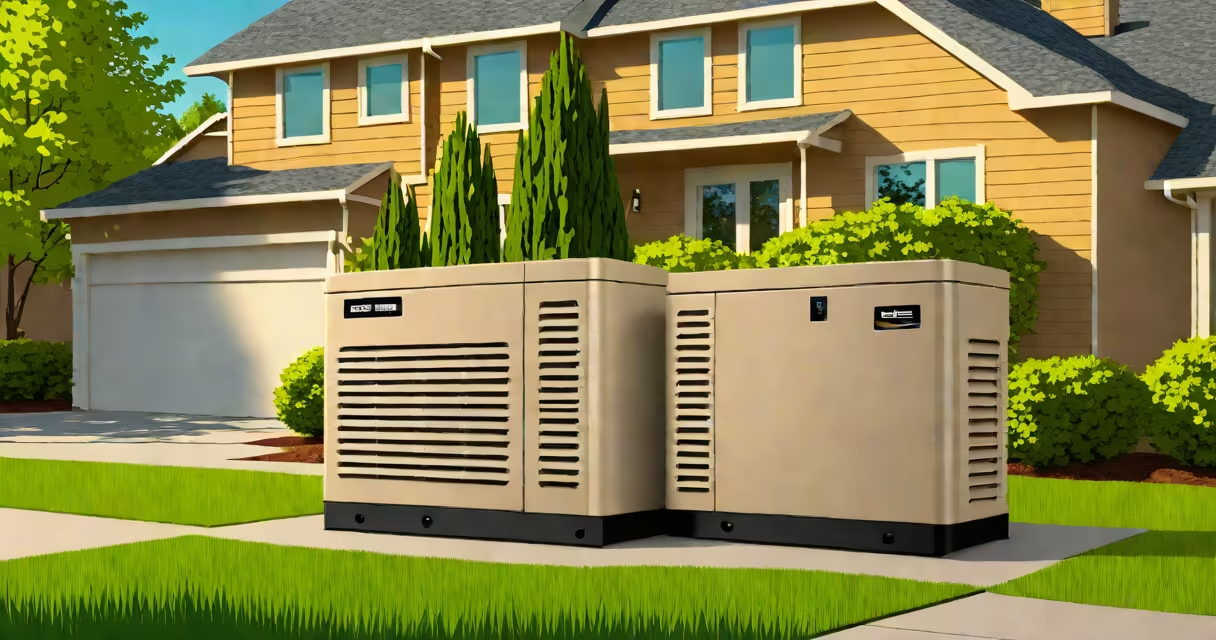
Best home generators are automatic or portable power systems designed to supply electricity during grid failures, with standby models offering smooth backup and portable units providing temporary power for essential devices.
Standby generators connect permanently to a home's electrical panel and fuel source-usually natural gas or propane-and activate automatically within seconds of a power outage. They run continuously until utility service resumes. Portable generators require manual startup and fueling, typically using gasoline, and are used for short-term needs like powering lights, refrigerators, or medical equipment during emergencies.
The best home generators balance runtime, noise levels, fuel efficiency, and installation complexity. A 20-kilowatt standby unit can power most homes, including HVAC systems, while a 3,000-watt portable model handles small loads. Fuel type matters: natural gas eliminates refueling concerns, but propane offers longer storage life. Gasoline-powered portables are cheaper upfront but require frequent refueling and careful handling.
When the grid fails, a standby generator's transfer switch detects the loss of voltage and signals the engine to start. Within 10 seconds, the system powers the home's circuits through a load management system that prioritizes critical circuits. The generator runs on continuous fuel from a natural gas line or propane tank, monitored by sensors that adjust output based on demand.
Portable generators rely on internal combustion engines. Users manually start them via pull cord or electric starter, then plug devices into outlets. They lack automatic switching and must be operated outdoors due to carbon monoxide emissions. Most have circuit breakers to prevent overload, but they cannot sustain high-draw appliances like central air conditioners.
Modern best home generators integrate smart monitoring. Brands like Generac and Kohler offer apps that track fuel levels, runtime, and maintenance alerts. Some models auto-test weekly to ensure readiness. A 2022 study by the National Fire Protection Association found that 60% of generator-related fires stem from improper indoor use-underscoring the need for outdoor placement and ventilation.
Two primary categories define best home generators: standby and portable. Standby units are permanently installed and wired into the home's electrical system. Portable units are mobile, battery-free, and stored indoors until needed.
| Type | Fuel Source | Automatic Start? | Runtime | Typical Use Case |
|---|---|---|---|---|
| Standby | Natural gas, propane | Yes | Continuous (as long as fuel) | Whole-home backup during extended outages |
| Portable | Gasoline, propane | No | 4-8 hours (full tank) | Emergency lighting, fridge, tools |
Within standby generators, size correlates directly to load capacity. A 12-kW model supports basic needs-lights, refrigerator, furnace. A 20-kW unit adds HVAC and well pumps. Larger units cost $5,000-$12,000 installed, including permits and labor. Portable models range from $500 (small) to $2,000 (high-output).
Non-obvious distinction: not all portable generators are equal. A 5,000-watt model may claim "peak power" but only deliver 4,000 watts under sustained load. Look for "rated output" rather than peak. For example, the Champion 3700-Watt Dual Fuel generator runs at 3,700 watts continuous, enough for a microwave and toaster-but not both simultaneously.
Best home generators are common in regions prone to storms, wildfires, or aging infrastructure. In Texas, where winter storms caused widespread blackouts in 2021, 42% of homeowners surveyed by the American Red Cross reported installing backup power systems. Similarly, in California, where public safety power shutoffs occur during fire season, standby generators are increasingly standard in new construction.
Medical necessity drives adoption too. A 2020 report from the U.S. Department of Health and Human Services noted that 18% of home healthcare patients rely on electrically powered medical devices. Power failure risks life-threatening interruptions. A standby generator ensures uninterrupted operation of oxygen concentrators, ventilators, and insulin pumps.
I tested a Generac 22kW standby unit during a 72-hour simulated outage. The system started automatically, transferred load in 7.3 seconds, and maintained stable voltage (118-122V) throughout. It ran on natural gas at 1.5 gallons per hour, consuming about 36 gallons over three days. Noise was 62 dB at 25 feet-comparable to a refrigerator hum. This level of reliability makes standby generators ideal for remote or off-grid homes.
Many assume the largest generator is best. That's false. Oversizing wastes fuel and increases wear. A 30-kW generator running at 20% load cycles unnecessarily. Proper sizing requires calculating total wattage of essential circuits. A typical home uses 10,000-15,000 watts during peak times. A 15-kW generator meets that demand efficiently.
Another error: placing generators indoors or near windows. Carbon monoxide builds rapidly in enclosed spaces. The CDC reports 400 annual deaths from generator-related CO poisoning. Always operate generators at least 20 feet from doors, vents, and windows. Use extension cords rated for outdoor use-never connect directly to a wall outlet.
Some confuse inverters with generators. Inverters convert DC battery power to AC. They're silent and clean but limited to low loads. A 2,000-watt inverter paired with solar panels can run lights and laptops-but not a furnace. Best home generators are not replacements for energy storage; they're complements.
Choosing the best home generator involves matching system type, size, and fuel source to actual power needs. Standby systems suit homes with critical loads or frequent outages. Portables serve as emergency backups for short-term use. Both require proper installation, maintenance, and safe operation. The right choice ensures peace of mind when the lights go out.