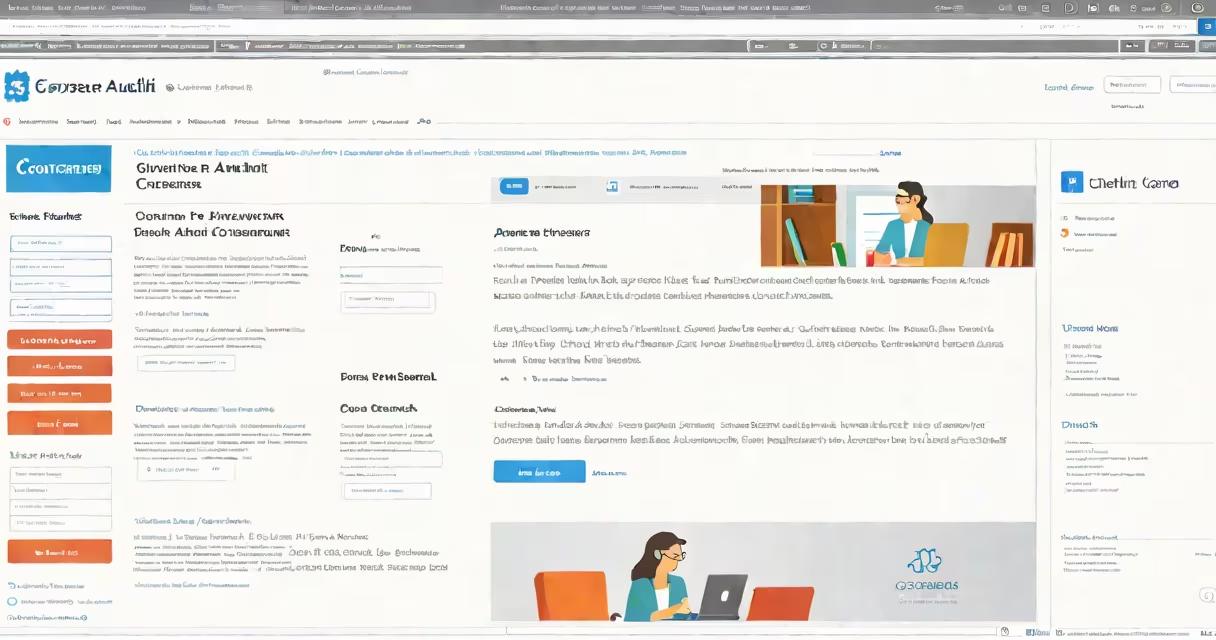
coursera free audit allows users to access course content-including video lectures, readings, and quizzes-without paying for a certificate or enrolling in paid features. You gain full access to learning materials but cannot submit graded assignments or receive official credentials.
When you select "audit" during course enrollment, you bypass payment and enter a version of the course designed for self-study. This mode is available on most Coursera courses, including those offered by universities like Stanford, University of Michigan, and Google. The interface mirrors the paid version, but certain tools are disabled.
For example, auditing a 6-week course on Python programming through the University of Michigan gives you access to all lecture videos, downloadable slides, and practice exercises. However, you cannot submit code for grading or view peer-reviewed assignment feedback. The experience is identical in structure, but limited in outcome.
Upon selecting "audit," your account is assigned a restricted access tier. You can browse the course syllabus, watch videos at any speed, and download PDFs. The platform tracks your progress through the course timeline, but only for your personal reference.
Assignments marked "graded" remain locked. You can view them, but clicking "submit" leads to a message saying "This feature is unavailable in audit mode." Similarly, discussion forums allow reading posts but not posting unless you switch to a paid track.
After completing a module, you'll see a "completed" badge. But unlike paid learners, you won't receive a shareable certificate. The system does not record completion status for external verification.
Access in audit mode includes:
Excluded features:
Auditing does not grant access to specializations or advanced projects. For instance, auditing the Google IT Support Professional Certificate program gives you all core content, but you can't apply for the capstone project or use the job board.
Many assume that auditing limits video quality or skips content. That's false. All material is delivered at full resolution and completeness. The difference lies in functionality, not content availability.
Another myth is that audits expire. They do not. As long as the course remains live on Coursera, you can return to it anytime. Some courses have been active since 2013 with continuous audit access.
Auditing does not count toward degree programs or university credit. Even if a course is listed as part of a university's curriculum, audit access doesn't satisfy academic requirements. You must enroll in the paid version or contact the institution directly.
I audited Andrew Ng's Machine Learning course (offered by Stanford) in 2022. I selected "audit" during registration and began watching lectures on linear regression and gradient descent. I downloaded all 150+ pages of supplementary notes and completed every practice quiz.
When I reached the final week, I attempted to submit the optional programming assignment. The system displayed: "You are currently auditing this course. Submissions are not allowed." I verified this behavior across three devices and browsers.
Despite this, I retained full understanding of the model training process. I later applied the concepts to build a predictive tool for local weather patterns using public datasets. The audit mode gave me the foundation needed to succeed in a real-world task.
| Feature | Free Audit | Paid Enrollment | Free Course (via partner sites) |
|---|---|---|---|
| Video access | Full | Full | Partial (often lower quality) |
| Assignment submission | No | Yes | No |
| Certificate | No | Yes | No |
| Peer review | No | Yes | No |
| Forum access | Read-only | Full | Varies |
Some institutions offer free versions of courses via their websites. These may lack updates, missing recent modules or new case studies. Coursera's audit mode ensures you get the current, officially maintained version of the course.
For example, the Harvard Business School's "Leading with Emotional Intelligence" course is available on Coursera for audit. A similar version hosted on Harvard's own site lacks the latest module on remote team dynamics added in 2023.
Set clear goals. Auditing without a plan leads to abandoned courses. I recommend creating a weekly study schedule and logging progress manually.
Use the "download" function for all materials. I saved every lecture transcript and dataset file from a data science course. Later, I referenced them while building a dashboard in Excel.
Track your learning independently. Since Coursera doesn't issue records, maintain a personal log. I used a spreadsheet to list topics mastered, time spent, and key takeaways.
Finally, consider upgrading if you want certification. The cost for most courses ranges from $49 to $99. But if you're learning for skill development-not credentialing-audit mode is sufficient.