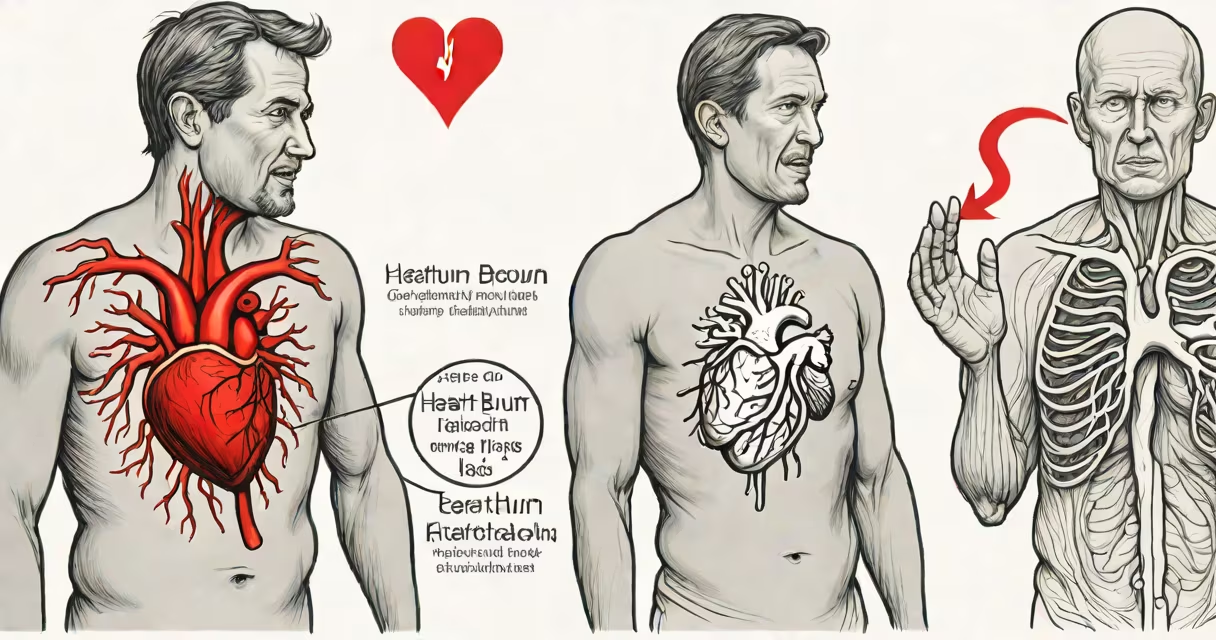
Heartburn and heart issues are distinct conditions that often mimic each other due to similar chest pain patterns. Heartburn stems from stomach acid flowing into the esophagus, while heart issues involve problems with the heart muscle, valves, or blood vessels. Confusing the two can delay life-saving treatment.
Heartburn occurs when the lower esophageal sphincter fails to close properly, allowing acidic digestive contents to rise into the esophagus. This causes a burning sensation behind the breastbone, typically after eating or lying down. The condition affects about 60 million Americans monthly, according to the American College of Gastroenterology. It's usually temporary and manageable through diet and medication.
Heart issues refer to disorders involving the heart's structure or function, such as angina, heart attacks, arrhythmias, or heart failure. These conditions stem from blocked arteries, damaged tissue, or electrical system malfunctions. Symptoms may include pressure, tightness, or pain in the chest, often radiating to the arm, neck, or jaw. Unlike heartburn, heart-related chest pain doesn't always improve with antacids.
Heartburn results from mechanical and chemical irritation. When stomach acid reaches the esophagus, it damages the sensitive lining, triggering nerve signals interpreted as burning pain. This process is localized and often worsens with bending, lifting, or consuming spicy foods. Symptoms typically appear within 30 minutes of eating and resolve within an hour after antacid use.
Heart issues involve systemic disruptions. A heart attack happens when blood flow to part of the heart muscle stops, usually due to a clot in a coronary artery. Without oxygen, heart cells begin dying within 20 minutes. Pain develops gradually or suddenly and persists beyond 15 minutes. It may be accompanied by shortness of breath, cold sweats, nausea, or dizziness-symptoms absent in typical heartburn.
One key difference lies in response to nitroglycerin. Patients with angina often feel relief within minutes of taking nitroglycerin tablets. Heartburn does not respond to this medication. This diagnostic clue helps doctors distinguish between cardiac and gastrointestinal causes during emergency evaluation.
There are two primary categories of heartburn: occasional and chronic. Occasional heartburn occurs less than twice a week and is often linked to large meals, alcohol, caffeine, or lying down soon after eating. Chronic heartburn, diagnosed as gastroesophageal reflux disease (GERD), happens more than twice a week and can lead to complications like esophagitis or Barrett's esophagus.
| Type | Frequency | Common Triggers | Typical Duration |
|---|---|---|---|
| Occasional heartburn | <2 times/week | Spicy food, alcohol, late-night eating | 15-60 minutes |
| Chronic (GERD) | ≥2 times/week | Obesity, hiatal hernia, smoking | Hours, recurring daily |
| Cardiac chest pain | Variable, often sudden | Stress, exertion, cold weather | More than 15 minutes, may come and go |
Heart issues span multiple diagnoses. Angina involves temporary chest pain due to reduced blood flow, often triggered by physical activity. A myocardial infarction (heart attack) results from complete blockage and requires immediate intervention. Arrhythmias cause irregular heartbeats and may present with palpitations or fainting. Each condition has specific diagnostic markers, including EKG changes, elevated troponin levels, and imaging findings.
Heartburn is common in adults over 40, especially those with obesity or hiatal hernias. The prevalence increases with age and lifestyle factors like high-fat diets and sedentary behavior. It's more frequent in pregnant women due to hormonal changes and increased abdominal pressure.
Heart issues are the leading cause of death globally, responsible for nearly 18 million deaths annually, according to the World Health Organization. Risk factors include hypertension, high cholesterol, diabetes, smoking, and family history. Men are more likely to develop heart disease earlier in life, while women often show delayed symptoms until later decades.
A real-world example illustrates the danger of misdiagnosis. In 2019, a 52-year-old man experienced severe chest pain after a holiday dinner. He attributed it to indigestion and took antacids. The pain lasted over 30 minutes and spread to his left arm. He was rushed to the ER and diagnosed with an acute ST-elevation myocardial infarction (STEMI). Delayed presentation increased his risk of permanent heart damage. This case underscores why persistent chest discomfort should never be assumed to be heartburn.
Many people assume that any chest pain behind the sternum is heartburn. This belief leads to underreporting of cardiac events. A study published in The Journal of the American Medical Association found that 30% of patients with acute coronary syndrome initially self-diagnosed as having heartburn.
Another misconception is that heartburn cannot cause serious harm. While rare, chronic GERD can lead to esophageal strictures, bleeding, or even adenocarcinoma. The American Cancer Society reports that long-standing reflux increases the risk of esophageal cancer by up to 50%. However, this remains a small fraction of cases compared to cardiovascular disease.
One non-obvious distinction: heartburn pain often improves when standing or leaning forward. Cardiac pain tends to worsen with exertion and improves with rest. This positional response is a critical red flag for clinicians. I've seen patients who dismissed their chest tightness as "just gas" until they collapsed during a walk. That's when we confirmed a blocked artery via angiography.
Seek immediate medical attention if chest pain lasts longer than 15 minutes, spreads to the jaw or arm, or is accompanied by sweating, nausea, or difficulty breathing. These signs indicate possible cardiac involvement. Even if you suspect heartburn, err on the side of caution-especially if you're over 40 or have risk factors.
For persistent heartburn despite over-the-counter remedies, consult a gastroenterologist. Endoscopy and pH monitoring can confirm GERD and rule out structural abnormalities. Treatment may include proton pump inhibitors, dietary changes, or surgery in severe cases.
Recognizing the difference between heartburn and heart issues saves lives. Always treat unexplained chest pain seriously, regardless of your initial assumption.