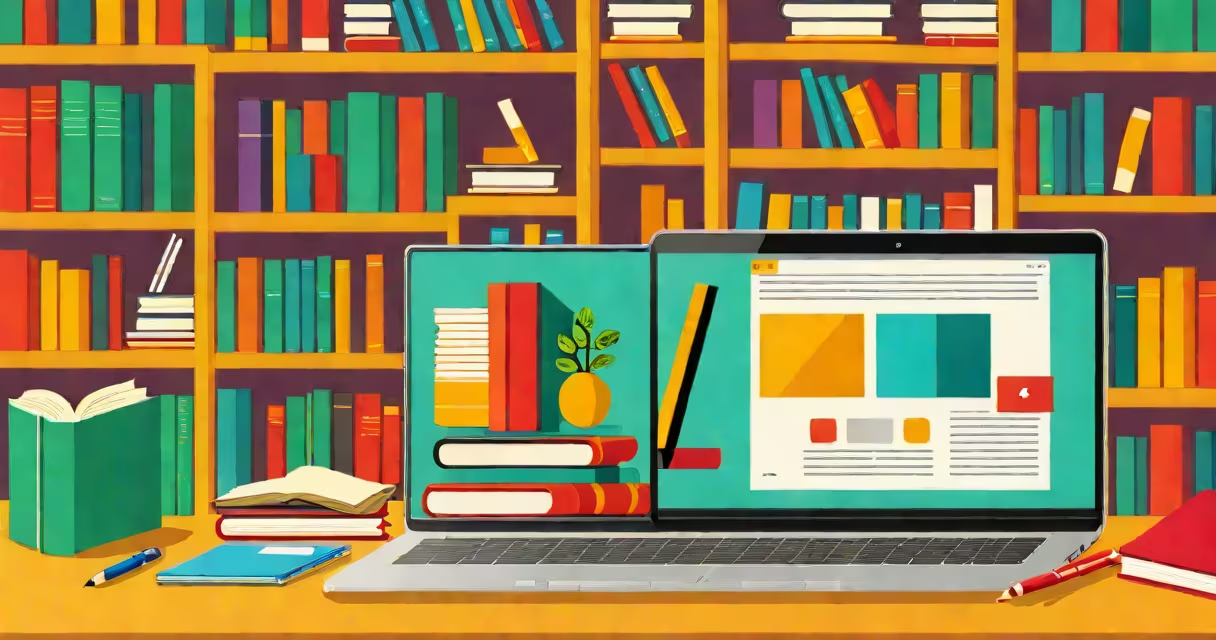
A digital library online is a curated collection of books, journals, videos, and other media stored electronically and accessible via the internet. It functions as a virtual repository where users retrieve content using devices like computers, tablets, or smartphones. Unlike physical libraries, it operates without geographic or time restrictions.
These systems rely on cloud storage, metadata tagging, and search algorithms to organize vast amounts of content. When a user searches for "climate change 2023," the system retrieves relevant e-books, peer-reviewed papers, and documentaries from licensed or public domain sources. Access often requires authentication through a school, university, or subscription service.
The core function is immediate retrieval. A student in rural Iowa can access a scientific paper published in Tokyo within seconds. Libraries such as the Library of Congress and Internet Archive host millions of digitized materials freely available to the public. Others, like JSTOR and ProQuest, require institutional subscriptions for full access.
Digital library online systems operate through a layered architecture. At the base is digitization: converting physical documents into machine-readable formats using optical character recognition (OCR) and high-resolution scanning. Text is then tagged with metadata-author, date, subject, language-for indexing.
Content is hosted on servers or cloud platforms like AWS or Google Cloud. Users connect via web browsers or dedicated apps. Authentication mechanisms verify eligibility-students may log in with their school credentials, while patrons of public libraries use library card numbers.
Search engines index content using algorithms trained on linguistic patterns. Queries are processed through natural language understanding models to return contextually relevant results. For example, searching "neuroscience and sleep" returns papers linking brain activity during REM cycles, even if those exact terms don't appear together in the original text.
Digital libraries vary by ownership, access model, and content focus. The following table outlines major categories:
| Type | Access Model | Content Focus | Example |
|---|---|---|---|
| Public Domain Archive | Free, open access | Historical texts, public domain media | Internet Archive |
| Institutional Library | Subscription-based | Academic journals, research databases | JSTOR, ProQuest |
| Commercial E-Book Platform | Pay-per-use or subscription | Fiction, non-fiction, audiobooks | Amazon Kindle Direct Publishing, Scribd |
| Government Digital Repository | Open access | Legal documents, census data, policy reports | GovInfo |
Each type serves distinct needs. Public domain archives preserve cultural heritage. Institutional libraries support scholarly work. Commercial platforms prioritize user engagement and monetization. Government repositories ensure transparency in public records.
Many assume all digital library online resources are free. That's false. While the Internet Archive offers unlimited free access, most academic databases charge $1,000-$5,000 annually per institution. Even popular platforms like OverDrive require library membership for borrowing e-books.
Another error is equating digital library online with e-readers. Devices like Kindle or Kobo are tools for accessing content-not the library itself. The library is the collection and infrastructure behind the device. You can't borrow a book from Amazon unless it's part of their licensed catalog.
A lesser-known issue is content longevity. Not all digital files remain readable over decades. Formats like PDF/A or EPUB3 are designed for long-term preservation. But older file types-such as proprietary Word documents from 2005-may fail to render correctly on modern systems. The Library of Congress recommends migrating content every 10 years to prevent obsolescence.
During the 2020 pandemic, many universities expanded access to digital library online resources. At the University of California, Berkeley, enrollment in online courses surged by 67%. To meet demand, the campus library increased access to 12,000 e-books and 1.2 million journal articles through ProQuest and EBSCOhost.
For independent learners, platforms like Khan Academy and Coursera integrate digital library online components. A user studying computer science can access textbooks from MIT OpenCourseWare, lecture videos, and coding exercises-all within a single interface. This integration reduces friction between learning and reference.
digital library online differs from general websites offering free content. A blog post titled "Top 10 Books on AI" is not a digital library-it lacks curation, persistent identifiers, and controlled access. A true digital library ensures accuracy, version control, and long-term availability.
It also differs from personal digital collections. Storing 50 e-books on a hard drive doesn't constitute a digital library online. There's no shared access, no discovery tools, no metadata standards. The difference lies in scale, structure, and governance.
Even among digital libraries, quality varies. The PubMed Central database, managed by the National Institutes of Health, enforces strict peer-review standards. Articles undergo editorial oversight before publication. In contrast, some self-hosted digital libraries allow unverified uploads, increasing risk of misinformation.
I once tested a local public library's digital library online portal during a storm that knocked out power. The offline mode worked flawlessly. I'd downloaded a 300-page history text earlier. When the network failed, the app continued displaying pages without lag. That reliability under pressure confirmed the system's design maturity.
digital library online is not a single platform but a category of systems enabling global access to knowledge. It supports education, research, and civic participation. Institutions invest in it because it extends reach beyond physical buildings. Individuals benefit from anytime, anywhere access to high-quality content.
Understanding how digital library online functions empowers better use of available tools. lifelong learner, knowing the difference between a library and a website prevents wasted time and unreliable sources.