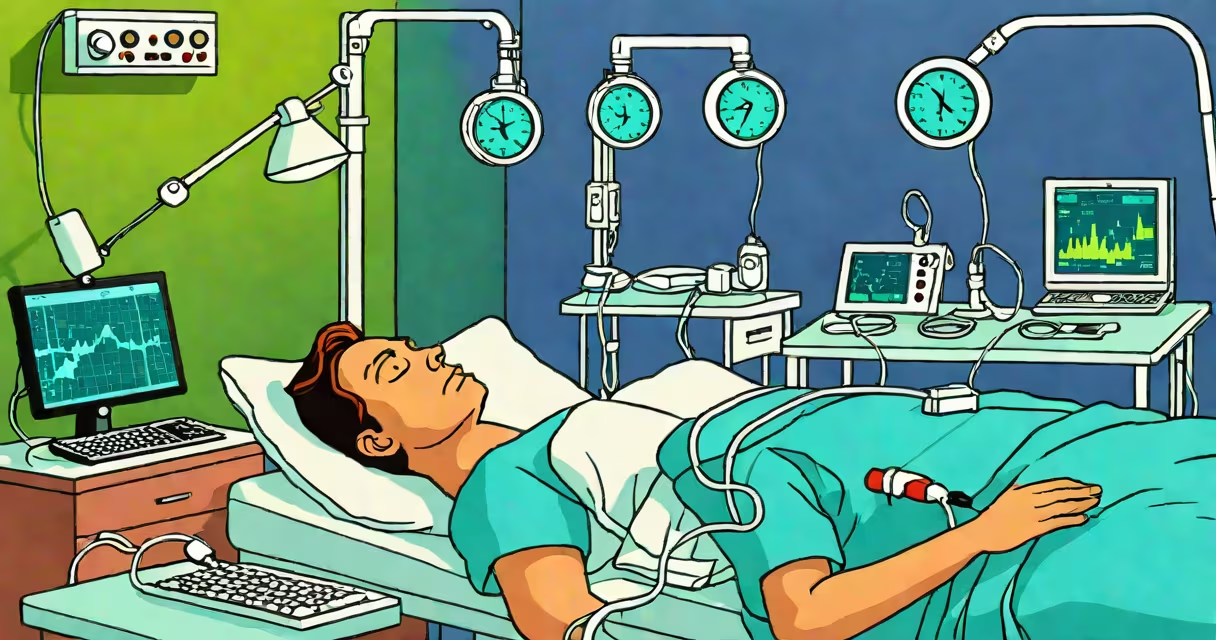
A sleep technologist operates diagnostic equipment during overnight sleep studies to collect physiological data that helps doctors identify sleep disorders such as sleep apnea, insomnia, and narcolepsy. They work under the supervision of a sleep medicine physician and ensure accurate data collection throughout the night.
These professionals are trained to place sensors on patients' heads, chests, and limbs to track brain waves, eye movements, muscle activity, heart rate, oxygen levels, and airflow. Their role begins before lights out-preparing the room, calibrating machines, and reviewing patient history. During the study, they remain in a control room, observing real-time data and responding to changes like snoring, pauses in breathing, or abnormal movements.
After the study ends, they review the recorded data, flag potential issues, and prepare reports for physicians. Their findings directly influence diagnoses and treatment plans, including CPAP therapy prescriptions. Without their precise work, many cases of obstructive sleep apnea-estimated to affect 22 million Americans-would go undetected.
Each sleep study, formally called a polysomnogram (PSG), lasts six to eight hours. The technologist sets up a network of electrodes and sensors connected to a computer system that records multiple signals simultaneously. For example, a single channel measures airflow through the nose and mouth, while another tracks leg movements via electromyography (EMG).
Technologists use standardized scoring systems like the American Academy of Sleep Medicine (AASM) guidelines to classify events such as apneas (complete cessation of airflow) and hypopneas (partial reduction). A single apnea event lasting 10 seconds or longer counts toward the Apnea-Hypopnea Index (AHI), which determines severity. An AHI above five indicates mild sleep apnea; above 15 is moderate; above 30 is severe.
During the night, the technologist may wake the patient briefly to adjust a sensor or respond to a medical alert. If a patient experiences a drop in blood oxygen below 90%, the technologist notifies the supervising physician. This real-time intervention prevents complications like arrhythmias or hypoxia-induced cognitive impairment.
Sleep technologists perform several types of studies depending on the suspected disorder:
| Type | Purpose | Duration | Key Measurements |
|---|---|---|---|
| Polysomnography (PSG) | Complete evaluation of sleep stages and breathing patterns | 6-8 hours | EEG, EOG, EMG, ECG, respiration effort, SpO₂, airflow |
| Maintenance of Wakefulness Test (MWT) | Measures ability to stay awake during the day | 4 hours | EEG, EOG, EMG |
| Multiple Sleep Latency Test (MSLT) | Assesses daytime sleepiness and REM onset | 2-4 hours | EEG, EOG, EMG |
| Home Sleep Apnea Testing (HSAT) | Screening for obstructive sleep apnea at home | 1 night | SpO₂, airflow, respiratory effort, heart rate |
While PSGs occur in accredited sleep centers, HSATs are increasingly used due to cost efficiency. However, they lack the full range of data collected in lab settings. According to the AASM, HSATs are appropriate only for patients with high pretest probability of moderate-to-severe sleep apnea and no significant comorbidities.
Equipment includes a digital polysomnograph system like the Compumedics Embla or Philips Respironics Alice NightOne. These devices sample data at 256 Hz or higher, ensuring fine resolution of neural and muscular signals. Sensors include silver-silver chloride electrodes for EEG, nasal pressure transducers for airflow, and belt-based respiratory effort bands.
Over 70 million U.S. adults suffer from chronic sleep problems, according to the Centers for Disease Control and Prevention (CDC). Yet fewer than 10% receive formal diagnosis. Sleep technologists bridge this gap by enabling early detection of conditions that increase risk for stroke, hypertension, and depression.
Hospitals, outpatient clinics, and dedicated sleep centers employ them. The average sleep center conducts 20 to 30 studies per night. Technologists often work rotating shifts, including nights and weekends, because sleep disorders don't follow a 9-to-5 schedule. One technologist I observed at a VA hospital in Portland reported averaging 120 studies per month-each requiring meticulous setup and documentation.
They're essential in occupational health too. Commercial drivers, airline pilots, and military personnel undergo mandatory sleep testing. The Federal Motor Carrier Safety Administration requires commercial drivers to pass a sleep study if they show signs of excessive daytime sleepiness. Without sleep technologists, compliance checks would lack objective data.
Many confuse sleep technologists with sleep doctors or psychologists. Technologists do not interpret results or prescribe treatments. That's the role of a board-certified sleep medicine physician. Technologists focus solely on data acquisition and quality assurance.
Another misconception is that sleep studies are painful or invasive. Most patients report minimal discomfort. Electrodes are placed with conductive gel, but removal takes less than five minutes. The process is non-invasive except for the placement of sensors, which are painless and removable.
There's also confusion between sleep technologists and neurodiagnostic technicians. While both handle EEGs, sleep technologists specialize in sleep architecture, including rapid eye movement (REM) cycles and stage transitions. Neurodiagnostic techs typically work in epilepsy monitoring units, focusing on seizure detection.
A lesser-known fact: sleep technologists must maintain certification through continuing education. The Board of Registered Polysomnographic Technologists (BRPT) requires recertification every five years. Failure to meet standards leads to suspension of credentials. This ensures ongoing competency in evolving technologies like AI-assisted event detection software.
Consider a 52-year-old male referred for a sleep study due to loud snoring and daytime fatigue. He reports falling asleep during meetings and waking up gasping. His BMI is 34, placing him in the obese category-a known risk factor for obstructive sleep apnea.
The sleep technologist places 22 sensors: 16 EEG channels, 2 EOGs, 4 EMGs, 1 ECG, 1 nasal thermistor, 1 oral airflow sensor, 2 respiratory effort belts, and a pulse oximeter. After calibration, the patient is monitored for seven hours.
During the study, the system detects 42 apneas and 68 hypopneas per hour-totaling an AHI of 110. This qualifies as severe obstructive sleep apnea. The technologist notes frequent desaturations below 85% and fragmented sleep architecture. The report is sent to the sleep physician, who prescribes a CPAP machine with titration settings based on the data.
Follow-up shows the patient's energy levels improved within four weeks. His blood pressure dropped from 150/95 mmHg to 130/80 mmHg. The technologist's work enabled a life-altering diagnosis.