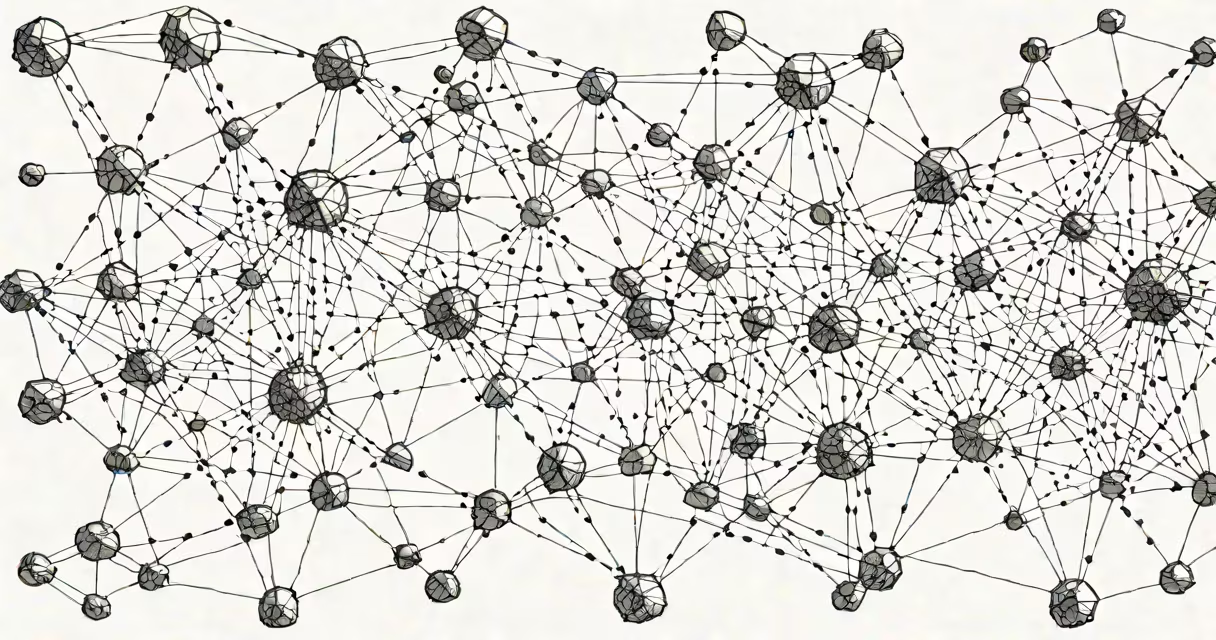
The essentials of computer science are the foundational concepts that define how computers process information, solve problems, and execute instructions. These include algorithms, data structures, programming paradigms, computational complexity, and system architecture. Understanding them enables effective software development, debugging, and innovation across digital domains.
At its core, computer science is about problem-solving through abstraction and automation. The essentials provide the tools to break down complex tasks into steps a machine can follow. For example, sorting a list of 10,000 student grades requires a clear algorithm-like merge sort-to avoid exponential runtime. Without these principles, even basic programs fail under scale.
These concepts form the basis of every major software system, from web browsers to AI models. They are not optional extras-they are the shared language of developers, researchers, and engineers. Mastery allows professionals to move beyond syntax and understand why a solution works-or doesn't.
Algorithms are step-by-step procedures for solving problems. A search algorithm finds an item in a database. A sorting algorithm arranges data in order. Efficiency matters: an algorithm that takes 10 seconds to sort 1,000 items may take hours for 1 million. This is measured using Big O notation-O(n log n) is better than O(n²).
Data structures organize information so algorithms can access it quickly. Arrays store elements in sequence. Linked lists chain nodes with pointers. Trees group data hierarchically-like a file system. Choosing the right structure impacts performance. Using a hash table to look up usernames reduces search time from linear to constant, even with millions of entries.
Programming languages implement these ideas. Python uses lists and dictionaries; C++ supports pointers and templates. But the underlying logic remains consistent. A recursive function calling itself-like calculating factorial-relies on stack memory and base cases. Without understanding recursion, you cannot grasp tree traversal or changing programming.
These are the building blocks of computer science:
| Component | Function | Real-world example |
|---|---|---|
| Algorithms | Define logical steps to solve a task | Dijkstra's algorithm finds shortest path in GPS navigation |
| Data Structures | Organize data for efficient access | Hash tables power login systems by storing passwords securely |
| Computational Complexity | Measure resource usage (time/space) | O(1) lookup in a hash map vs. O(n) in a list |
| Abstraction | Hide implementation details | Using a library function without knowing its internal code |
| Recursion | Solve problems by breaking them into smaller versions | Calculating Fibonacci numbers using repeated function calls |
Each component interacts. An algorithm selects a data structure based on expected operations. Complexity analysis determines whether the solution scales. Abstraction hides low-level details so developers focus on intent, not mechanics.
For instance, consider a ride-sharing app. When a rider requests a trip, the system runs an algorithm to match them with the nearest driver. The driver locations are stored in a spatial index-a specialized data structure. The algorithm checks proximity within 500 meters, returning results in under 100 milliseconds. This performance relies on both efficient data organization and optimized logic.
Many assume computer science is just coding. It is not. Coding is the output; computer science is the reasoning behind it. Writing a loop that prints "Hello" five times involves syntax-but understanding why it runs in O(n) time involves computer science.
Another myth: you need advanced math to succeed. While discrete math and calculus appear in theory courses, most practical applications rely on logic, pattern recognition, and structured thinking. You don't need to derive the Fourier change to build a responsive website.
A less obvious correction: not all algorithms are created equal. A brute-force solution may work for small inputs but fail at scale. For example, checking every pair of users in a social network of 1 million people requires 5×10¹¹ comparisons-too slow for real-time features. A smarter algorithm using graph theory reduces this to manageable levels.
I once built a recommendation engine using nested loops. With 10,000 users, it took 12 minutes to generate suggestions. Switching to a matrix-based approach reduced runtime to under 3 seconds. The difference wasn't hardware-it was algorithmic understanding.
Every software product uses the essentials. Web apps rely on algorithms to render pages dynamically. Mobile apps depend on data structures to cache images efficiently. Cloud services use distributed algorithms to manage traffic across regions.
In cybersecurity, understanding hashing prevents password leaks. A system storing passwords as plain text is vulnerable. Using SHA-256 hashing ensures even if data is stolen, the original values remain hidden. This is not just security-it's applied computer science.
AI systems depend on algorithms to learn patterns. Training a neural network involves gradient descent-an optimization algorithm that adjusts weights iteratively. Without understanding how loss functions minimize error, you cannot debug model behavior.
These principles also apply outside tech. Logistics companies use routing algorithms to reduce fuel costs. Hospitals use scheduling algorithms to assign staff. Even music streaming platforms use recommendation algorithms based on user history and similarity scores.
Computer science knowledge exists on a spectrum. Beginners learn syntax and basic control flow. Intermediate learners master recursion, memory management, and trade-offs between speed and storage. Advanced practitioners analyze algorithmic correctness, prove time bounds, and design systems under constraints.
For example, a beginner writes a loop to sum numbers. An intermediate developer optimizes it using vectorized operations. An expert considers cache locality and branch prediction effects on performance-even if the result is the same.
Understanding the essentials is not a one-time task. It evolves with experience. A junior developer may write a working program. A senior engineer ensures it handles edge cases, scales to high load, and remains maintainable over years.
Graduates who grasp the essentials enter fields with higher demand. According to the U.S. Bureau of Labor Statistics, jobs in computer and information technology are projected to grow 15% from 2021 to 2031-faster than average. Roles like software developer, data analyst, and systems architect require deep familiarity with the essentials of computer science.
Learning the essentials of computer science is not about memorizing terms. It's about developing a mindset: how to think logically, break down problems, and evaluate solutions objectively. This skill set applies far beyond code-into decision-making, planning, and innovation.
Mastering these concepts prepares individuals for technical roles, academic research, and entrepreneurship. designing a new system, the essentials of computer science are the bedrock of digital progress.