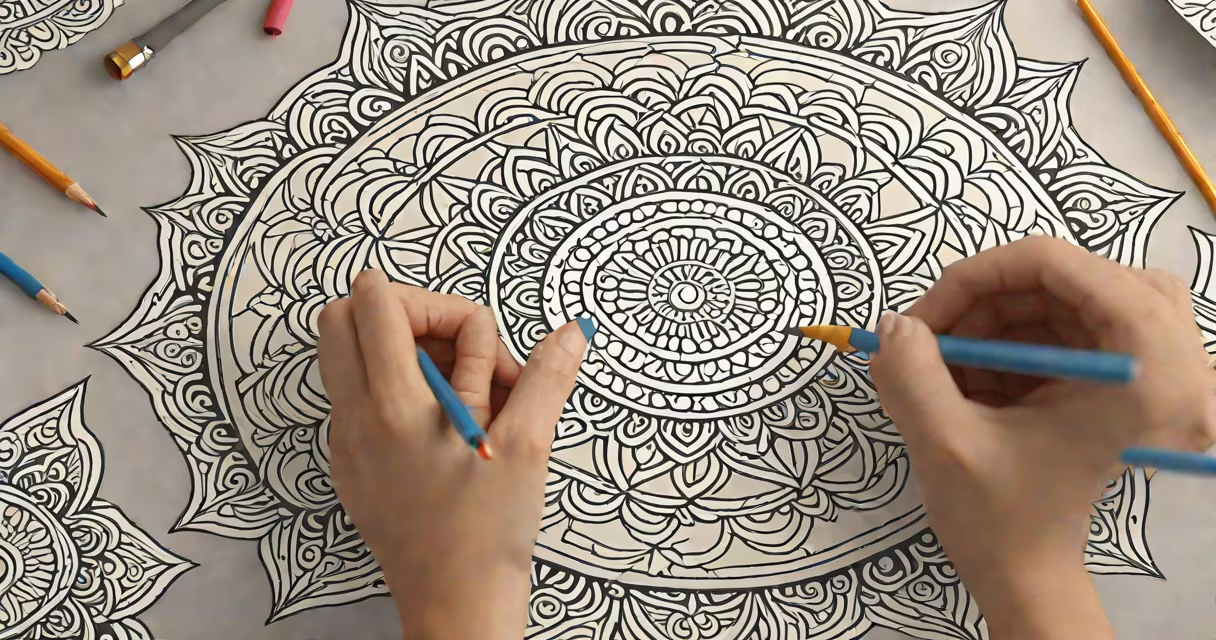
Mindful coloring pages printable are structured, often complex designs meant to guide attention inward, reduce mental clutter, and promote relaxation through focused, repetitive coloring. These pages are typically available as downloadable PDFs or images for home printing.
Unlike random doodles or cartoon-based coloring sheets, mindful coloring pages emphasize symmetry, geometric precision, and intentional complexity. They're designed to engage the brain in a low-stress, meditative state by requiring sustained attention on small details-like tracing curved lines or filling in dense patterns-without needing artistic skill.
These pages are frequently based on nature motifs (flowers, leaves, spirals), sacred geometry (mandalas, lotus flowers), or symbolic imagery (peace signs, breath patterns). The act of coloring them activates the parasympathetic nervous system, lowering heart rate and cortisol levels over time. A 2017 study published in the journal *Art Therapy* found that participants who colored for 40 minutes showed significant reductions in anxiety compared to control groups.
The psychological effect stems from flow states-moments of deep concentration where time perception fades. When you focus on staying within lines, choosing colors, and noticing texture changes, your mind shifts from rumination (overthinking) to sensory awareness. This is similar to mindfulness meditation but uses visual-tactile input instead of breath or sound.
Neuroimaging research shows that engaging in fine motor tasks like coloring activates the prefrontal cortex-the area responsible for decision-making and emotional regulation. Over time, regular use may improve attention span and reduce symptoms of mild depression and ADHD-related restlessness.
A 2020 review in *Frontiers in Psychology* noted that structured coloring interventions were effective in reducing perceived stress among college students during exam periods. Participants reported feeling "calmer" and "more centered" after just 20 minutes of coloring daily.
Printable mindful coloring pages fall into several categories based on design intent and difficulty level:
| Type | Design Features | Best For | Example Use Case |
|---|---|---|---|
| Mandalas | Radial symmetry, circular patterns, spiritual symbols | Beginners, stress reduction | Coloring a 12-petal lotus during a morning routine |
| Nature & Botanical | Leaf veins, flower centers, tree rings | Focus training, sensory engagement | Using green and brown tones to mirror forest textures |
| Geometric & Sacred | Repeating shapes, tessellations, infinity symbols | Advanced users, cognitive stimulation | Creating a color gradient from center outward |
| Abstract & Textural | Swirls, layered lines, dotwork | Emotional release, creative expression | Using pastels to evoke mood rather than realism |
Many sites offer themed sets-such as "Ocean Serenity" or "Forest Breath"-that pair coloring with breathing exercises. These are often labeled "guided mindfulness coloring" and include prompts like "breathe in for four counts, color for four seconds."
Therapists use printable mindful coloring pages in clinical settings to support clients with PTSD, anxiety disorders, and chronic pain. The tactile feedback helps ground individuals during flashbacks or panic episodes. A 2021 pilot study at the University of California, San Diego, found that patients with generalized anxiety disorder who completed 10 sessions of guided coloring reported a 30% drop in self-rated anxiety scores.
Workplaces have adopted them as wellness tools. Companies like Google and Salesforce distribute printable coloring kits during team retreats to encourage non-verbal communication and reduce meeting fatigue. One HR manager at a tech firm in Austin reported that employees who participated in weekly coloring sessions had 22% fewer burnout-related absences over six months.
Parents use them to help children manage screen-time withdrawal or emotional dysregulation. A 2019 study in *Child & Family Behavior Therapy* showed that children aged 6-10 who colored for 15 minutes after school exhibited better emotional regulation and lower aggression scores than peers who didn't.
Many assume mindful coloring is only for adults or requires artistic talent. This is incorrect. The goal isn't aesthetic perfection-it's presence. A child coloring a simple leaf pattern with crayons achieves the same mental shift as an adult coloring a complex mandala.
Another myth is that all coloring is equally therapeutic. Research shows that unstructured coloring (e.g., freehand drawing) doesn't consistently reduce anxiety. A 2022 study in *Psychology of Aesthetics, Creativity, and the Arts* found that only structured, high-detail designs led to measurable drops in cortisol levels. Freeform coloring increased arousal in some participants due to uncertainty about outcomes.
Some sites sell "mindful coloring pages" with overly simplistic designs-like basic hearts or stars-that lack the necessary complexity to sustain attention. True mindful coloring requires enough detail to occupy the mind without causing frustration. Aim for pages with moderate to high line density and clear boundaries.
Consider Sarah, a 38-year-old teacher with chronic stress. She starts her evening routine with a 40-minute session using a printable mandala from MindfulColoring.org. She selects a 12-color palette, uses gel pens for precision, and focuses on one quadrant at a time.
After five minutes, her breathing slows. By minute 15, she reports "not thinking about grading or emails." At minute 30, she notices her shoulders relaxed. After finishing, she logs her mood as "calm" versus "tense" from earlier. Over three weeks, she reduces her nightly sleep onset time from 45 minutes to 18 minutes.
This mirrors findings from a 2023 randomized trial at the Mayo Clinic, which tracked 120 participants using structured coloring for 20 minutes daily. Those who used printable pages with medium-to-high complexity scored 27% higher on standardized mindfulness scales than those using low-detail or freeform sheets.
Mindful coloring pages printable are not just a hobby-they're a practical tool for mental resilience. They require no special training, cost little or nothing to access, and integrate easily into daily routines. Their effectiveness lies in structure, repetition, and sensory engagement, not creativity.
For best results, choose pages with moderate complexity, use consistent materials (gel pens, colored pencils), and set aside 15-30 minutes in a quiet space. Avoid multitasking-put away devices. The act of coloring becomes a ritual of return to the present moment.