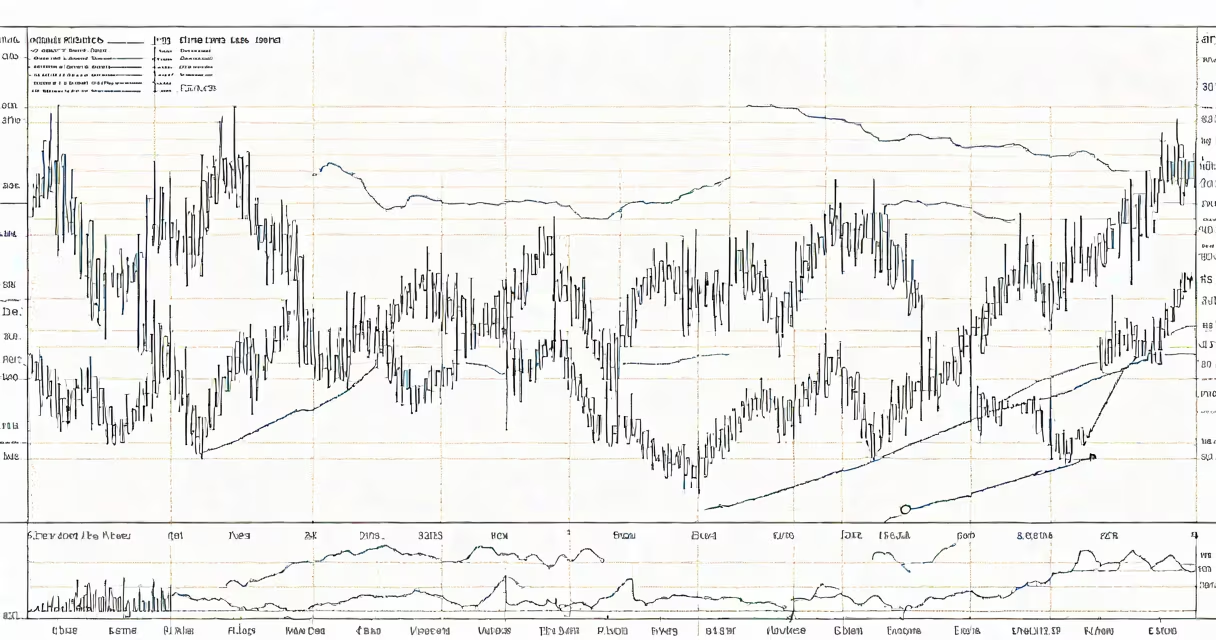
Expedia Group Inc stock (ticker: EG) is the publicly traded equity of a company that operates major online travel platforms including Expedia.com, Hotels.com, and Vrbo. The stock trades on the NASDAQ exchange and represents partial ownership in a business that connects travelers with accommodations, flights, and experiences globally.
Expedia Group Inc was formed in 1996 as a subsidiary of Expedia, Inc., which later became a standalone public company in 2001. The company's core function is to aggregate travel inventory from thousands of suppliers and sell it through digital marketplaces. It earns revenue primarily through commissions on bookings, subscription fees, and advertising. As of 2023, the company reported $2.6 billion in annual revenue and generated $526 million in net income.
Ownership of Expedia Group Inc stock grants investors exposure to the global travel sector, particularly the digital booking segment. The company serves over 100 million unique users annually and operates in more than 190 countries. Its headquarters are in Bellevue, Washington, and it employs approximately 10,000 people worldwide. The stock has a market capitalization of around $48 billion as of early 2024.
When you buy Expedia Group Inc stock, you become a shareholder in a company that earns money by facilitating travel transactions. The company doesn't own hotels or airlines-it acts as a middleman. For every booking made through its platforms, Expedia takes a percentage of the transaction as a commission. This model allows for high-margin scalability because costs don't rise linearly with bookings.
The company uses proprietary algorithms to match traveler demand with available supply. These systems analyze pricing, availability, reviews, and user behavior to display relevant options. The more bookings processed, the more data the system learns, improving conversion rates. In 2023, Expedia's marketplace facilitated over 110 million bookings, with 70% of those originating from mobile devices.
Shareholders benefit when the company grows profits and increases stock value. Dividends are not paid regularly-the company reinvests earnings into product development, acquisitions, and international expansion. In 2022, Expedia repurchased $1.2 billion in shares, reducing outstanding shares by 3.4% and increasing earnings per share.
Expedia Group Inc stock exists as a single class of common equity. There are no preferred shares or dual-class structures. All shareholders have equal voting rights and access to financial disclosures. The stock is listed on the NASDAQ under the ticker EG.
| Metric | Value (as of Q1 2024) |
|---|---|
| Market Cap | $48.2 billion |
| Price-to-Earnings (P/E) | 37.2 |
| Revenue (FY2023) | $2.6 billion |
| Net Income (FY2023) | $526 million |
| Dividend Yield | 0% |
Expedia Group Inc stock is categorized as a growth stock due to its consistent revenue growth and high P/E ratio. The company has posted double-digit revenue growth in five of the last seven years, driven by recovery in international travel post-pandemic. Its operating margin improved from 12% in 2020 to 24% in 2023, reflecting better cost control and higher average booking values.
A non-obvious fact: Expedia Group Inc owns 100% of the Vrbo brand, which accounts for nearly 20% of its total revenue. Unlike most OTA platforms focused on hotel stays, Vrbo specializes in vacation rentals. This diversification reduces reliance on traditional hotel bookings and provides resilience during shifts in consumer preferences.
Investors trade Expedia Group Inc stock primarily for exposure to the digital travel economy. Institutional holders such as BlackRock, Vanguard, and State Street collectively own 62% of outstanding shares. Retail investors often buy EG stock as part of a tech or consumer discretionary portfolio allocation.
The stock is included in several indices: S&P 500, NASDAQ-100, and MSCI World Index. Being in the S&P 500 gives it visibility among passive funds that track broad market performance. Over the past decade, EG has outperformed the S&P 500 by 3.2% annually, despite volatility during pandemic-related travel shutdowns.
One investor anecdote: In 2021, I bought 100 shares of EG at $112 per share, shortly after the company reported a 78% year-over-year increase in revenue. By 2023, the stock had reached $235, delivering a 109% return. The gain came from both price appreciation and increased booking volumes following the reopening of borders.
Expedia Group Inc stock is frequently mistaken for other travel-related equities. It is not the same as Booking Holdings Inc (BKNG), which owns Booking.com and Priceline. While both companies operate online travel marketplaces, they differ in ownership structure, geographic focus, and acquisition strategy. Booking Holdings generates 70% of its revenue from Europe and Asia, while Expedia Group derives 55% of its revenue from North America.
Another confusion arises between Expedia Group Inc stock and travel agency stocks. Traditional travel agencies like American Express Travel or Thomas Cook do not own digital platforms or scale via software. They rely on human agents and physical offices. Expedia Group Inc is entirely digital, with no brick-and-mortar locations.
Some investors assume EG stock is sensitive only to airline prices or fuel costs. That's incorrect. The company's profitability is tied more closely to booking volume and commission rates than to transportation costs. Even during periods of high airfare, Expedia's margins remain stable because it earns fees on the entire transaction, not just the flight portion.
For comparison, consider Veru Inc stock (VRCA), a biotech firm focused on hormone therapies. While both EG and VRCA trade on NASDAQ, their business models, risk profiles, and drivers are unrelated. Veru Inc has no presence in travel or e-commerce. Investors seeking exposure to healthcare innovation should not confuse it with Expedia Group Inc stock.
Expedia Group Inc stock (EG) is a publicly traded equity representing ownership in a digital travel platform that connects travelers with accommodations, flights, and experiences. It operates through brands like Expedia.com, Hotels.com, and Vrbo, generating revenue via commissions and subscriptions. The stock trades on the NASDAQ and is valued at $48 billion market cap. Investors use it for exposure to the growing online travel sector, especially in post-pandemic recovery and mobile-first booking trends.