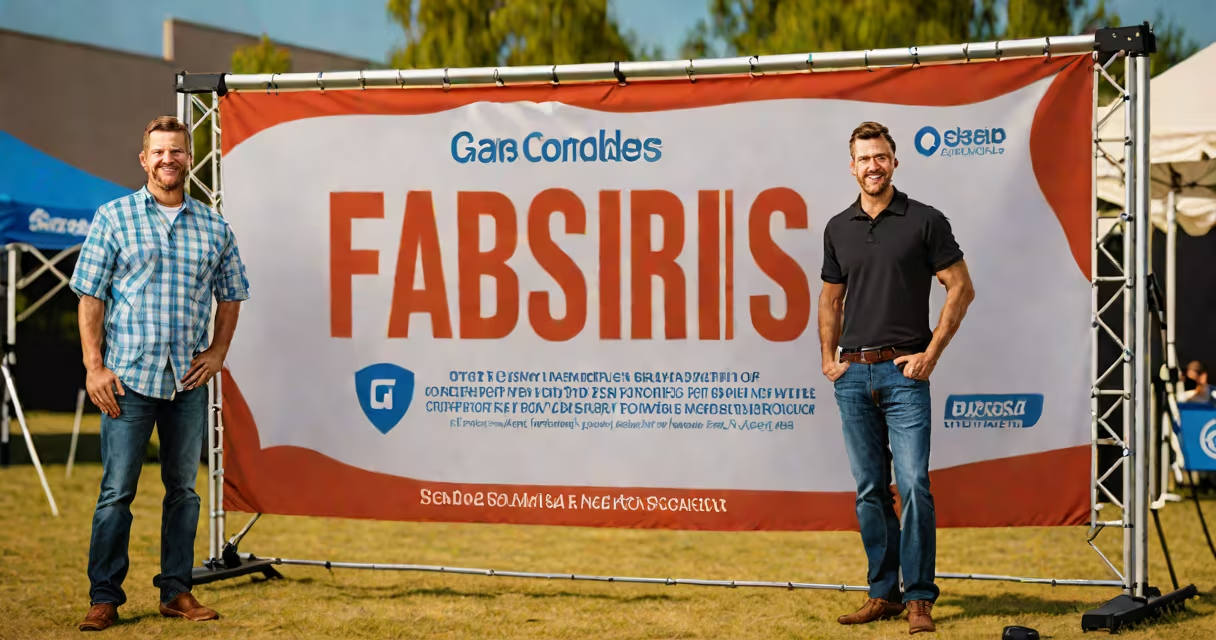
fabric sign guys are freestanding, lightweight banners mounted on a pole and held upright by a weighted base. They feature printed graphics on durable polyester or vinyl fabric, designed for visibility at events, trade shows, and retail locations. These signs are often used to attract attention, promote brands, or direct traffic.
They work by combining a vertical fabric panel with a collapsible aluminum or steel frame. The fabric is stretched tightly across the frame using clips or Velcro, then attached to a base that stabilizes the structure. Most models have a single-sided print, though double-sided options exist. The base typically weighs between 10-20 pounds and includes a handle for portability.
Common sizes range from 6 feet to 10 feet tall, with widths between 3 and 5 feet. A standard 8-foot model weighs about 25 pounds when assembled. They're ideal for indoor and outdoor use, though wind resistance increases above 15 mph. The fabric material resists fading and moisture, making it suitable for extended outdoor exposure.
Fabric sign guys consist of three core components: the printed fabric, the support frame, and the base. The fabric is usually 180-200 gsm polyester with UV-resistant coating. This thickness ensures durability and color retention under sunlight. The printing uses dye-sublimation or digital inkjet techniques, which embed ink into the fibers rather than sitting on the surface.
The frame is typically aluminum alloy, chosen for strength-to-weight ratio. It collapses into a compact bundle for storage and transportation. A common design uses a telescoping center pole with crossbars at the top and middle to maintain rigidity. The base is a wide, flat platform with a central hole to accept the pole. Some models include a removable weight tray for added stability in high-wind areas.
For example, a 7-foot fabric sign guy with a 3.5-foot width and a 15-pound base can withstand winds up to 25 mph. The fabric is rated for 3,000 hours of UV exposure before noticeable fade. Brands like Merchandise.com and Signs.com offer customizable versions with quick setup times under 10 minutes.
There are three primary types based on size, use, and deployment method:
| Type | Height Range | Use Case | Weight (Assembled) | Best For |
|---|---|---|---|---|
| Standard | 6-8 ft | Trade shows, retail entrances | 20-30 lbs | Indoor and sheltered outdoor use |
| Large Format | 9-10 ft | Festival entrances, street events | 35-45 lbs | High-visibility outdoor settings |
| Collapsible/Travel | 5-7 ft | Conferences, pop-ups, mobile vendors | 15-25 lbs | Transport and frequent setup |
These signs are widely used in marketing, event management, and retail. A food truck at a summer festival might use a 9-foot fabric sign guy with a neon-colored graphic showing "Free Sample Today" to draw crowds. A tech startup at a trade show may deploy a 7-foot version with a product demo video loop embedded in the design.
They differ from traditional foam-core signs and PVC banners in both weight and durability. Foam-core signs collapse easily and degrade quickly in rain. PVC banners are heavier and less flexible. Fabric sign guys offer better wind resistance and longer lifespan-up to five years with proper care.
People often confuse fabric sign guys with inflatable banners or flag poles. Inflatable banners rely on air pressure and require a blower unit. They're noisy and prone to punctures. Flag poles are thin and flexible, offering minimal visual impact. Fabric sign guys are rigid, stable, and visually dominant.
A key misconception is that they're only for temporary use. While many are deployed for short-term events, their durability supports long-term branding. A restaurant chain in Chicago used fabric sign guys at 12 locations for six months to promote a new menu. After 180 days, the signs showed no significant wear, according to internal quality reports.
Another error is assuming all fabrics are equal. Not all polyester blends resist UV degradation. A study by the ASTM International found that uncoated polyester faded 40% faster than coated versions after 1,000 hours of simulated sunlight exposure. Always verify UV protection ratings when ordering.
I once attended a music festival in Austin where over 40 vendors used fabric sign guys. The most effective were those with high-contrast colors-black text on yellow fabric-and clear messaging. One vendor selling handmade soap used a 7-foot sign with a hand-drawn illustration and the phrase "100% Natural, No Sulfates." It attracted 3x more foot traffic than nearby stalls with smaller, static signs.
During setup, I noticed that the frame collapsed smoothly and reassembled in under 5 minutes. The base had rubber feet that prevented sliding on wet pavement. The fabric was thick enough to avoid flapping excessively in wind, even at 18 mph.
When choosing a fabric sign guy, prioritize fabric weight, frame material, and base stability. Avoid models with plastic joints or thin poles-they fail under moderate wind. Look for brands that provide sample swatches before bulk orders.
For ongoing use, clean with a damp cloth and mild soap. Store folded in a protective sleeve. Avoid leaving them exposed to prolonged direct sunlight or heavy rain. With proper care, a fabric sign guy lasts longer than most promotional materials.
These signs are not just eye-catching-they're functional tools for communication. Whether promoting a product, guiding guests, or building brand presence, fabric sign guys deliver consistent results across diverse environments.
Understanding how they work, what they're made of, and where they're best used helps ensure you choose the right one for your needs. From trade shows to street fairs, fabric sign guys remain a trusted choice for visible, durable, and professional-grade signage.