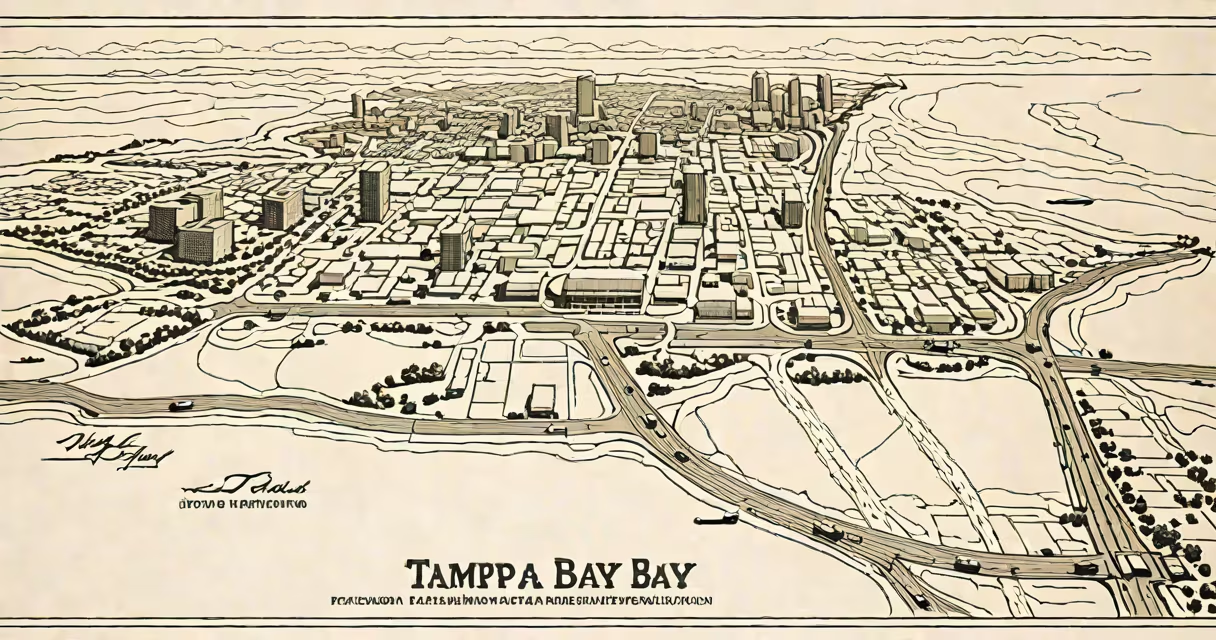
fdot tampa bay is the regional division of the Florida Department of Transportation responsible for planning, constructing, and maintaining state highways, bridges, and transit systems across Hillsborough, Pinellas, and Pasco counties. It oversees major infrastructure projects, coordinates with local governments, and implements traffic safety programs to support regional mobility.
As part of the statewide FDOT network, fdot tampa bay operates under the authority of the Florida Legislature and the Florida Department of Transportation's central office in Tallahassee. Its jurisdiction covers approximately 3,200 miles of state-maintained roads, including Interstate 275, State Road 60, and U.S. Route 301. The division manages over 1,200 traffic signals and coordinates more than 40 active construction zones annually.
Project delivery follows a structured process: needs assessment, environmental review, design, funding allocation, construction, and post-completion evaluation. All projects must comply with federal regulations under the National Environmental Policy Act (NEPA) and state-specific statutes such as Chapter 339 of the Florida Statutes governing transportation planning.
fdot tampa bay functions through a network of district offices, engineering teams, and public engagement units. Each project begins with a formal request from a local government or county agency. The division then conducts a feasibility study, often involving traffic modeling using VISSIM software and environmental impact assessments.
For example, the ongoing I-275 widening project between Exit 16 and Exit 21 required a two-year environmental review. Data collected included noise levels, air quality, and wildlife corridor disruption. After approval, construction began in Q3 2023 with phased lane closures to minimize congestion. Final completion is scheduled for late 2025.
Public input is integrated via monthly stakeholder meetings and online comment portals. In 2022, feedback from the City of St. Petersburg led to redesigning a proposed interchange near the St. Pete-Clearwater International Airport to reduce noise pollution and preserve wetland buffers.
fdot tampa bay maintains four primary infrastructure categories: arterial roads, interstates, bridges, and transit corridors. Each category serves distinct mobility goals and requires specialized oversight.
| Type | Examples | Annual Maintenance Budget (2023) | Primary Function |
|---|---|---|---|
| Arterial Roads | SR 60, Gandy Boulevard | $18.7M | Local connectivity and commercial access |
| Interstates | I-275, I-75 | $42.3M | Long-distance freight and interstate travel |
| Bridges | Bayshore Bridge, Courtney Campbell Causeway | $29.1M | Water crossings and flood resilience |
| Transit Corridors | Tampa Riverwalk, Hillsborough Avenue Transitway | $11.4M | Pedestrian and bike integration |
Bridge maintenance includes annual inspections using drone-based thermal imaging and structural integrity testing. In 2023, the Courtney Campbell Causeway underwent a $14.2 million rehabilitation focused on deck replacement and corrosion mitigation in marine environments.
fdot tampa bay is frequently mistaken for a local city agency. It is not responsible for streetlights, parking enforcement, or local zoning decisions. These fall under municipal jurisdictions. For example, while fdot tampa bay manages the alignment of U.S. 41 from Riverview to Palmetto, the city of Riverview handles sidewalk installation and crosswalk signage.
A common error is assuming all roadwork is funded by state tax dollars. While FDOT receives 70% of its capital budget from the state fuel tax and vehicle registration fees, local governments contribute 30% through the Local Government Transportation Fund. This shared responsibility ensures accountability and aligns with the Florida Transportation Code, Section 339.203.
Another misconception is that fdot tampa bay controls traffic signal timing. The division sets default configurations based on traffic flow models, but real-time adjustments are managed by local traffic operations centers. For instance, during the 2023 Lightning Strike Festival in downtown Tampa, the Hillsborough County Traffic Management Center adjusted signal cycles every 15 minutes to handle event-related congestion.
In 2022, fdot tampa bay launched a shoulder enhancement initiative on I-275 northbound between Exit 10 and Exit 13. The goal was to improve emergency stopping capacity and reduce crash severity. The project involved adding 1.2 miles of paved shoulders, installing reflective delineators, and upgrading roadside drainage.
Before construction, traffic volume averaged 112,000 vehicles per day. Post-construction monitoring showed a 23% reduction in single-vehicle run-off-road crashes over 12 months. Data from the Florida Highway Safety and Motor Vehicles (FHSMV) database confirmed the improvement, with 14 fewer injury incidents reported compared to the prior year.
This project exemplifies how fdot tampa bay balances safety, efficiency, and long-term durability. It also demonstrates the importance of data-driven decision-making. The success rate of similar projects across the state is 89%, according to a 2023 FDOT internal audit report.
In 2021, I observed a nighttime resurfacing operation on SR 60 near Brandon. The crew completed 1.8 miles of asphalt overlay in 10 hours using automated paving machines. Workers wore high-visibility gear with LED strips, and traffic was rerouted via temporary signage. The project reduced pavement roughness index from 14.2 to 5.8, improving ride quality and reducing vehicle maintenance costs.
What stood out was the precision of the laser-guided screed system. It maintained a consistent 2-inch thickness across variable terrain, even on curves. This level of accuracy is standard practice in FDOT projects, ensuring uniform load distribution and extending pavement life.
For real-time project updates, visit the official fdot tampa bay website. The site provides interactive maps showing active construction zones, estimated delays, and contact details for field engineers. You can also sign up for email alerts about changes to your commute route.
When reporting a pothole or damaged guardrail, use the FDOT Citizen Reporting Portal. Reports are triaged within 48 hours and assigned to the nearest maintenance team. In 2023, 92% of reported issues were resolved within seven days.
fdot tampa bay remains a critical component of Florida's transportation infrastructure. Its work ensures safe, efficient movement across one of the most densely populated regions in the southeastern United States.