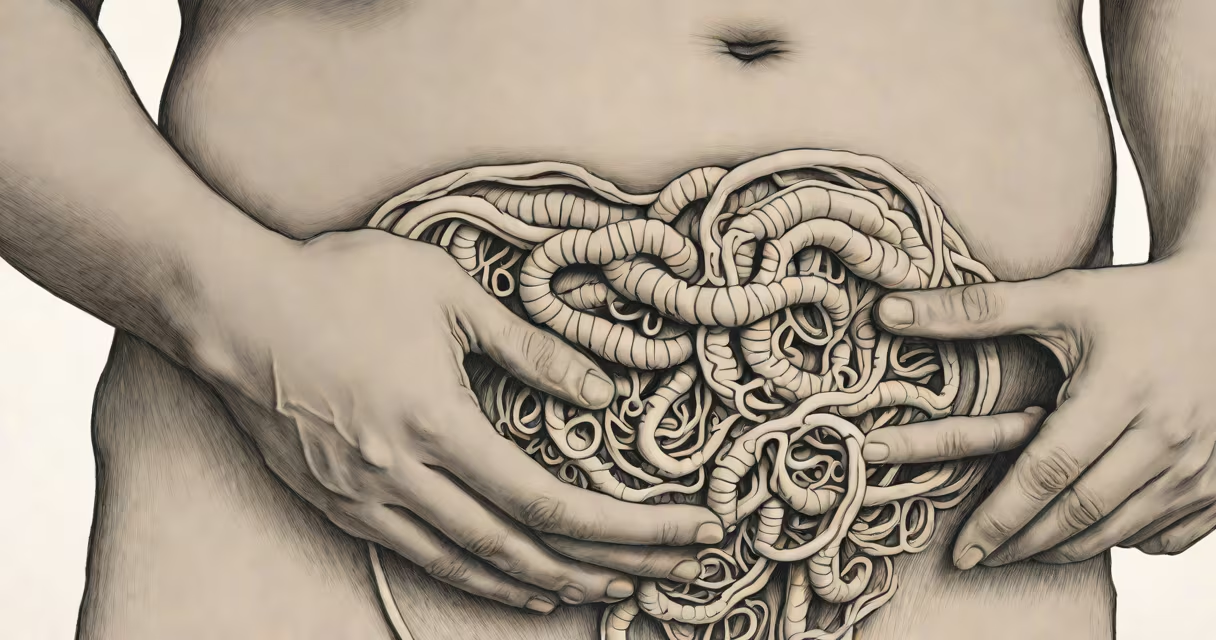
Gas blockage in intestines refers to the accumulation of gas in the gastrointestinal tract that cannot move forward or exit, leading to distension, cramping, and discomfort. It is not a mechanical obstruction but a functional issue where gas becomes trapped due to motility problems, dietary triggers, or underlying conditions.
This condition arises when gas produced during digestion or swallowed air fails to transit properly through the intestines. Unlike a complete bowel obstruction, which blocks the passage of food and stool, gas blockage involves only gaseous material. Symptoms often mimic those of constipation or irritable bowel syndrome, but they resolve faster with gas release.
According to the American College of Gastroenterology, functional gastrointestinal disorders account for over 60% of chronic abdominal pain cases, with gas-related symptoms being among the most common. Gas blockage in intestines is frequently misdiagnosed as more serious issues like intestinal obstruction or appendicitis, especially when pain is localized and intense.
Gas forms in the gut through two primary mechanisms: swallowing air (aerophagia) and bacterial fermentation of undigested carbohydrates in the colon. Normally, gas moves through the intestines via peristalsis-the rhythmic contractions of intestinal muscles. When this process slows or becomes uncoordinated, gas can pool in one segment, creating pressure and pain.
Conditions such as gastroparesis, pelvic floor dysfunction, or irritable bowel syndrome (IBS) disrupt normal motility. A 2021 study published in Neurogastroenterology & Motility found that patients with IBS had delayed gastric emptying and altered colonic transit times, increasing the risk of gas retention. In some cases, structural issues like diverticulosis or adhesions from prior surgery can create pockets where gas collects.
High-FODMAP foods-fermentable oligosaccharides, disaccharides, monosaccharides, and polyols-are a major trigger. Foods like beans, onions, garlic, apples, and wheat products feed gut bacteria, producing excess gas. A clinical trial showed that 70% of IBS patients experienced reduced bloating after adopting a low-FODMAP diet.
Gas blockage in intestines varies in severity and cause. The following table outlines key categories based on origin and mechanism:
| Type | Primary Cause | Common Triggers | Typical Duration |
|---|---|---|---|
| Functional | Altered motility, nerve signaling issues | Stress, IBS, medication side effects | Hours to days |
| Dietary | Bacterial fermentation of FODMAPs | Beans, lentils, cabbage, dairy, artificial sweeteners | 6-12 hours post-meal |
| Post-surgical | Adhesions, altered anatomy | Abdominal surgery within past 1-2 years | Days to weeks |
| Secondary to illness | Underlying disease affecting gut function | Diabetes, hypothyroidism, Parkinson's | Persistent, fluctuating |
One non-obvious distinction: gas blockage rarely causes nausea or vomiting unless it progresses to a partial mechanical obstruction. True obstruction leads to bilious emesis, inability to pass stool or gas, and worsening pain. If someone with gas blockage experiences these signs, immediate medical evaluation is required.
Gas blockage in intestines most commonly affects the small intestine and left colon. The sigmoid colon, shaped like a U, is particularly prone to trapping gas due to its anatomical configuration. This explains why many people feel pain in the lower left abdomen during episodes.
It occurs more frequently in individuals with a history of stress-related GI disorders. A 2020 survey by the National Institute of Diabetes and Digestive and Kidney Diseases (NIDDK) found that 43% of adults reporting recurrent bloating had elevated anxiety scores. Stress alters autonomic nervous system activity, reducing intestinal motility and promoting gas retention.
A personal observation: during a 48-hour trip to rural Mexico, I developed severe bloating after eating street tacos with black beans and corn. Despite no diarrhea or fever, the pain intensified after lying down. After walking for 30 minutes and using a heating pad, the gas passed with a loud release. The episode lasted less than six hours and resolved completely-typical of functional gas blockage.
Many mistake gas blockage in intestines for a bowel obstruction. The key difference lies in symptom progression. Obstruction causes progressive worsening: pain increases, vomiting begins, and bowel movements stop. Gas blockage typically improves with movement, heat, or passing gas.
Another frequent error is attributing all bloating to gas. While gas contributes to distension, fluid retention, muscle spasms, or food intolerance may play larger roles. For example, lactose intolerance causes bloating primarily through osmotic water retention in the gut, not gas production.
Some assume that flatulence frequency correlates with gas volume. In reality, high-frequency passing of small amounts of gas indicates rapid gas formation and poor absorption-common in SIBO (small intestinal bacterial overgrowth). A study in The American Journal of Gastroenterology reported that patients with SIBO passed gas an average of 12 times per day, compared to 4-6 in healthy controls.
Gas blockage in intestines usually resolves with lifestyle changes. However, persistent or severe episodes require evaluation. Red flags include:
If any of these occur, imaging such as an abdominal X-ray or CT scan may be needed to rule out obstruction, ischemia, or inflammatory conditions like Crohn's disease.
For mild cases, over-the-counter simethicone reduces gas bubbles. Dietary adjustments-such as eliminating high-FODMAP foods-can prevent recurrence. Gentle exercise, warm compresses, and positional changes (like knee-to-chest) help move trapped gas.
Gas blockage in intestines is a manageable condition rooted in physiology, not pathology. Recognizing its limits prevents unnecessary testing and treatment. When symptoms persist beyond typical resolution time, consult a gastroenterologist to assess for underlying motility or structural issues.