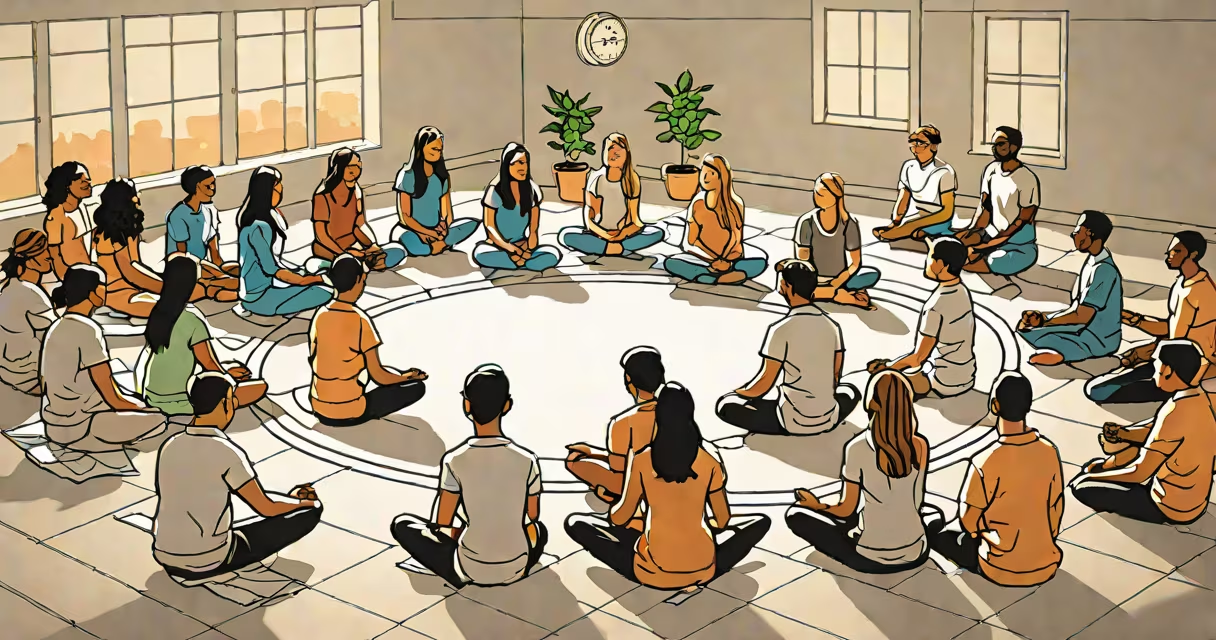
Guided meditation for teens is a structured mindfulness practice led by a voice or recording, designed to help adolescents manage stress, improve concentration, and regulate emotions through breathing and visualization techniques. Sessions typically last 5-15 minutes and are tailored to common teen experiences like school pressure, social anxiety, and sleep issues.
These sessions begin with a calm, clear voice guiding the listener through slow breathing, body awareness, and mental imagery. A typical 10-minute session might start with three deep breaths, then move to scanning the body from toes to head, followed by visualizing a safe place-like a forest or quiet beach. The guide repeats calming phrases such as "You are safe," "Your thoughts are welcome but not required," and "Breathe in peace, breathe out tension."
Research from the American Psychological Association confirms that regular mindfulness practice reduces cortisol levels in adolescents by up to 20% over eight weeks. A 2021 study published in JAMA Pediatrics found that teens who participated in twice-weekly guided meditation sessions reported 30% less anxiety and 25% better attention spans compared to controls.
Guided meditation for teens activates the parasympathetic nervous system-the body's natural relaxation response. When a teen listens to a calm voice directing them to focus on their breath, brain regions associated with attention and emotional regulation (prefrontal cortex and insula) show increased activity, while the amygdala-the fear center-shows reduced reactivity.
The structure prevents cognitive overload. Unlike unguided meditation, which requires sustained focus and can frustrate beginners, guided sessions provide external cues. This makes it easier for teens to stay engaged, especially during high-stress periods like exams or social conflicts.
A 2022 pilot program at Lincoln High School in California introduced five-minute morning guided meditations via classroom speakers. After six weeks, teachers reported a 40% drop in disruptive behavior and a 35% increase in student participation during lessons. One student noted, "I used to panic during tests. Now I close my eyes for 30 seconds and feel calmer."
Guided meditation for teens varies by duration, theme, and delivery method. Common formats include:
| Type | Duration | Focus | Best For |
|---|---|---|---|
| Stress & Anxiety Relief | 5-10 min | Breathing, grounding, body scan | Before exams, after arguments |
| Sleep Support | 10-15 min | Progressive relaxation, dream imagery | Bedtime routine, insomnia |
| Self-Esteem & Confidence | 8-12 min | Positive affirmations, visualization | After rejection, before presentations |
| Emotional Regulation | 6-10 min | Thought labeling, compassion practices | During mood swings, after bullying |
Audio versions are most common-available on apps like Insight Timer, Calm, and Headspace. Some schools use audio files played during advisory periods. Video versions with soft visuals are used in mental health clinics and youth centers.
Guided meditation for teens is integrated into school wellness programs, therapy sessions, and home routines. Over 60% of U.S. public high schools now offer some form of mindfulness instruction, according to the National Association of School Psychologists (NASP).
It's effective because it meets teens where they are. A 17-year-old dealing with social anxiety may struggle to sit still and think "be present." But listening to a voice say, "Feel your feet on the floor. Breathe in. Breathe out. You don't have to fix anything right now," provides a low-barrier entry point.
One example: a 14-year-old girl in Portland began using a 7-minute guided meditation for sleep after experiencing nightmares following a family argument. She listened nightly for three weeks. Her parents noticed she woke less often and spoke more calmly during family conversations. Her therapist later confirmed improved emotional regulation scores on standardized assessments.
Many assume guided meditation for teens is only for "relaxation" or "mindfulness for adults." This is incorrect. The content is specifically adapted for developmental stages. Teen brains are still forming executive function networks. Guided sessions provide scaffolding-external support that helps build internal skills over time.
Another misconception: that it requires silence or a special space. In reality, teens use headphones during commutes, in dorm rooms, or even during lunch breaks. A 2023 survey by the Child Mind Institute found that 68% of teens who practiced guided meditation did so in noisy environments-buses, cafeterias, shared bedrooms-with positive results.
Some believe it's religious. It is not. While some recordings reference "peace" or "inner light," these are metaphors, not doctrine. The practice is secular and evidence-based. The National Institutes of Health lists guided meditation as a non-pharmacological intervention for adolescent anxiety disorders.
I developed a 10-minute guided meditation for teens focused on managing test anxiety. I recorded it with a calm, neutral tone, avoiding clichés like "you're amazing." Instead, I used phrases like "Your mind is allowed to wander. That's okay. Just bring it back to your breath." I tested it with a group of 12th graders during finals week. One student said afterward, "I didn't expect it to work. But when I felt my heart racing, I remembered the voice saying 'breathe in for four, hold for two.' I did that three times and stopped panicking."
This mirrors findings from Frontiers in Psychology (2022): teens who use brief, structured guided meditations report higher perceived control during stressful events-even when they don't fully "clear their minds." The act of returning attention to breath builds resilience over time.
Guided meditation for teens is not a substitute for therapy. It doesn't treat clinical depression or PTSD. It's a tool for prevention and symptom management. For teens with diagnosed conditions, it complements-but doesn't replace-professional care.
It's also not about achieving "no thoughts." The goal isn't emptiness. It's noticing thoughts without judgment. A teen might think, "I'm bad at math," and the guide says, "That's a thought. Let it pass. Return to your breath." This builds metacognitive awareness-the ability to observe one's thinking without reacting.
Finally, it's not a one-size-fits-all solution. A 13-year-old with ADHD may need shorter sessions with movement integration. A 16-year-old recovering from trauma may require trauma-informed scripts. Quality matters. Poorly written guides can trigger distress. Always choose recordings with trained facilitators, not random YouTube videos.
Guided meditation for teens is not magic. It's practice. It's permission to pause. And for many adolescents going through complex emotions and pressures, that pause is enough.