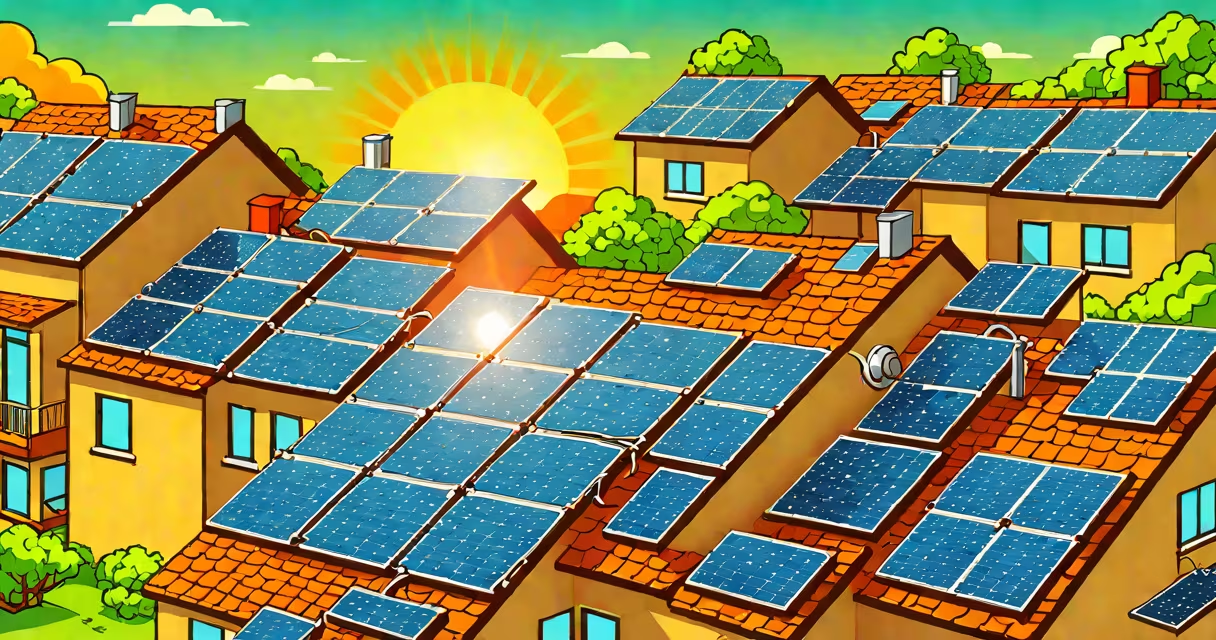
Solar power is harvested by converting sunlight into electricity through photovoltaic cells, which are semiconductor devices that generate direct current when exposed to light. This process occurs when photons from sunlight strike the cell's surface, dislodging electrons and creating an electric current.
Photovoltaic cells are the core components of solar panels. They are typically made from silicon, a material chosen for its ability to absorb light efficiently and conduct electricity. When sunlight hits the cell, it excites electrons in the silicon, causing them to flow in a specific direction. This movement forms a current that can be captured and used to power electrical devices.
The efficiency of harvesting solar power depends on several factors: the intensity of sunlight, the angle and orientation of the panels, temperature, and the quality of the materials used. A standard residential solar panel operates at around 15-22% efficiency, meaning it converts 15-22% of incoming sunlight into usable electricity.
Each photovoltaic cell consists of two layers of silicon: one doped with phosphorus (n-type) to create excess electrons, and the other doped with boron (p-type) to create electron vacancies called holes. When these layers are joined, they form a p-n junction. Sunlight provides energy that frees electrons from the n-type layer, allowing them to move toward the p-type side, creating a flow of current.
This electron movement generates direct current (DC). The DC electricity flows through wires to an inverter, which converts it into alternating current (AC)-the form used by homes and businesses. Without this conversion, most household appliances wouldn't operate.
A typical 300-watt solar panel produces about 1.2 kilowatt-hours of electricity per day under ideal conditions (four peak sun hours). Over a year, a single panel can generate approximately 430 kWh, enough to offset a portion of average home usage.
Solar power systems vary based on scale and application. The most common types are rooftop installations, ground-mounted arrays, and utility-scale solar farms.
| System Type | Typical Use | Power Output Range | Key Components |
|---|---|---|---|
| Rooftop solar | Residential and small commercial buildings | 3-10 kW | Panel range, inverter, mounting hardware, monitoring system |
| Ground-mounted | Commercial sites, farms, community projects | 10-100 kW | Fixed or tracking mounts, combiner boxes, inverters, grounding |
| Utility-scale | Grid-connected power stations | 1 MW - 500 MW | Large panel fields, centralized inverters, transformers, SCADA systems |
Tracking systems improve harvest efficiency by adjusting panel angles throughout the day to follow the sun. Single-axis trackers increase output by 15-25%, while dual-axis trackers can boost yield by up to 35% compared to fixed panels.
Solar power is deployed globally, especially in regions with high solar insolation. Countries like Germany, China, India, and the United States lead in installed capacity. In the U.S., solar accounts for over 4% of total electricity generation, with California leading in both installed systems and daily production.
Residential systems reduce reliance on grid power and lower electricity bills. A typical 6-kW system in Arizona can produce 9,000 kWh annually, saving a homeowner $1,200 per year on energy costs, according to the National Renewable Energy Laboratory (NREL).
Off-grid applications rely on solar power in remote areas without access to transmission lines. For example, solar microgrids provide electricity to villages in sub-Saharan Africa, where over 600 million people lack reliable power. These systems often include battery storage to supply power at night.
Many assume solar panels work only on sunny days. In reality, they generate electricity on cloudy days-just at reduced output. On overcast days, panels produce 10-25% of their rated capacity, depending on cloud thickness.
Another myth is that solar panels require frequent maintenance. Most systems need cleaning only once or twice a year. Rain usually clears dust, and modern panels are designed to withstand extreme weather. NREL reports that properly installed solar arrays last 25-30 years with minimal degradation.
A lesser-known fact: solar panels don't convert all sunlight into electricity. About 70-80% of incident sunlight is reflected or lost as heat. The remaining 20-30% becomes usable power. Research into multi-junction cells, which stack multiple semiconductor layers, has pushed lab efficiencies above 47%, though these remain expensive and rare in consumer systems.
Consider a 5-kW solar system installed on a suburban home in Colorado. The roof faces south at a 30-degree tilt, maximizing exposure. The system includes 14 panels, each rated at 350 watts, totaling 4,900 watts of capacity.
During peak sun hours (10 a.m.-3 p.m.), the system generates roughly 3.5 kW of power. Over a year, it produces about 7,200 kWh. This covers about 80% of the household's annual electricity use. Excess power feeds into the grid via net metering, earning credits that offset winter usage when sunlight is limited.
After installation, the homeowner uses a monitoring app to track daily output. On a clear day in June, the system produces 25 kWh-enough to run a refrigerator, lights, and a laptop for 24 hours. The entire setup cost $16,000 before federal tax credits, reducing the payback period to about 9 years.