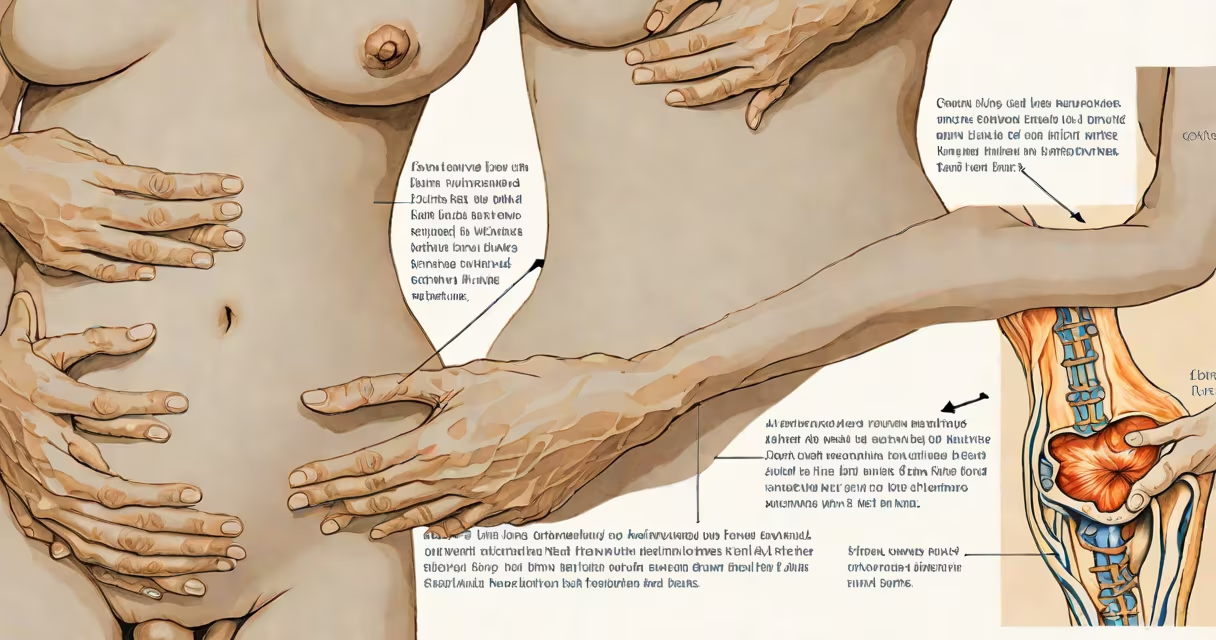
When a pregnant person is fully effaced, the cervix has thinned to less than 1 mm in thickness and is nearly flush with the birth canal. This state indicates the body is preparing for delivery, often occurring late in the third trimester or during active labor.
Cervical effacement is measured in percentages. At 0%, the cervix remains thick and closed. At 100%, it has completely thinned out. The process begins gradually, often during the last few weeks of pregnancy, and accelerates as labor approaches.
Effacement occurs alongside cervical dilation. While dilation measures how wide the cervix opens (from 0 to 10 cm), effacement describes how much the cervix has shortened. Both are tracked during labor to assess progress toward childbirth.
The cervix starts as a firm, closed muscle ring at the base of the uterus. As labor nears, hormonal changes-especially increased prostaglandins-soften and thin the tissue. This softening allows the cervix to stretch and shorten, eventually becoming paper-thin.
Effacement happens in stages. Early in pregnancy, the cervix may begin softening, but significant thinning typically begins in the final month. During contractions, pressure from the baby's head pushes against the cervix, encouraging further thinning. The process is gradual and varies between individuals.
Healthcare providers assess effacement during vaginal exams. They estimate the percentage based on fingertip feel-how much of the cervix can be compressed between the thumb and index finger. A fully effaced cervix feels like a flat disc rather than a thick tube.
Effacement is measured in percentages. The following table outlines standard stages:
| Percentage Effaced | Cervical Thickness | Typical Timing |
|---|---|---|
| 0% | Full thickness (~4 cm) | Early pregnancy or pre-labor |
| 50% | Half-thinned (~2 cm) | Weeks 36-38 |
| 100% | Nearly flat (<1 mm) | Labor onset or active phase |
Most first-time mothers see effacement begin around 38 weeks. In subsequent pregnancies, effacement may start earlier-sometimes even before 36 weeks-as the body remembers the process.
Some people report feeling a dull ache or pressure in the lower back or pelvis as effacement progresses. Others notice increased discharge or mucus plug loss. These signs are not always present, however.
Effacement does not guarantee immediate labor. A woman can be 100% effaced and still be in early labor or even days away from delivery. Effacement is a sign of readiness, not a countdown.
Many confuse effacement with dilation. Dilation refers to how open the cervix is, while effacement refers to how thin it is. A person can be 100% effaced but only 2 cm dilated-still in early labor.
Another misconception is that effacement must happen before labor begins. In reality, effacement and dilation often occur simultaneously. Some women enter labor with minimal effacement, especially if they're having their first baby.
According to the American College of Obstetricians and Gynecologists (ACOG), effacement is not a reliable predictor of labor onset. A 2021 review in Obstetrics & Gynecology found that only 38% of women who were 100% effaced went into labor within 48 hours, highlighting that effacement alone doesn't trigger delivery.
Consider a 39-week pregnant person named Maria. Her provider checks her during a prenatal visit and reports: "You're 80% effaced and 4 cm dilated." This means her cervix has thinned but hasn't reached full effacement. She's in active labor, likely progressing toward delivery.
At 40 weeks, her provider rechecks and says, "Now you're 100% effaced and 6 cm dilated." The cervix is nearly flat, and the opening is wide enough for the baby's head to pass through. This marks the transition to the second stage of labor.
Her experience shows that effacement is part of a continuous process. It doesn't happen suddenly-it builds over time, sometimes over several hours or days.
In my work as a labor and delivery nurse, I've seen patients who were 100% effaced but didn't go into active labor until hours later. One patient, a 32-year-old with a history of prolonged labor, was fully effaced at 39 weeks but remained undilated for 12 hours. Her body needed more time to coordinate contractions effectively.
This experience reinforced that effacement is a necessary step but not sufficient on its own. Labor requires both physical readiness and coordinated uterine activity.
Once fully effaced, the body focuses on dilation and descent. The baby's head moves deeper into the pelvis, applying pressure that further stretches the cervix. When dilation reaches 10 cm, the second stage of labor begins-the pushing phase.
For most people, being fully effaced means they're close to delivery. However, the timing varies. Some deliver within hours; others wait days. Factors like parity (first vs. subsequent birth), fetal position, and maternal health influence the timeline.
Providers monitor progress using the Bishop score-a tool that evaluates cervical effacement, dilation, station (baby's position), consistency, and fetal presentation. A high score suggests favorable conditions for induction or spontaneous labor.
Being fully effaced means the cervix has thinned to nearly nothing, signaling that the body is ready for birth. It's a key milestone in labor progression but not a guaranteed sign of imminent delivery. Understanding this stage helps people prepare for the next steps-pushing, delivery, and recovery.