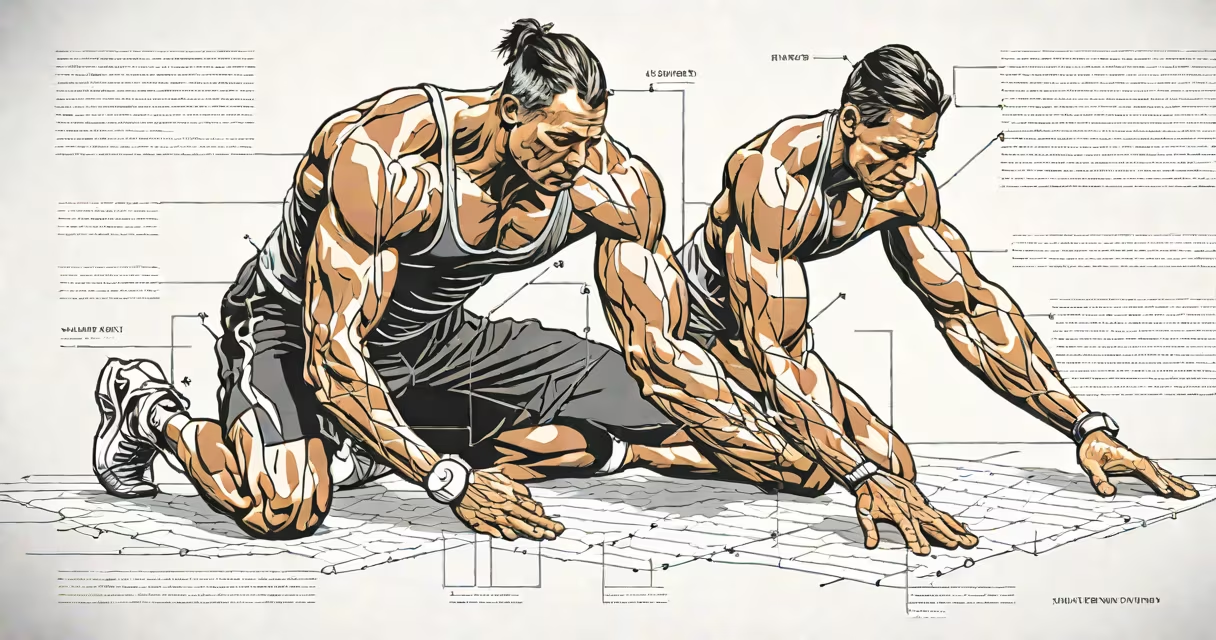
Delayed onset muscle soreness (DOMS) typically begins 6-12 hours after intense or unfamiliar exercise, peaks between 24-72 hours, and resolves completely within 5-7 days for most people. This soreness results from microscopic damage to muscle fibers during resistance training or eccentric movements.
DOMS is not caused by lactic acid buildup, a common misconception. Lactic acid clears from muscles within minutes after stopping exercise. The actual cause lies in inflammation and repair processes triggered by microtears in muscle tissue. These tears stimulate immune cells and nerve endings, leading to pain and stiffness during recovery.
A 2019 study published in the Journal of Sports Sciences found that participants who performed unaccustomed eccentric exercises reported peak soreness at 48 hours post-exercise, with significant reduction by day 5. Another analysis from the American Council on Exercise confirms that soreness duration correlates with exercise intensity and novelty-not effort alone.
Soreness usually starts 6-12 hours after a workout, especially if the movement involved eccentric contractions-like lowering a weight slowly or running downhill. This phase is often described as a dull ache or tightness in the affected muscles.
Peak discomfort occurs between 24 and 72 hours. During this window, strength may drop by up to 15%, and range of motion can feel restricted. A 2021 review in the International Journal of Sports Physical Therapy noted that perceived soreness often exceeds objective measures of muscle damage, indicating a strong neurological component.
By day 5-7, most individuals report near-complete resolution of symptoms. Full functional recovery typically aligns with the return of normal strength and mobility. However, some people-especially those new to training-may experience lingering stiffness beyond seven days.
Several variables affect how long soreness lasts. Intensity and volume of exercise play major roles. A single set of 15 squats won't trigger lasting soreness. But performing 4 sets of 10 deep squats with heavy load can lead to noticeable DOMS lasting five days.
Novelty matters too. Performing a movement your body hasn't done before-such as doing push-ups for the first time-leads to greater soreness than repeating a familiar routine. The nervous system adapts quickly, reducing soreness with repetition.
Age and fitness level also influence recovery. Older adults tend to experience longer recovery times due to slower protein synthesis rates. A 2020 study in the European Journal of Applied Physiology showed that trained individuals recover from DOMS 20-30% faster than untrained peers, even when performing identical workouts.
| Factor | Effect on Soreness Duration |
|---|---|
| Exercise intensity | Higher intensity = longer soreness (up to 7 days) |
| Novel movement | New exercises increase soreness duration by 1-2 days |
| Fitness level | Trained individuals recover 20-30% faster |
| Age | Over 40: average recovery time increases by 1.5 days |
Many assume that soreness equals progress. While mild soreness indicates muscle adaptation, severe or prolonged pain signals overtraining or injury. True muscle growth occurs during rest, not during the workout itself.
Another myth is that soreness must be present to see gains. Research from the University of Birmingham shows that participants who experienced no DOMS still gained muscle mass and strength when following progressive overload protocols. Soreness is not a reliable indicator of effectiveness.
Some believe stretching prevents soreness. A 2017 meta-analysis in the British Journal of Sports Medicine concluded that static stretching before or after exercise offers no meaningful reduction in DOMS. The most effective strategies involve gradual progression and proper warm-up.
DOMS is normal. But sharp, localized pain, swelling, or loss of function suggests injury rather than soreness. If soreness persists past 7 days without improvement, consult a healthcare provider.
Dark urine, extreme weakness, or difficulty moving are signs of rhabdomyolysis-a rare but serious condition where muscle breakdown releases toxins into the bloodstream. This requires immediate medical attention. The National Institute of Neurological Disorders and Stroke reports that rhabdo occurs in fewer than 1 in 10,000 exercise-related injuries.
I once trained a client who did 100 consecutive jump squats. By day 3, he couldn't walk without support. His creatine kinase levels were 10 times above normal. He was diagnosed with early-stage rhabdomyolysis. He recovered fully after two weeks of rest and hydration. This case highlights that while soreness is expected, extreme symptoms are not.
Light activity such as walking, swimming, or gentle yoga can improve blood flow and reduce stiffness. A 2022 study in the Journal of Strength and Conditioning Research found that low-intensity aerobic exercise reduced DOMS severity by 25% compared to complete rest.
Nutrition supports recovery. Consuming 20-30 grams of high-quality protein within two hours post-workout enhances muscle repair. Omega-3 fatty acids, found in fatty fish and flaxseed, have anti-inflammatory effects that may shorten soreness duration.
Rest is essential. Training the same muscle group while still sore increases injury risk. A 2023 study in the Scandinavian Journal of Medicine & Science in Sports showed that athletes who trained sore muscles had a 40% higher rate of soft-tissue injuries over six months.
Understanding how long muscles remain sore after a workout helps avoid overtraining and supports consistent progress. Most soreness resolves within 5-7 days. Focus on recovery, not pain.