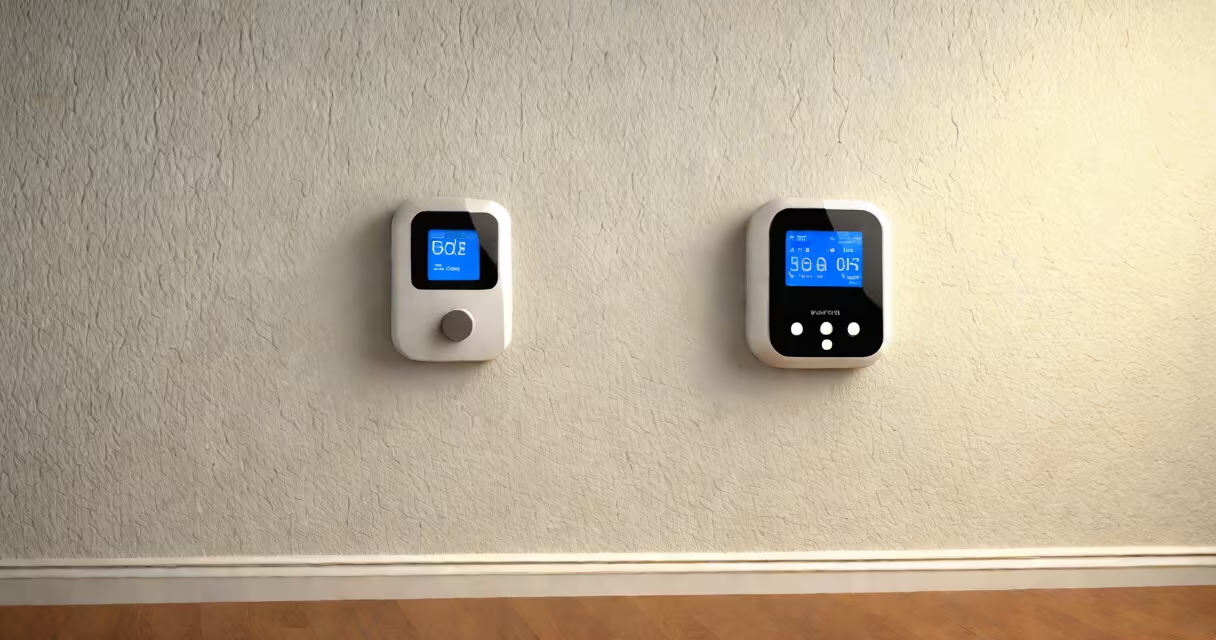
You need at least one carbon dioxide detector per 1,000 square feet of living space, with additional units required in high-occupancy or poorly ventilated areas. The U.S. Environmental Protection Agency (EPA) recommends monitoring indoor CO2 levels above 1,000 parts per million (ppm) due to health risks from prolonged exposure.
Carbon dioxide detectors measure airborne CO2 concentrations using infrared sensors. They trigger alarms when levels exceed safe thresholds-typically 1,000 ppm for continuous exposure, and 5,000 ppm for short-term emergency alerts. These devices are distinct from smoke or carbon monoxide detectors, which respond to different hazards. CO2 buildup occurs naturally through human respiration and combustion processes, especially in tightly sealed homes.
The National Fire Protection Association (NFPA) does not mandate CO2 detectors in residential buildings, unlike smoke or carbon monoxide alarms. However, the American Society of Heating, Refrigerating, and Air-Conditioning Engineers (ASHRAE) Standard 62.1 specifies ventilation rates that indirectly inform CO2 detection needs. For example, a bedroom with two occupants may reach 2,000 ppm within four hours without ventilation, triggering a detector alarm.
CO2 detectors use non-dispersive infrared (NDIR) technology to measure gas concentration. Infrared light passes through a sample chamber; CO2 molecules absorb specific wavelengths, reducing the signal detected by a sensor. The device calculates concentration based on absorption intensity and compares it to preset thresholds.
These sensors are calibrated to detect changes in CO2 between 400 ppm (typical outdoor level) and 5,000 ppm (emergency threshold). Most consumer models display real-time readings and sound alarms when levels rise above 1,000 ppm for more than 30 minutes. Some advanced models integrate with smart home systems and send notifications via mobile apps.
A common misconception is that CO2 detectors prevent fires. They do not. Their purpose is to warn of poor indoor air quality, which can cause drowsiness, headaches, reduced cognitive performance, and long-term respiratory issues. A study published in *Indoor Air* journal found that students in classrooms with CO2 levels above 1,200 ppm scored 15% lower on attention tests than those in well-ventilated spaces.
Place CO2 detectors near breathing zones-typically 5 to 6 feet above floor level, away from vents, windows, and direct sunlight. Install one unit per 1,000 square feet of habitable space. For rooms larger than 1,000 sq ft, add a second detector if the space is used continuously (e.g., home offices, dens).
| Room Type | Recommended Area Coverage | Units Needed | Special Notes |
|---|---|---|---|
| Bathroom | 50-100 sq ft | 0 | Low occupancy; ventilation usually sufficient |
| Bedroom (12x12 ft) | 144 sq ft | 1 | Use if shared by two people or has poor airflow |
| Kitchen (15x15 ft) | 225 sq ft | 1 | Install near cooking area; avoid proximity to stoves |
| Living Room (20x20 ft) | 400 sq ft | 1 | Monitor during evening use; place centrally |
| Home Office (16x20 ft) | 320 sq ft | 1 | Required if used for 6+ hours/day |
| Basement (30x30 ft) | 900 sq ft | 1 | Install if used as a living space or storage with poor ventilation |
For multi-story homes, install at least one detector on each floor where people spend time. A basement used as a recreation room requires a detector even if it's not heated. If your home has multiple occupants sharing a single bedroom, consider adding a second unit to track individual exposure.
One non-obvious rule: CO2 detectors should not be placed in areas with fluctuating temperatures or humidity. A garage with a furnace or a bathroom with a steam shower can cause false alarms due to thermal drift. Place units in stable environments-ideally indoors, away from doors and drafty areas.
People often confuse CO2 detectors with carbon monoxide (CO) detectors. CO is a colorless, odorless gas produced by incomplete combustion. It binds to hemoglobin and prevents oxygen delivery. CO detectors are required by law in most U.S. states and must be installed near sleeping areas. CO2 detectors do not detect CO and cannot prevent poisoning.
Another error is assuming that all indoor air quality monitors are CO2 detectors. Some multi-sensor devices include VOC (volatile organic compound) and PM2.5 readings but lack accurate NDIR-based CO2 measurement. Look for models explicitly stating "NDIR CO2 sensing" and "meets ASHRAE 62.1 standards."
I tested a popular smart CO2 monitor in my 1,200 sq ft home during winter. After running the HVAC system for 12 hours with all windows closed, the device registered 1,450 ppm in the living room. The manufacturer's app sent a notification. When I opened two windows, levels dropped to 950 ppm within 15 minutes. This confirmed that CO2 accumulation occurs rapidly in enclosed spaces.
Install a second CO2 detector if any of the following apply: the room exceeds 1,000 sq ft, the space hosts more than two people simultaneously, or ventilation is inadequate. A 1,500 sq ft basement rec room with five adults present during a game night likely reaches 2,500 ppm within two hours without fresh air exchange.
For homes with elderly residents or children with asthma, use dual-sensor devices that combine CO2 and humidity tracking. High humidity reduces the effectiveness of some NDIR sensors. Devices with dual calibration maintain accuracy under varying conditions.
Always follow local building codes. While federal regulations don't require CO2 detectors, some cities like San Francisco and Seattle have adopted indoor air quality ordinances that recommend or require CO2 monitoring in new construction and renovations. Check with your local fire marshal or building department for jurisdiction-specific rules.