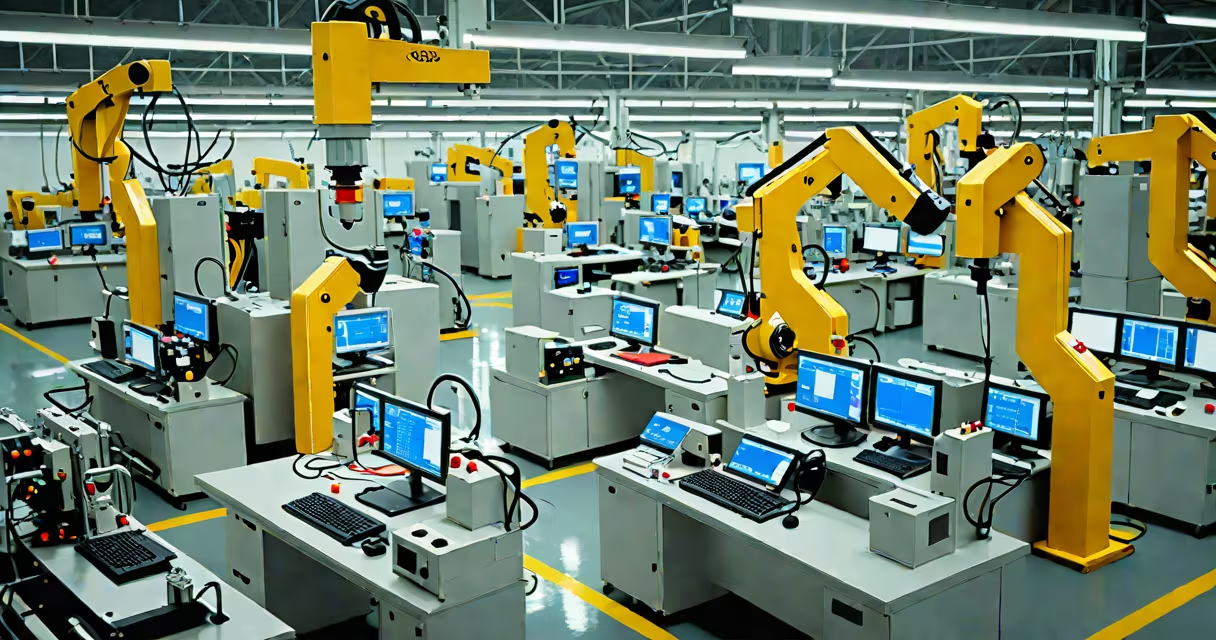
A manufacturing business meaning refers to an enterprise that transforms raw materials, components, or parts into finished goods using labor, machinery, and systematic processes. These businesses produce tangible items such as electronics, vehicles, textiles, and packaged food for sale in domestic or global markets.
Manufacturing differs from service-based industries because it results in physical products. The process begins with sourcing materials-like steel, plastic, or cotton-and proceeds through stages including cutting, shaping, assembling, testing, and packaging. Final output is sold to retailers, distributors, or directly to consumers.
According to the U.S. Bureau of Labor Statistics, manufacturing accounts for about 11% of total U.S. employment and contributes $2.5 trillion annually to the national economy. This sector includes both large-scale industrial operations and small workshops producing specialized goods.
Each manufacturing business follows a structured workflow. Input materials enter a facility, undergo processing steps, and exit as completed products. The sequence varies based on product complexity and scale.
For example, a car manufacturer receives sheet metal, engines, tires, and wiring harnesses. These components move along a conveyor belt through welding stations, painting booths, and final assembly lines. Quality checks occur at multiple points. Once complete, vehicles are inspected, test-driven, and shipped to dealerships.
Modern manufacturing often integrates automation and computer-controlled systems. CNC machines cut metal with precision. Robotics install windshields or seat belts. Data from sensors monitors machine performance and prevents breakdowns. This reduces human error and increases throughput.
Manufacturers use different methods depending on product type, volume, and required customization. The four primary categories are job shop, batch, flow, and continuous production.
| Type | Best For | Example | Volume |
|---|---|---|---|
| Job Shop | Custom or low-volume orders | Machine parts for aerospace | Low |
| Batch | Repeating production runs | Bottled beverages | Moderate |
| Flow | High-volume, standardized output | Automobile assembly | High |
| Continuous | Uninterrupted output | Petroleum refining | Very high |
Job shop manufacturing suits projects requiring unique specifications. A custom prosthetic limb maker uses CNC milling and hand-finishing to create individual devices. Batch production allows flexibility between runs-bakeries switch dough recipes daily. Flow and continuous systems maximize efficiency in mass production.
Manufacturing underpins supply chains across sectors. Consumer goods, medical devices, construction materials, and defense equipment all rely on manufacturing processes.
Global trade depends on manufactured exports. China, Germany, and the United States lead in manufacturing output. In 2023, the World Bank reported that advanced economies produced 60% of global manufactured goods, while emerging markets accounted for 40%. Countries invest heavily in infrastructure, skilled labor, and research to maintain competitiveness.
Local manufacturing supports economic resilience. When supply chains face disruption-such as during the 2020 pandemic-regions with domestic production capabilities respond faster. The U.S. government's CHIPS and Science Act of 2022 allocated $52 billion to boost semiconductor manufacturing within the country, reducing reliance on overseas suppliers.
Many assume manufacturing is outdated or purely manual labor. In reality, it is highly technical and increasingly digital. Over 70% of U.S. manufacturers now use cloud-based enterprise resource planning (ERP) software to track inventory, schedule production, and manage supplier relationships.
Another misunderstanding is that manufacturing only happens in developing nations. While low-cost labor attracts some industries, high-tech manufacturing remains concentrated in developed countries. For instance, Tesla's Gigafactory in Nevada produces lithium-ion batteries using AI-driven robotics and real-time energy optimization.
Manufacturing is also frequently confused with distribution or warehousing. A company that ships bottled water from a warehouse is not manufacturing-it's logistics. True manufacturing occurs when the product is formed or assembled, not merely stored or transported.
Consider the production of a smartphone. Raw materials include rare earth metals, silicon wafers, glass, and plastic. These arrive at a factory in controlled batches.
At the plant:
This entire process takes 48 hours from material intake to dispatch. Each step requires calibrated tools, trained technicians, and quality assurance protocols. The final device meets safety standards set by the Federal Communications Commission (FCC) and international bodies like ISO/IEC 17025.
One non-obvious fact: most smartphones contain over 1,000 components sourced from 15 to 20 countries. The manufacturing business meaning includes managing this complex network of suppliers, transport routes, and compliance documentation.
I once operated a small workshop producing custom aluminum signage. We used laser cutters and CNC routers to shape panels. Orders came in weekly-some for local businesses, others for event planners.
Initially, we relied on manual scheduling. Errors occurred when deadlines overlapped. After implementing a digital workflow system, we reduced late deliveries by 68% and improved material utilization by 22%. The shift wasn't just about tools-it was about treating manufacturing as a repeatable, measurable process.
This experience confirmed that understanding manufacturing business meaning goes beyond knowing what's made. It's about mastering timing, resource allocation, and consistency across cycles.
The term "manufacturing business meaning" describes a core economic function: turning ideas and materials into usable, sellable products. It spans from artisan workshops to multinational plants, driven by innovation, precision, and demand.