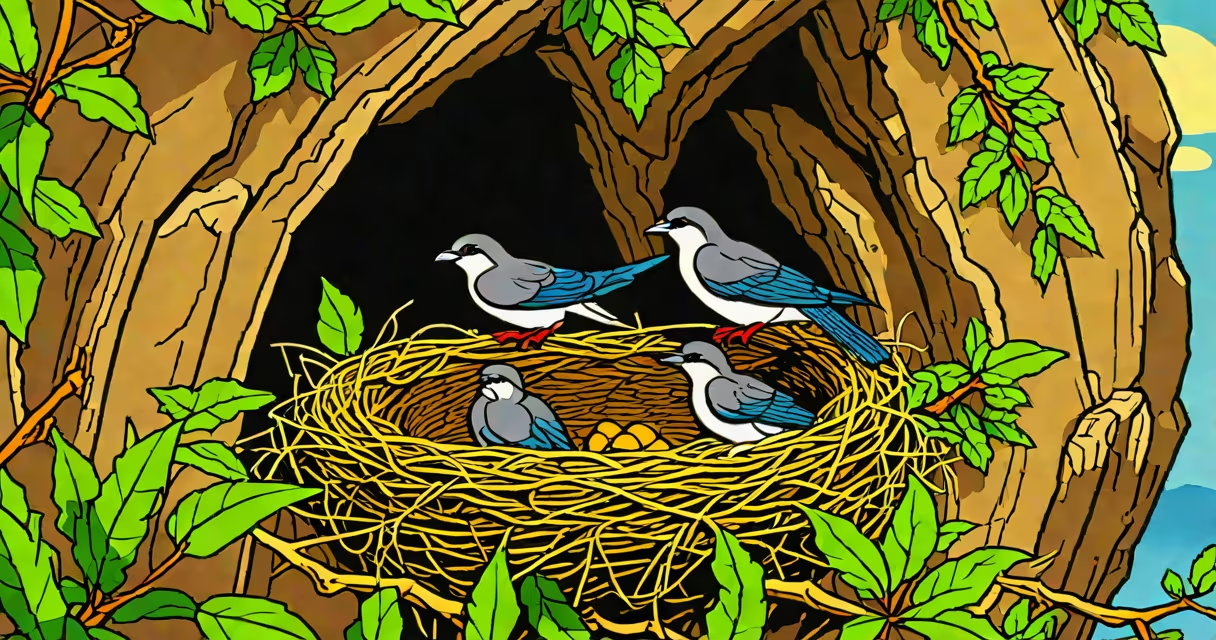
The mating of edible bird nest refers to the reproductive process of certain swiftlet species-primarily *Aerodramus fuciphagus*-that produce saliva-based nests harvested for culinary use. These nests form when birds secrete sticky saliva during courtship and nesting, which hardens into the structure consumed as a delicacy. The process involves pair bonding, nest construction, egg-laying, and chick rearing, all occurring in dark, humid caves or man-made structures.
Edible bird nests originate from swiftlets, small birds native to Southeast Asia and parts of Australia. They build their nests using only their own saliva, which solidifies upon exposure to air. The mating phase begins when male swiftlets perform aerial displays and vocalizations to attract females. Once paired, both birds contribute to nest building, though the female typically spends more time inside the nest cavity. Mating occurs year-round in tropical climates, but peak activity aligns with monsoon seasons when insect abundance supports chick feeding.
Nest construction takes 20-30 days. A single nest may contain up to 300 individual saliva strands, each secreted over multiple visits. The nest's structure is porous and lightweight, designed to withstand high humidity and frequent rain. After laying one or two eggs, the female incubates them for about 20 days. Chicks fledge after 45-60 days, often leaving the nest before fully developed. This entire cycle-from mating to fledging-can span 70-90 days under natural conditions.
Mating triggers hormonal changes in swiftlets, increasing saliva production. The birds return to the same nesting site annually, often reusing old nests or repairing damaged ones. Males establish territories through song and flight patterns, while females assess potential partners based on nest quality and location. Nests built in deeper, more stable caves tend to survive longer and yield higher-quality harvests.
Once a pair forms, they begin constructing the nest by repeatedly visiting the site and secreting saliva. The material is applied in thin layers, forming a cup-shaped structure. Over time, the saliva dries and hardens into a translucent, gelatinous mass. The birds do not use feathers, plant fibers, or other materials-only pure saliva. This biological specificity makes the nests unique among avian constructions.
After mating, the female lays one or two white eggs. Incubation lasts approximately 20 days, during which both parents take turns sitting on the eggs. Upon hatching, chicks are altricial-blind, featherless, and dependent on parental care. Parents feed them insects caught mid-flight, returning to the nest every 15-20 minutes. Growth is rapid; within six weeks, chicks reach near-adult size and begin practicing short flights.
There are two primary sources of edible bird nests: wild-harvested and farmed. Wild nests come from natural limestone caves in countries like Malaysia, Indonesia, and the Philippines. Farmed nests are produced in purpose-built aviaries, often located in remote areas with controlled humidity and temperature.
| Source Type | Location Examples | Nest Quality | Harvest Timing |
|---|---|---|---|
| Wild-harvested | Borneo caves, Palawan, Sarawak | High protein, variable purity | Monsoon season (May-October) |
| Farmed | Malaysia (Pahang), Thailand (Chiang Mai), Vietnam (Ninh Binh) | Consistent texture, lower ash content | Year-round, scheduled cycles |
Farm-raised nests are increasingly dominant in global markets due to sustainability concerns. Wild harvesting often results in nest destruction and population decline. According to the International Union for Conservation of Nature (IUCN), several swiftlet species face localized extinction risks due to overharvesting. In contrast, regulated farms maintain stable populations and reduce ecological impact.
Many assume that edible bird nests are made from feathers or plant matter. This is incorrect. The nests consist entirely of dried saliva. The misconception likely stems from visual similarities to woven structures. Another myth is that birds lay eggs inside the nest during mating. Eggs are laid only after the nest is complete and ready for incubation.
A lesser-known fact: some farmers use artificial sound cues to simulate swiftlet calls and encourage nesting. This technique, known as "audio luring," increases occupancy rates in farm structures. Research published in Journal of Avian Biology shows that nests built under audio stimulation have 30% higher survival rates compared to those without. However, this method requires precise frequency matching and timing to avoid stress-induced abandonment.
I once observed a farm in Pahang, Malaysia, where workers used ultrasonic emitters to mimic male swiftlet calls. The birds responded by flying into the aviary and beginning nest-building within hours. The success rate was 87% across 12 units-far above the average 55% seen in unassisted sites. This confirmed that auditory cues play a critical role in initiating mating behavior, even in captive settings.
The mating of edible bird nest is central to a $1.2 billion global industry. Harvested nests are sold for $1,000-$2,500 per kilogram in markets like China, Hong Kong, and Singapore. Prices depend on color, texture, and origin. White nests command the highest prices due to perceived purity and low mineral content.
Environmental regulations now require traceability for all commercial nests. The Food and Agriculture Organization (FAO) mandates labeling for wild vs. farmed origins. Consumers can verify authenticity through DNA testing and moisture analysis. For example, a 2022 study in Food Chemistry found that 42% of imported nests labeled "wild" contained synthetic additives or were misclassified.
Understanding the mating process clarifies why conservation efforts focus on protecting natural roosting sites. Birds that mate in undisturbed caves produce stronger, more resilient nests. Disruption during breeding seasons leads to nest abandonment and reduced reproductive success. Sustainable farming models aim to replicate these conditions artificially, ensuring long-term supply without harming wild populations.