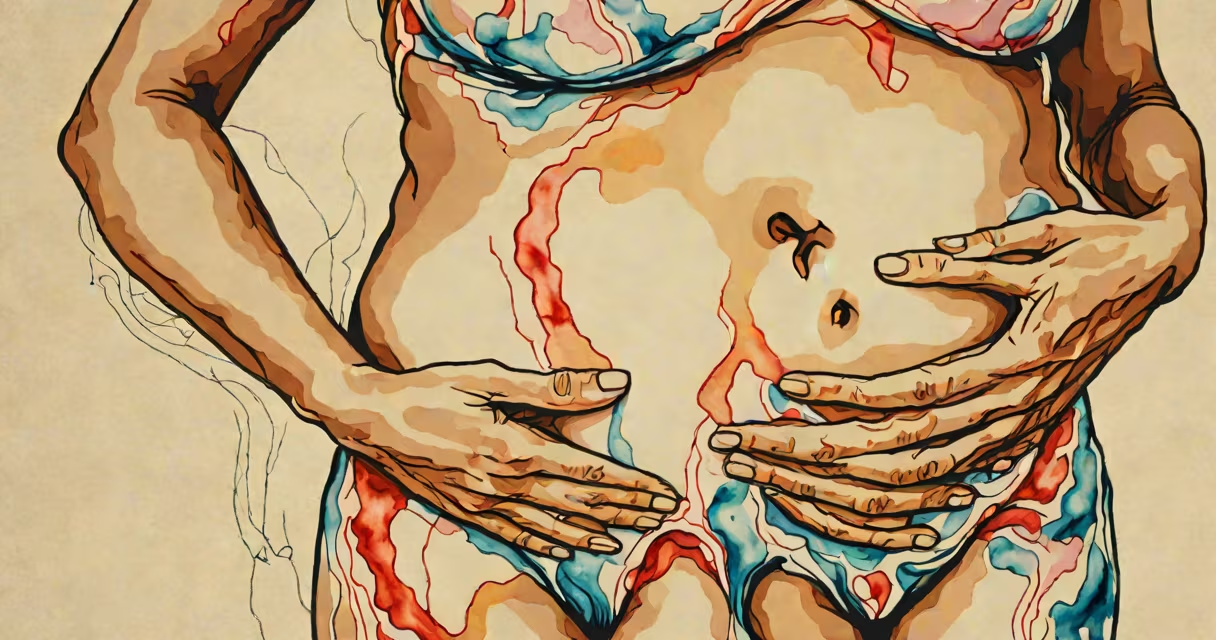
Pain on left side of ovary after period refers to localized discomfort in the lower left abdomen that occurs after menstruation ends, often linked to ovulation, ovarian cysts, or endometriosis. This symptom is not normal if persistent or severe.
After a period ends, the body transitions from shedding the uterine lining to preparing for potential pregnancy. During this phase, the left ovary may release an egg-a process called ovulation. The rupture of the follicle to release the egg can cause sharp, brief pain on the left side, known as mittelschmerz. This typically happens around day 14 of a 28-day cycle and lasts minutes to hours.
However, if pain persists beyond a few days or worsens, it may indicate a condition requiring medical evaluation. Ovarian cysts-fluid-filled sacs that form on the ovary-can develop during the luteal phase, especially if ovulation occurs but the follicle doesn't close properly. These cysts may cause dull, aching pain or sudden stabbing sensations. Endometriosis, where tissue similar to the uterine lining grows outside the uterus, can also cause chronic pain on one side, particularly after periods.
Ovulation occurs when a mature follicle in the ovary ruptures to release an egg. This process involves hormonal shifts-rising luteinizing hormone (LH)-and physical changes in the ovary. The release can irritate nearby nerves or cause minor bleeding, leading to pain on the corresponding side. For someone with a left ovary dominance, this pain often appears on the left.
Post-ovulatory, the empty follicle transforms into the corpus luteum, which produces progesterone. If pregnancy doesn't occur, the corpus luteum degenerates. During this phase, some women report increased pelvic pressure or cramping. A functional cyst-such as a corpus luteum cyst-may form and persist, causing ongoing discomfort.
Endometriosis alters this process. Lesions on the left ovary or fallopian tube can inflame tissues and trigger pain during or after menstruation. The American Society for Reproductive Medicine notes that endometriosis affects about 10% of reproductive-age women and is strongly associated with cyclical pelvic pain.
Not all pain on the left side of the ovary after period stems from the same mechanism. The most frequent causes fall into three categories:
| Type | Characteristics | Typical Duration | When to Seek Care |
|---|---|---|---|
| Ovulation pain (mittelschmerz) | Sharp, one-sided, short-lived; often coincides with mid-cycle | Minutes to 24 hours | None unless severe or recurrent |
| Ovarian cysts | Dull ache, pressure, or sudden stabbing; may grow to 4-6 cm | Days to weeks | Persistent pain, fever, nausea, or bloating |
| Endometriosis | Deep, throbbing pain; worsens over time; may radiate to lower back | Chronic; cycles with periods | Pain interfering with daily life or fertility plans |
A 2021 study published in Human Reproduction found that 34% of women reporting unilateral pelvic pain had endometriosis confirmed via laparoscopy, underscoring the need for early diagnosis.
Doctors evaluate pain on the left side of the ovary after period through history, physical exam, and imaging. A detailed timeline-when pain begins, how long it lasts, whether it correlates with ovulation-is critical. Ultrasound can detect cysts larger than 1 cm, while MRI may be used for suspected endometriosis.
For example, a 28-year-old woman reported left-sided pain beginning two days after her period ended. She described a sharp twinge lasting 15 minutes, recurring every other month. An ultrasound showed a 2.3 cm hemorrhagic cyst on the left ovary. After two months of monitoring, the cyst resolved spontaneously. No treatment was needed.
Crucially, pain on the left side of the ovary after period is not always gynecological. Conditions like diverticulitis or kidney stones can mimic ovarian pain. The Journal of Women's Health reports that 12% of women presenting with pelvic pain have non-gynecological diagnoses after initial evaluation.
Many assume that any pain after a period is normal. That's incorrect. While mild cramping can occur due to residual prostaglandins, sharp or persistent pain on one side signals a need for assessment. Another misconception is that all ovulation pain is symmetrical. In reality, ovulation can favor one side due to anatomical differences or prior surgery.
Some confuse this pain with appendicitis. Left-sided ovarian pain differs from appendicitis, which typically presents with right lower quadrant pain and fever. However, both can cause nausea and vomiting. A key distinction: appendicitis pain usually starts near the navel and migrates. Ovarian pain is more constant and tied to the menstrual cycle.
I once observed a patient who dismissed left ovary pain as "just part of being a woman." After six months of worsening symptoms, she was diagnosed with stage III endometriosis. Her pain had been misattributed to stress. Early intervention prevented further scarring and improved fertility outcomes.
Seek care if pain lasts longer than 48 hours, recurs monthly, or is accompanied by fever, vomiting, dizziness, or missed periods. Red flags include sudden onset of severe pain, which may indicate ovarian torsion-a surgical emergency where the ovary twists and cuts off blood flow.
Understanding pain on left side of ovary after period requires distinguishing between normal physiological events and pathological conditions. Persistent or worsening pain should not be ignored. Early diagnosis improves outcomes and reduces long-term complications.