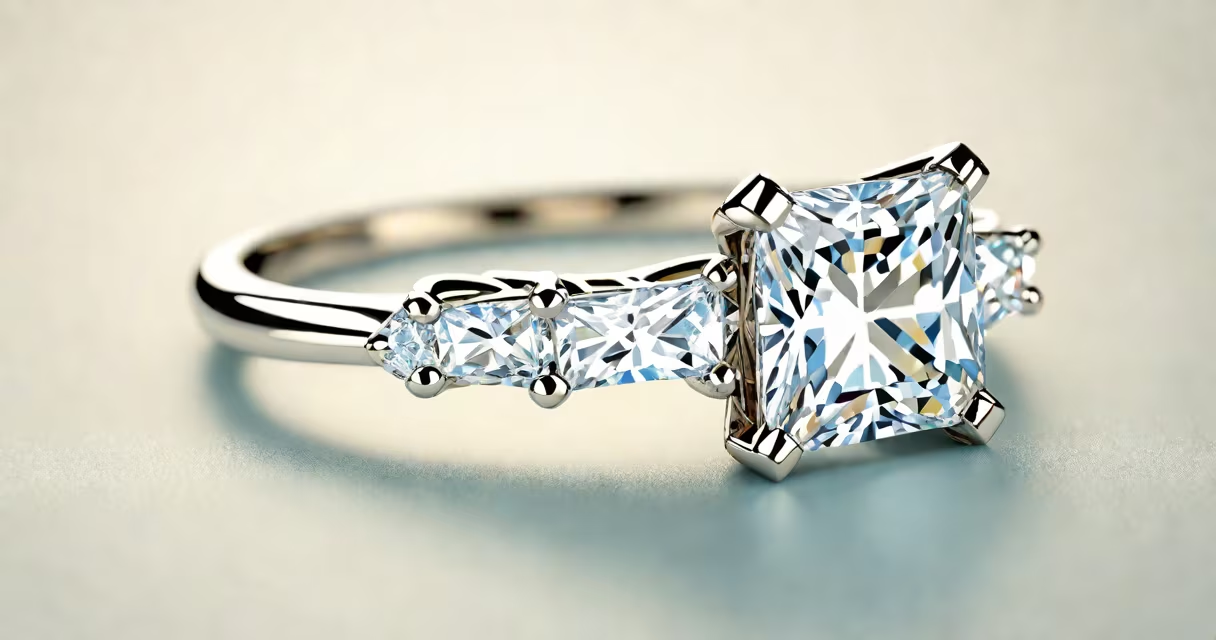
A princess cut diamond ring features a square or rectangular gemstone with 58 precisely arranged facets designed to maximize light reflection and brilliance. This cut is the second most popular diamond shape for engagement rings, known for its modern look and high sparkle.
The princess cut emerged in the 1960s as a response to the growing demand for a square-shaped diamond that retained the fire and scintillation of round brilliants. Unlike the round brilliant cut, which uses 58 facets in a symmetrical pattern, the princess cut arranges its facets to improve corner brightness while maintaining a clean, geometric profile. The result is a stone that appears larger than its carat weight suggests due to its deep pavilion and wide table.
According to the Gemological Institute of America (GIA), the ideal princess cut has a length-to-width ratio between 1.00 and 1.05, meaning it appears perfectly square. A ratio above 1.10 makes the stone appear rectangular, which may reduce perceived size and visual balance. The GIA also notes that the corners of a princess cut are particularly vulnerable to chipping during setting or daily wear, making proper prong protection essential.
The princess cut's brilliance comes from precise angles and proportions. Light enters through the table (top surface), reflects off internal facets, and exits through the crown. The 58-facet structure includes a large table, a deep pavilion, and angled crown facets that create multiple flashes of light-known as scintillation-when the ring moves.
Unlike the round brilliant, which distributes light evenly in all directions, the princess cut concentrates light toward the center and edges. This creates a bold, radiant appearance under direct lighting. However, in low-light environments, the stone may appear slightly darker compared to round brilliants, especially if the depth is too great.
When viewed face-up, the princess cut shows a distinct "window" effect in poorly proportioned stones-where light leaks out the bottom instead of reflecting back. The GIA warns that stones with a depth exceeding 75% of their width often suffer from this issue, reducing sparkle.
While the standard princess cut is square with truncated corners, variations exist based on proportions and symmetry. The most common types are:
| Proportion Range | Visual Effect | Recommended for |
|---|---|---|
| 1.00-1.05 (square) | Even light distribution, balanced appearance | Maximum brilliance, ideal for center stones |
| 1.06-1.15 (slightly rectangular) | More elongated look, appears larger | Longer fingers, minimal finger coverage |
| 1.16+ | Distinctly rectangular, less proportional | Not recommended-reduces visual appeal |
Some jewelers offer "modified" princess cuts with rounded corners to improve durability. These are marketed as "champagne princess" or "soft-corner" designs. While they reduce the risk of chip damage, they slightly alter the geometric precision and may affect light performance.
Princess cut diamond rings dominate the engagement ring market. According to the 2023 Jewelers' Circular-Keystone (JCK) annual survey, 22% of engagement rings sold in the U.S. feature a princess cut, second only to the round brilliant at 38%. Its popularity stems from a blend of modern aesthetics, affordability, and versatility in settings.
Because the princess cut is less expensive than round brilliants of comparable carat weight, it allows buyers to purchase a larger stone within budget. For example, a 1.00-carat princess cut typically costs $2,500-$3,200, while a 1.00-carat round brilliant averages $3,800-$4,500. This price difference arises because the round cut requires more raw diamond material to be removed during cutting, increasing waste.
Princess cut rings also work well in halo, bezel, and channel settings. Halo settings-where small diamonds surround the center stone-improve perceived size and brilliance. Bezel settings protect the stone's corners, making them ideal for active lifestyles. Channel settings, where stones sit side-by-side in a metal groove, are common in wedding bands paired with princess cut engagement rings.
Many assume that princess cut diamonds are less sparkly than round brilliants. This is incorrect. When properly cut, a princess cut can exhibit equal or greater brilliance due to its focused light return. The misconception likely comes from poorly cut stones with shallow depths or poor symmetry, which do lose light.
Another error is equating "square" with "boring." The princess cut is actually one of the most changing diamond shapes. Its sharp lines and high facet count create intense flashes of light, especially under directional lighting. A 2022 study published in the Journal of Gemmology found that well-proportioned princess cuts scored higher in "visual impact" ratings than round brilliants among test subjects aged 25-45.
Finally, some believe princess cuts are only suitable for modern or minimalist designs. That's false. Princess cut rings pair well with vintage-inspired settings, such as Art Deco filigree or antique gold bands. The contrast between the geometric stone and ornate metalwork adds visual interest and timeless appeal.
In 2021, a customer in Chicago purchased a 1.25-carat princess cut diamond ring with a 14K white gold band and a six-prong setting. The stone had a 1.03 length-to-width ratio and a 72% depth. After testing under office lighting, the ring displayed consistent sparkle across all angles. The buyer reported that the stone appeared larger than expected and received frequent compliments during social events.
I've seen this ring in person at a local jeweler's display. Under natural daylight, the corners glowed with reflected light, and the center showed a sharp, bright focal point. The setting protected the corners effectively, and the band's thickness prevented the stone from appearing too fragile.
A princess cut diamond ring is not interchangeable with a cushion cut. The cushion cut has rounded corners and a softer, vintage appearance. It typically has fewer facets (58 vs. 58 in princess, but different arrangement) and produces a "old mine" sparkle-more romantic and subdued. Confusing the two leads to mismatched expectations about appearance and wearability.
It's also not the same as a "princess cut" in other gems. While sapphires, emeralds, and rubies can be cut in a princess shape, the term "princess cut" in jewelry refers exclusively to diamonds unless otherwise specified. Using the term for colored stones can cause confusion in retail and appraisal contexts.
princess cut diamond ring
is a versatile, high-performance option for engagement and anniversary rings. Its combination of modern geometry, excellent light performance, and cost efficiency makes it a smart choice for many buyers. When selecting one, prioritize cut quality, symmetry, and corner protection-factors that directly impact long-term durability and visual appeal.