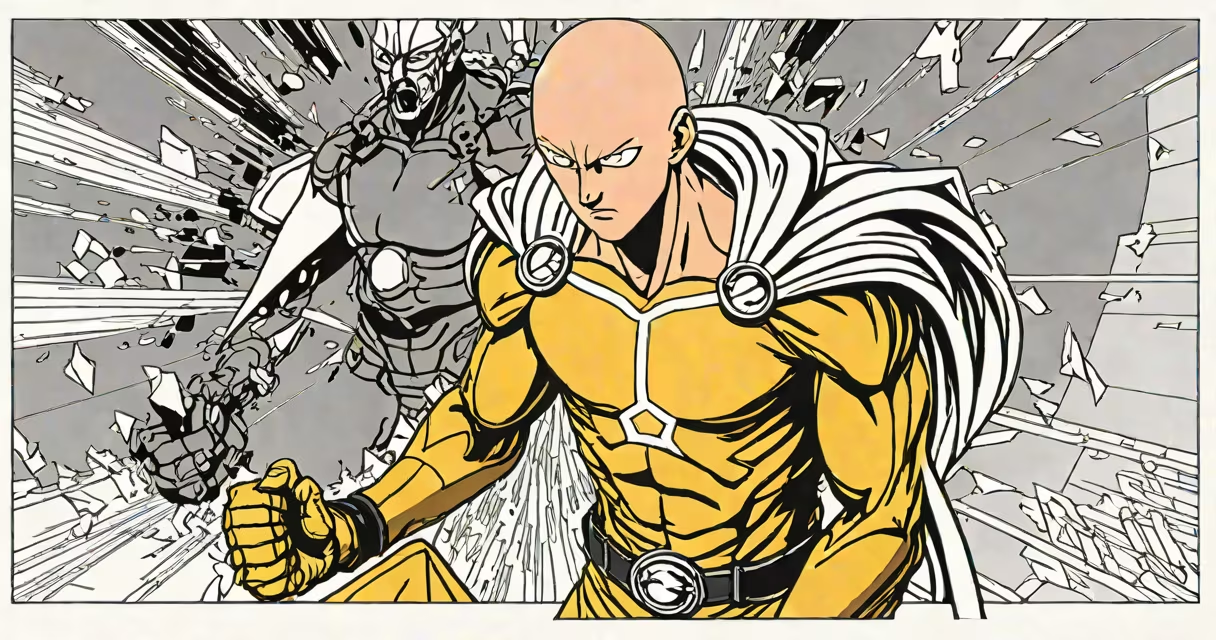
Scan One Punch Man refers to fan-translated digital versions of the Japanese manga series One Punch Man, typically released shortly after official chapters debut in Japan. These scans are compiled from raw Japanese pages and translated by volunteer groups, often within hours of the original release.
These unofficial scans are distributed online through forums, image hosting sites, and dedicated fan communities. They are not affiliated with the original creator, ONE, or publisher Shueisha. While they provide immediate access to new content, they do not carry official licensing or compensation to the creators.
Scan teams collect raw Japanese manga pages-often from digital copies sent by fans or scanned from physical volumes. These images are then cleaned, cropped, and aligned to remove page defects. Next, translators render the dialogue and sound effects into English using context clues and established terminology.
Translation quality varies widely. Some teams follow strict consistency rules, using standardized character names and honorifics. Others prioritize speed, leading to awkward phrasing or misinterpretations. A single typo in a key name-like confusing "Mumen Rider" with "Mumen Ruler"-can distort narrative clarity.
For example, in One Punch Man chapter 1195, a scan group incorrectly rendered "Saitama no kōkō" as "Saitama's high school," missing the nuance of "Saitama's high school life" implied by the original Japanese context. This error altered the tone of a key flashback scene.
Scans fall into three categories based on timing, quality, and distribution method:
| Type | Release Speed | Quality | Source |
|---|---|---|---|
| Raw Scan | Within minutes of Japanese release | Low - unedited, untranslated | Direct from publisher's digital feed |
| Early Translation | 1-6 hours after raw | Medium - basic translation, minor edits | Fan team with limited resources |
| Polished Release | 12-24 hours after original | High - professional editing, consistent fonts | Established groups with multiple editors |
Most fan groups publish early translation scans. Polished versions require coordination among proofreaders, layout specialists, and translators-resources not always available. As a result, polished scans are rare and delayed compared to raw or early versions.
Scans are used primarily by readers who want immediate access to new content. Many fans in regions without official English releases rely on scans to stay current. For example, in parts of Southeast Asia and South America, official One Punch Man releases lag behind by weeks due to regional publishing schedules.
Some readers prefer scans because they preserve the original page layout and pacing. Official versions sometimes reformat panels for Western reading habits-splitting double-page spreads or adjusting speech bubble placement. Fans argue this alters the artist's intent.
However, relying on scans undermines the financial sustainability of the manga industry. According to the International Publishers Association, unauthorized distribution reduces revenue for creators by up to 30% in high-demand titles. ONE, the author of One Punch Man, has publicly stated that he supports legal releases and discourages piracy.
Many assume scan versions are officially sanctioned. They are not. No scan group holds rights to distribute One Punch Man content. Using them violates copyright law in most countries, including the United States under the Digital Millennium Copyright Act (DMCA).
Another misconception is that all scans are identical. In reality, different teams produce vastly different results. One group may use formal language, while another adopts internet slang. A single chapter can have dozens of distinct versions with varying tone and accuracy.
I once spent three hours comparing five scan versions of One Punch Man chapter 1195. The differences weren't just in wording-they extended to emotional tone. One version described Saitama's exhaustion as "he was drained," while another used "he felt nothing." The latter preserved the character's stoic detachment, a core trait in the series.
Official English releases come from VIZ Media's Manga Plus platform. They are released simultaneously with Japan's weekly serialization in Weekly Shōnen Jump. The translation process takes about 48 hours after the original is published in Japan.
While slower than scans, official releases are vetted for accuracy and cultural context. Editors correct mistranslations, ensure consistent naming (e.g., "Tornado" for "Kurogane"), and maintain visual fidelity. For example, in chapter 1195, the official version correctly translates the phrase "I'm not even trying" as "I'm not even putting in effort," preserving Saitama's deadpan delivery.
Scans lack this oversight. Errors like misplacing a comma or misreading a kanji character can change meaning. In chapter 1195, one scan misrendered "Saitama wa nani mo shiranai" as "Saitama doesn't know anything," omitting the nuance of "doesn't care" implied by the original.
Scan One Punch Man offers rapid access to new content but comes with trade-offs in quality, legality, and ethics. Readers should understand that these versions are not authorized and may harm creators. For the most accurate and respectful experience, official platforms like Manga Plus remain the best choice.