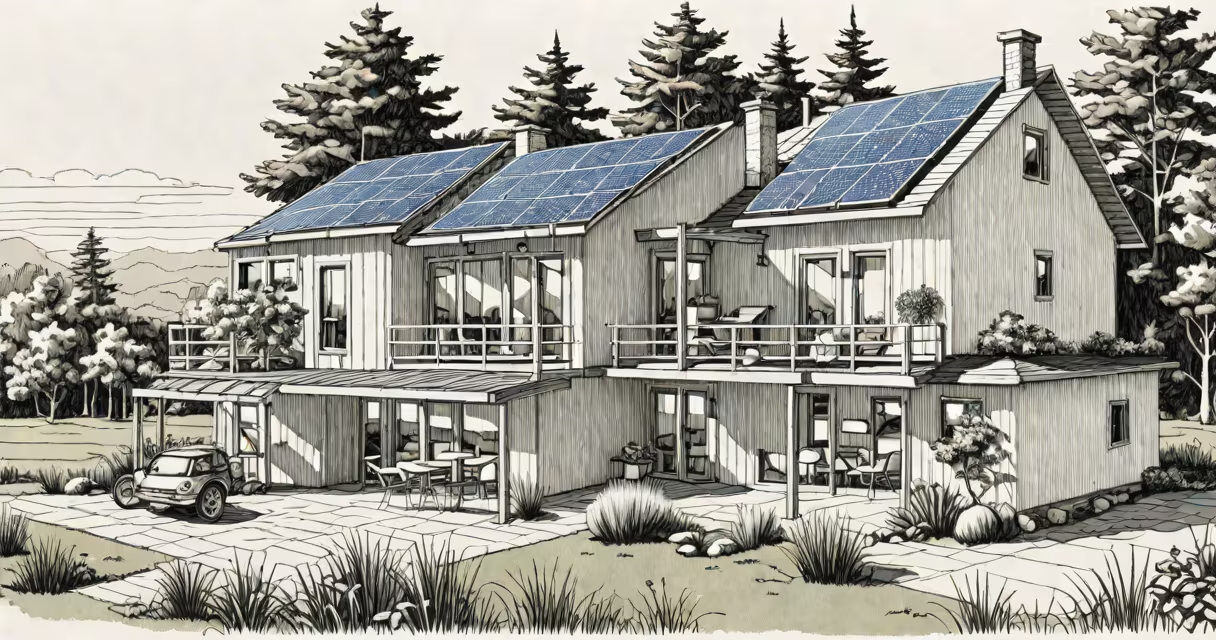
A self sustainable definition describes a system, individual, or community that maintains its function over time using only available local resources, without depleting ecosystems or relying on external inputs beyond what can be replenished.
Self sustainability means meeting basic needs-food, water, energy, shelter-through closed-loop processes that regenerate resources. This is not about isolation, but about resilience. A household growing its own food, capturing rainwater, and generating power from solar panels operates under a self sustainable model. The goal is long-term viability without strain on natural systems.
According to the United Nations' Brundtland Commission report (1987), sustainability requires balancing economic development, environmental protection, and social well-being. Self sustainability extends this principle to individual or localized action. It's not just about reducing harm-it's about creating systems that endure.
At its core, self sustainability relies on closed-loop cycles. Inputs are minimized, outputs are reused, and waste becomes a resource. For example, kitchen scraps feed a compost bin, which fertilizes garden soil. Greywater from washing dishes is filtered and used to irrigate plants. Solar panels generate electricity for lighting and cooking.
These systems depend on predictable inputs-sunlight, rainfall, human labor-and output management. Energy use must match generation. Water consumption must stay below capture capacity. Food production must exceed consumption to allow for seed saving and surplus storage.
One real-world example is the Eco-Village at Findhorn, Scotland. Residents live in low-impact homes powered by wind and solar energy. They grow 70% of their food on-site using permaculture methods. Waste is composted or recycled. The community runs on shared decision-making and mutual support. Over 40 years, they've maintained energy neutrality and reduced reliance on municipal services.
Self sustainability varies by scale and focus. The most common categories are:
| Type | Scope | Key Features | Example |
|---|---|---|---|
| Personal | Individual or family | Homegrown food, rainwater harvesting, solar power | Urban homesteader in Portland growing vegetables on a rooftop |
| Community | Neighborhood or village | Shared tools, collective farming, decentralized energy grids | Transition Town in Totnes, UK, with local currency and repair cafes |
| Industrial | Factory or farm | Waste-to-energy conversion, closed-loop water systems | Zero-waste brewery in Berlin using spent grain for animal feed |
Each type integrates renewable energy, material reuse, and local governance. Personal systems prioritize autonomy. Community systems emphasize cooperation. Industrial models focus on efficiency and scalability.
Many confuse self sustainability with self-sufficiency. While related, they differ in intent. Self-sufficiency means doing everything independently-even if it harms the environment. Self sustainability prioritizes ecological balance over independence.
For example, a person who grows all their own food but uses chemical pesticides and drains groundwater is self-sufficient-but not self sustainable. Their actions degrade soil health and deplete aquifers. True self sustainability requires regenerative practices.
Another misunderstanding is that self sustainability demands extreme lifestyle changes. Not true. You don't need to live off-grid to be self sustainable. A city dweller who uses public transit, buys from local farmers, recycles all waste, and installs a small solar panel on their apartment roof contributes to self sustainability.
Even small shifts reduce dependency. The U.S. Environmental Protection Agency notes that households adopting basic recycling and energy conservation measures reduce their carbon footprint by 20-30% annually. That's measurable progress toward self sustainability.
Consider a couple in rural Vermont who moved to a 1-acre property in 2018. They built a passive-solar home using reclaimed wood and straw bale insulation. They installed 6 kW of rooftop solar panels and a 2,000-gallon rainwater tank. They planted 12 fruit trees, 30 vegetable beds, and raised chickens for eggs.
By year three, they produced 85% of their food. They used compost from kitchen scraps and chicken manure to enrich soil. Greywater from showers went to a constructed wetland before being released into a nearby stream. All trash was sorted: paper and glass to a recycling center, plastic to a local drop-off, organic waste to compost.
They sold excess produce at a weekly farmers market. Their annual energy bill dropped to $0. They used a single electric vehicle charged by solar power. Over five years, their land improved in biodiversity-native pollinators returned, soil carbon increased by 18%, and water retention rose.
Self sustainability is not synonymous with poverty or deprivation. It's not about rejecting modern tools. It's about choosing tools that align with long-term resilience. A solar-powered refrigerator is more self sustainable than a gas-powered one, even if both serve the same purpose.
It's also not about perfection. No system lasts forever. But self sustainable systems are designed to adapt. When a storm damages solar panels, repairs are made using spare parts stored locally. When a crop fails, seeds are rotated or alternative varieties are tried.
I built a similar setup in my backyard in 2020. I started with a 100-square-foot garden and a 50-gallon rain barrel. After two seasons, I added a small greenhouse and a worm compost bin. By year four, I grew enough tomatoes, beans, and kale to last through winter. I didn't eliminate store-bought items entirely-but I cut them by 60%. That's self sustainability in motion.
The self sustainable definition centers on enduring balance. It's not a destination. It's a continuous practice of adjusting behavior to fit planetary limits. Whether applied to a home, a business, or a neighborhood, it demands awareness, planning, and care.
Understanding this concept helps clarify choices-from buying a reusable bottle to supporting local farms. It's not about doing everything perfectly. It's about reducing harm and building resilience, one step at a time.