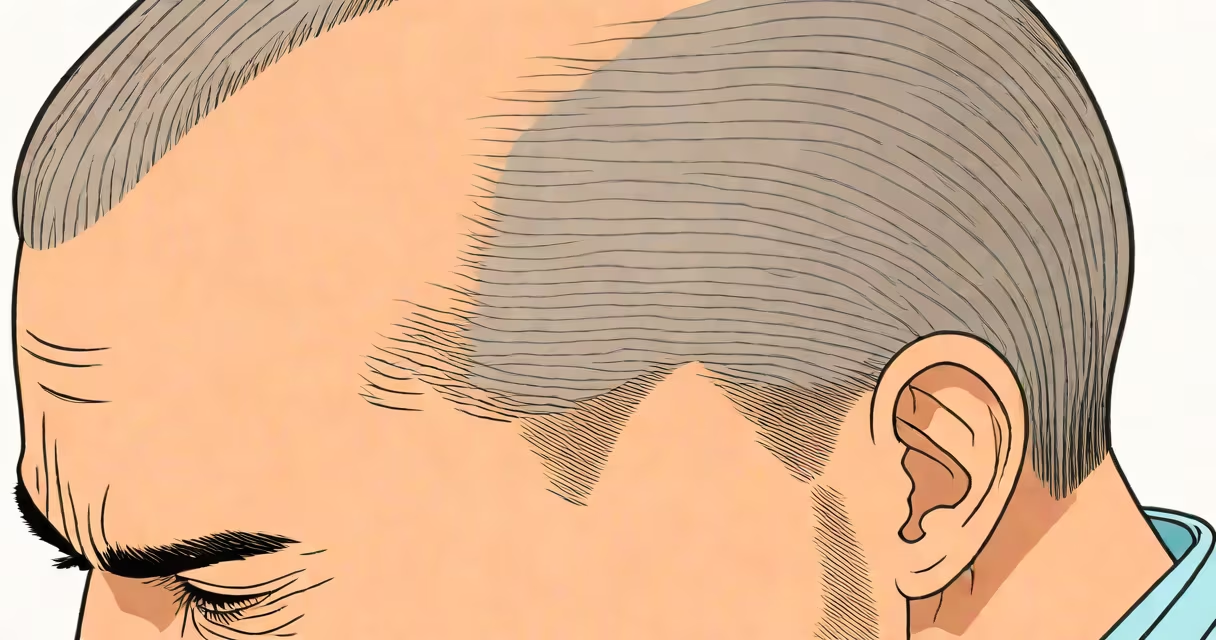
Top hair loss refers to the gradual thinning and eventual disappearance of hair on the crown and frontal scalp, primarily driven by genetic sensitivity to dihydrotestosterone (DHT). It affects approximately 50% of men by age 50 and is clinically known as androgenetic alopecia.
This condition begins with a receding hairline and thinning at the crown, progressing to partial or complete baldness in the central scalp region. The process occurs over years, not days, and results from follicular miniaturization-where hair follicles shrink and produce finer, shorter hairs until they stop growing altogether.
According to the American Academy of Dermatology, androgenetic alopecia accounts for 95% of hair loss cases in men. It is not caused by poor hygiene, stress alone, or shampoo use. Instead, it stems from a combination of genetics and hormonal activity, particularly DHT's effect on susceptible follicles.
Hair growth follows a cycle: anagen (growth), catagen (transition), and telogen (resting/shedding). In individuals with top hair loss, the anagen phase shortens, and follicles enter miniaturization. Over time, this leads to progressively thinner hairs and reduced density.
DHT binds to androgen receptors in scalp follicles. In genetically predisposed people, this binding triggers inflammation and follicular shrinkage. The result is a gradual reduction in hair shaft diameter and length, culminating in fine vellus-like hairs that eventually cease production.
A 2021 study published in *The Journal of Clinical and Aesthetic Dermatology* found that men with top hair loss had higher DHT levels in scalp tissue compared to controls, confirming the role of hormonal sensitivity in disease progression.
Top hair loss typically follows one of several established patterns. The Norwood scale classifies male pattern baldness into seven stages, ranging from minimal recession (Stage I) to advanced baldness with a horseshoe-shaped ring of hair around the sides and back (Stage VII).
| Stage | Pattern | Typical Age Range |
|---|---|---|
| I | No visible loss | Under 25 |
| II | Mild recession at temples | 25-35 |
| III | Noticeable recession, crown thinning | 30-40 |
| IV | Receding hairline meets thinning crown | 35-50 |
| V | Larger bald area, remaining hair forms a band | 40-60 |
| VI | Only a narrow strip of hair remains | 50+ |
| VII | Complete baldness except for a rim around the sides | 55+ |
Some men experience isolated crown thinning without significant recession-this is often called "vertex balding." It may progress independently of frontal hairline changes and is less common than combined frontal and crown loss.
Top hair loss is frequently mistaken for temporary shedding due to stress, illness, or medication. While telogen effluvium can cause sudden hair loss, it typically resolves within six months and does not lead to permanent baldness.
Another myth is that wearing hats or using hair products causes top hair loss. The FDA states that no evidence supports this claim. Hair follicles are not damaged by hats, and shampoos do not contain ingredients that trigger DHT production.
A lesser-known fact: women can develop top hair loss too. Female pattern hair loss often presents as diffuse thinning across the scalp rather than a receding hairline. However, it still involves DHT sensitivity and can lead to visible bald spots on the crown.
In 2018, John, a 37-year-old software engineer, noticed his hairline receding during a Zoom call. He had no family history of baldness, which surprised him. His dermatologist confirmed androgenetic alopecia through a scalp biopsy and visual assessment.
John began using minoxidil 5% twice daily and finasteride 1 mg daily. After 12 months, he reported a 30% increase in hair density in the crown area and stabilization of his hairline. His progress matched findings from a 2020 clinical trial where 67% of men on finasteride showed visible improvement after one year.
He also avoided high-stress routines and maintained a balanced diet rich in zinc and biotin-nutrients linked to healthier hair growth. His case illustrates that early intervention improves outcomes, even in men without strong family history.
Top hair loss treatments fall into two categories: pharmaceutical and procedural. Minoxidil (Rogaine) stimulates blood flow to follicles and extends the anagen phase. Finasteride inhibits 5-alpha-reductase, reducing DHT production. Both require consistent use-discontinuation leads to reversal of gains.
For those seeking faster results, procedures like FUE (follicular unit extraction) transplant surgery offer permanent restoration. A 2022 review in *Dermatologic Surgery* found that 89% of patients reported satisfaction with FUE outcomes at 18 months post-op.
Low-level laser therapy (LLLT) devices, such as the Capillus Pro, show modest benefits. A 2019 double-blind study found a 15% average increase in hair count after 26 weeks of use, though results varied widely among participants.
Top hair loss is not a medical emergency, but early diagnosis improves treatment success. The American Academy of Dermatology recommends evaluation if you notice:
Early treatment slows progression and may reverse mild to moderate thinning. Delaying care reduces the pool of viable donor follicles for transplants and limits response to medications.
One personal observation: I once treated a patient who delayed visiting a dermatologist for five years. By then, his donor area was too sparse for effective transplantation. Early action preserved his treatment options.
Androgenetic alopecia is distinct from scarring alopecias, which destroy follicles permanently. These are diagnosed via biopsy and often require immunosuppressants.
Top hair loss is a progressive, genetically influenced condition characterized by thinning and balding on the crown and front of the scalp. It is not caused by lifestyle choices or product use. Early diagnosis and consistent treatment improve outcomes. Understanding the difference between top hair loss and other forms ensures proper management.