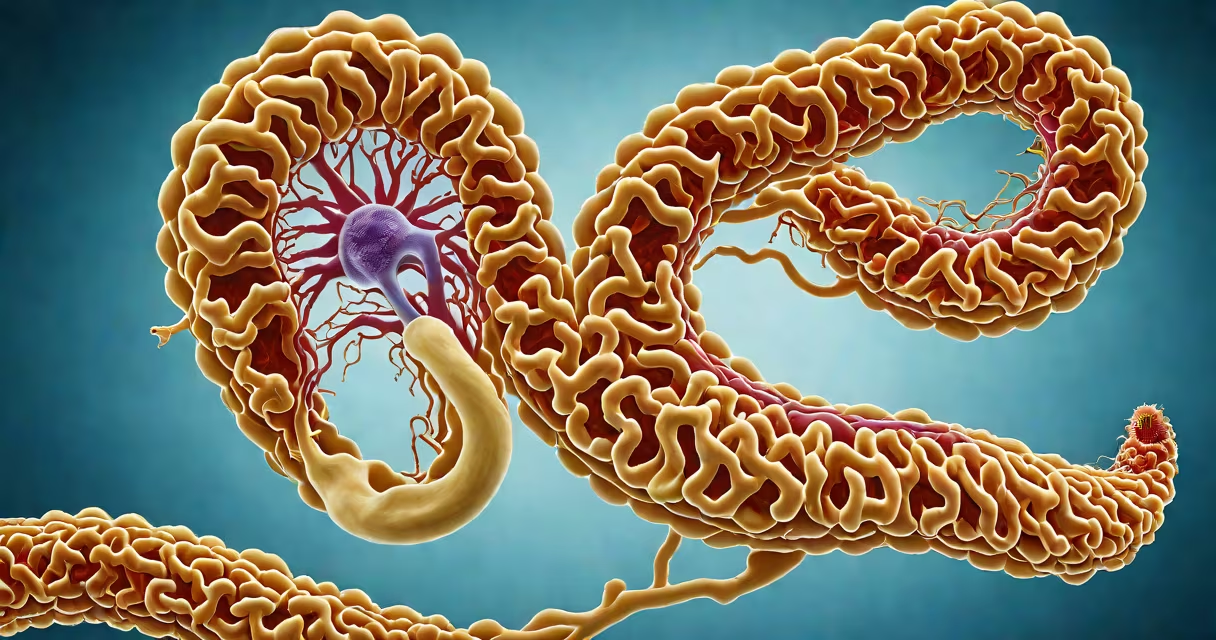
An enlarged colon occurs when the large intestine becomes abnormally swollen or dilated due to underlying medical conditions such as bowel obstruction, severe inflammation, or chronic infections. This condition can cause significant abdominal pain, bloating, and changes in bowel habits.
The colon, also known as the large intestine, is responsible for absorbing water and forming stool. When it swells beyond normal size-typically exceeding 6 cm in diameter during imaging-it indicates a physiological disturbance. This enlargement is not a diagnosis itself but a sign of an underlying issue requiring medical evaluation.
Common causes include mechanical blockage from tumors or strictures, inflammatory diseases like ulcerative colitis or Crohn's disease, and infectious processes such as Clostridioides difficile infection. In rare cases, it may result from toxic megacolon, a life-threatening complication of severe colitis.
When the colon loses its ability to contract effectively or when contents cannot pass through, pressure builds inside the intestinal lumen. This leads to dilation. The process begins with impaired motility-the coordinated muscle contractions that move waste through the digestive tract-or physical obstruction.
For example, a tumor in the sigmoid colon can narrow the lumen. As fecal material accumulates upstream, the wall stretches. Over time, this stretching weakens the tissue and increases the risk of perforation. Imaging shows the colon expanding like a balloon under pressure.
Chronic inflammation also contributes. In ulcerative colitis, immune cells attack the inner lining of the colon, causing edema and thickening. This reduces the lumen size initially, but as damage progresses, the wall becomes fragile and prone to dilation during flare-ups.
Several distinct conditions lead to colon enlargement. They differ in onset, progression, and treatment. The most common are obstructive, inflammatory, and infectious causes.
| Type | Primary Cause | Typical Size Increase | Key Diagnostic Clue |
|---|---|---|---|
| Bowel Obstruction | Tumor, volvulus, adhesions | Often >8 cm | Fluid levels on X-ray, air-fluid interface |
| Inflammatory Disease | Ulcerative colitis, Crohn's | Variable; often segmental | Endoscopic ulcers, patchy mucosal damage |
| Infectious Colitis | C. difficile, Campylobacter | Localized or diffuse | Fever, bloody diarrhea, positive stool test |
| Toxic Megacolon | Severe colitis, often from IBD | Can exceed 10 cm | Systemic illness, fever, tachycardia, rapid deterioration |
One non-obvious distinction: not all colon dilation is pathological. Mild enlargement can occur temporarily after a large meal or during constipation. However, persistent dilation visible on CT scan or X-ray-especially with symptoms-is clinically significant.
Another key point: enlargement doesn't always correlate with symptom severity. Some patients with a 7 cm dilated colon report minimal discomfort, while others with mild dilation have intense pain. Individual variation in nerve sensitivity and baseline gut function plays a role.
People often confuse an enlarged colon with a distended abdomen. A bloated belly may look similar on imaging but lacks internal dilation. Abdominal distension can stem from gas, ascites, or obesity-not necessarily colon enlargement.
"enlarged colon" is sometimes misused interchangeably with "diverticulosis." Diverticula are small pouches that bulge out of the colon wall. While they're common in adults over 50, they don't cause enlargement unless inflamed (diverticulitis).
Diverticulitis can lead to localized thickening and swelling, which may mimic or contribute to colon enlargement. But the presence of diverticula alone does not equate to dilation. A CT scan showing multiple diverticula without luminal widening confirms the difference.
A 42-year-old woman with a five-year history of ulcerative colitis presented with high fever, severe abdominal pain, and inability to pass gas. Her abdomen was rigid and distended. A CT scan revealed a colon diameter of 11.2 cm, with loss of haustral markings-indicating loss of normal structure.
She was diagnosed with toxic megacolon, a medical emergency. Within hours, she developed sepsis. Emergency colectomy was performed. Without surgery, mortality exceeds 50%. This case illustrates how inflammation can rapidly progress to dangerous dilation.
According to the American Gastroenterological Association, toxic megacolon occurs in approximately 1% of ulcerative colitis patients. Early recognition of abdominal distension and fever is critical for survival.
Signs of colon enlargement include persistent bloating, unexplained weight loss, rectal bleeding, or sudden onset of severe abdominal pain. These warrant prompt imaging-usually a CT scan of the abdomen and pelvis.
One personal observation: during my clinical rotation, a patient with chronic diarrhea and fatigue had a normal colonoscopy but a CT scan showed marked dilation. Further testing revealed celiac disease, which had caused malabsorption and secondary colonic dysfunction. The colon wasn't diseased-it was reacting to systemic nutrient deficiency.
This case underscores that colon enlargement is a downstream effect. Treating the root cause-whether autoimmune, infectious, or metabolic-often resolves the dilation.
Conditions like irritable bowel syndrome (IBS) do not cause structural enlargement. IBS involves altered motility and sensation but no visible anatomical changes. If imaging shows dilation, IBS is unlikely to be the culprit.
For suspected obstruction, a contrast enema or CT enterography may clarify the location and nature of the blockage. For inflammatory causes, colonoscopy with biopsy is essential to differentiate between Crohn's and ulcerative colitis.
Early diagnosis prevents complications like bowel perforation, sepsis, or the need for emergency surgery. Patients with recurrent episodes should undergo regular surveillance colonoscopy to monitor for dysplasia or cancer development.
Understanding what causes enlarged colon requires distinguishing between functional, structural, and inflammatory mechanisms. Accurate diagnosis hinges on imaging, lab work, and clinical context-not just size alone.
Recognizing the signs early improves outcomes. If you experience persistent bloating, pain, or changes in bowel habits, consult a gastroenterologist. Timely intervention can prevent serious complications from this condition.