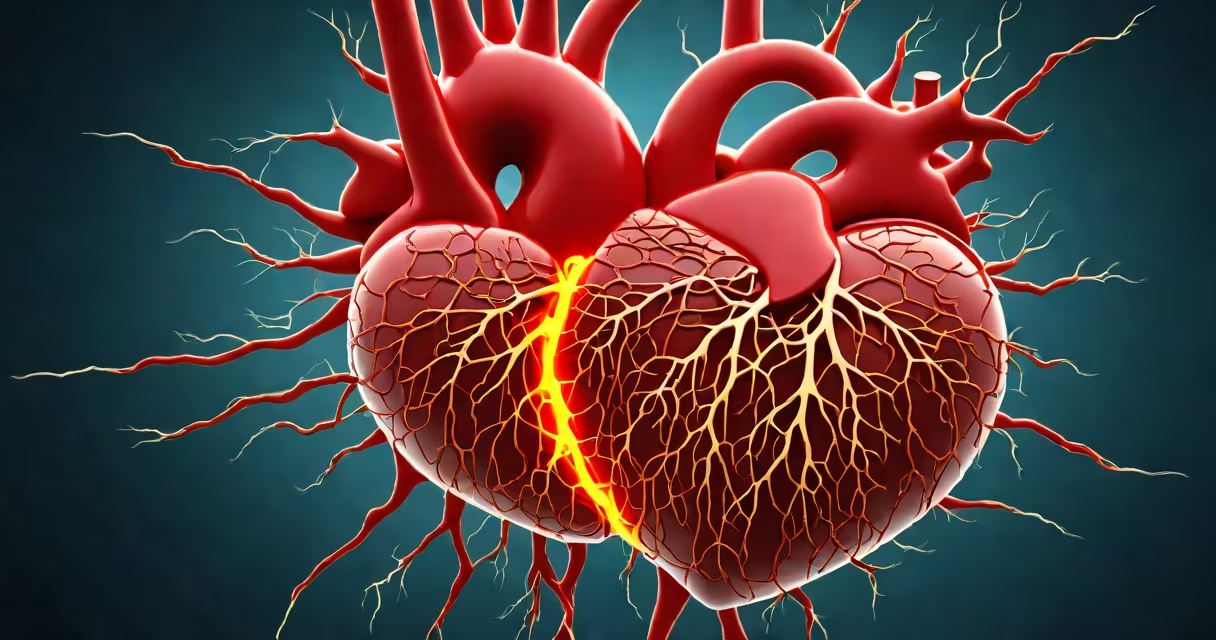
Sudden cardiac arrest happens when the heart's electrical system fails, stopping blood flow within seconds. This is not the same as a heart attack, though both can lead to sudden stoppage.
The heart relies on precise electrical impulses to contract in sequence. When these signals misfire or stop entirely, the heart cannot pump blood. Without oxygenated blood reaching the brain and organs, death follows in minutes unless intervention occurs.
According to the American Heart Association, about 356,000 out-of-hospital cardiac arrests occur annually in the U.S., with survival rates below 12%. Most cases result from underlying heart disease, but sudden stoppage can also happen in people with no known history of illness.
The heart's rhythm begins in the sinoatrial (SA) node, located in the right atrium. This natural pacemaker sends electrical waves through the atria, then down to the atrioventricular (AV) node, which delays the signal slightly before passing it to the ventricles.
This timing ensures the atria contract first, pushing blood into the ventricles. The ventricles then contract forcefully to eject blood into the aorta and pulmonary artery. If this sequence is disrupted, the heart may quiver uselessly instead of pumping.
Ventricular fibrillation (VF) is the most common cause of sudden cardiac arrest. In VF, chaotic electrical activity causes the ventricles to twitch rapidly and ineffectively. The heart stops moving blood, leading to immediate loss of consciousness and death if not treated with defibrillation.
Cardiac arrest results from conditions that impair the heart's ability to generate or conduct electrical signals properly. The most frequent causes fall into four categories:
| Category | Examples | Prevalence |
|---|---|---|
| Coronary artery disease | Blockage from plaque buildup | 70-80% of cases |
| Arrhythmias | Ventricular tachycardia, torsades de pointes | 15-20% |
| Structural heart issues | Cardiomyopathy, valve defects | 5-10% |
| Electrolyte imbalances | Low potassium, high calcium | Rare, but critical |
Coronary artery disease remains the leading cause. Atherosclerosis narrows arteries, reducing blood flow to heart muscle. When blood supply drops below a threshold, tissue dies-a process called ischemia. Ischemic tissue disrupts electrical signaling, triggering fatal arrhythmias.
For example, a 58-year-old man with a history of smoking and hypertension experienced chest pain while mowing his lawn. He collapsed within minutes. Emergency responders found him in ventricular fibrillation. After defibrillation and angioplasty, he survived. His blocked left anterior descending artery was repaired, confirming ischemia as the root cause.
Many confuse cardiac arrest with a heart attack. A heart attack (myocardial infarction) occurs when a coronary artery becomes blocked, killing heart muscle. While a heart attack can trigger cardiac arrest, it doesn't always do so. About 1 in 5 heart attacks leads to sudden arrest.
Another misconception is that cardiac arrest only affects older adults. While risk increases with age, sudden cardiac death can strike young athletes. In the U.S., about 1 in 300,000 adolescents experiences sudden cardiac death annually. Hypertrophic cardiomyopathy, a genetic condition causing thickened heart walls, accounts for nearly half of these cases.
A lesser-known fact: certain medications can induce lethal arrhythmias. Antiarrhythmic drugs like sotalol and amiodarone carry a risk of torsades de pointes, a form of polymorphic ventricular tachycardia. The FDA reports over 1,000 cases annually in the U.S., often linked to low potassium or magnesium levels.
Some people die suddenly with no prior symptoms. These cases often involve undiagnosed congenital abnormalities or inherited arrhythmia syndromes. Long QT syndrome, for instance, prolongs the heart's recovery phase after each beat. Triggers like loud noises, exercise, or emotional stress can initiate VF.
I once witnessed a 17-year-old soccer player collapse during practice. He had no known medical history. Paramedics arrived within three minutes, initiated CPR, and used an AED. The device detected ventricular fibrillation and delivered a shock. He regained a pulse after two shocks and survived with no neurological damage. Genetic testing later revealed a mutation in the KCNQ1 gene, associated with long QT syndrome.
Survival hinges on rapid response. For every minute without defibrillation, survival chances drop by 7-10%. Public access to automated external defibrillators (AEDs) in schools, gyms, and airports has improved outcomes, especially when combined with bystander CPR.
Understanding the difference between heart attack and cardiac arrest is essential. A heart attack damages tissue; cardiac arrest halts function. One can lead to the other, but they are distinct events requiring different treatments.
Recognizing warning signs-chest pain, shortness of breath, fainting during exertion-can prompt timely evaluation. Early diagnosis of arrhythmias, especially in families with a history of sudden death, allows preventive measures such as implantable cardioverter-defibrillators (ICDs).
What causes the heart to stop beating is often rooted in electrical instability due to structural or metabolic dysfunction. Immediate treatment saves lives. Awareness and preparedness remain key to survival.