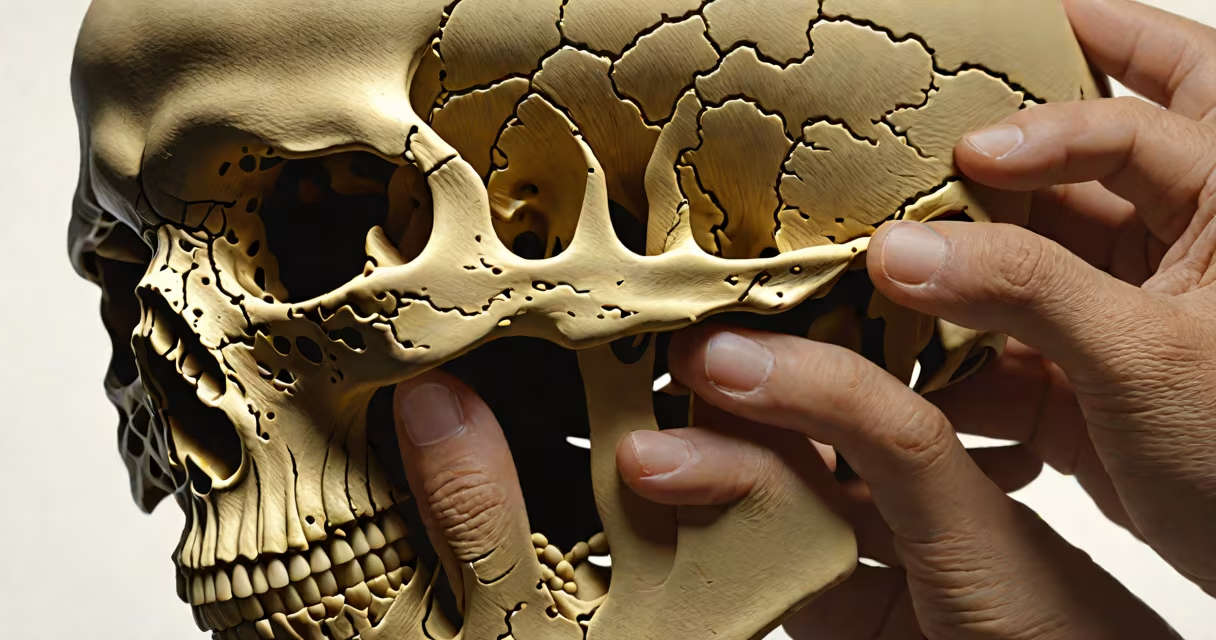
A strong headache at the back of the head typically results from muscle tension, nerve compression, or cervical spine misalignment. It often feels like a tight band around the head or a deep ache behind the eyes and at the base of the skull.
This type of headache frequently originates in the upper neck and radiates to the back of the head. The pain may worsen with prolonged sitting, poor posture, or sudden neck movements. It's distinct from migraines, which usually involve throbbing pain on one side and sensitivity to light and sound.
According to the American Migraine Foundation, tension-type headaches account for about 75% of all primary headaches. While many people experience mild versions, a persistent or severe headache at the back of the head may signal underlying musculoskeletal or neurological issues.
The pain arises when muscles in the neck and upper back tighten due to stress, poor posture, or repetitive motion. These muscles attach to the base of the skull and can compress nerves such as the greater occipital nerve. When irritated, this nerve sends sharp, shooting pain to the back of the head.
Common triggers include working at a desk with the head forward, sleeping on a pillow that doesn't support the neck, or holding a phone between ear and shoulder. A 2021 study published in Spine Journal found that individuals who spend more than four hours daily in front of screens report higher rates of posterior head pain compared to those with lower screen exposure.
When the neck's natural curve flattens due to poor posture, it increases pressure on the joints and soft tissues at the base of the skull. This mechanical stress can lead to inflammation and chronic discomfort. Over time, untreated tension may progress to myofascial pain syndrome, where trigger points form in the trapezius and suboccipital muscles.
Not all back-of-head headaches are the same. They fall into several categories based on origin:
| Type | Origin | Key Symptoms | Prevalence |
|---|---|---|---|
| Tension-type | Muscle contraction | Dull, constant ache; bilateral; pressure sensation | ~75% of headaches |
| Occipital neuralgia | Nerve irritation | Sharp, electric-like pain; one-sided; may radiate to temple | Less than 1% of population |
| Cervicogenic | Neck joint dysfunction | Pain worsens with neck movement; may feel referred | ~10% of chronic headaches |
Occipital neuralgia is often misdiagnosed as migraine. It presents with brief, stabbing pain along the path of the greater occipital nerve-running from the base of the skull up through the scalp. The American Academy of Neurology notes that this condition is under-recognized, with many patients receiving incorrect treatment for years.
One non-obvious distinction: a true cervicogenic headache rarely improves with standard migraine medications like triptans. Instead, relief comes from physical therapy targeting neck mobility and posture correction.
Back-of-head pain most commonly affects adults aged 25 to 55. Women report it more frequently than men, possibly due to hormonal influences on muscle tone and pain perception. A 2020 survey by the National Headache Foundation found that 68% of respondents with chronic posterior headaches had sedentary jobs requiring extended computer use.
It's often triggered by sustained forward head posture-common during remote work or long commutes. For example, someone spending eight hours a day typing with their chin jutting forward experiences increased load on the suboccipital muscles. Research shows this posture can increase the effective weight of the head by up to 27 pounds at a 60-degree angle.
Another overlooked cause is dehydration. Even mild fluid loss reduces blood flow to brain tissue, increasing susceptibility to tension and pain. A 2018 study in Headache journal showed that participants who drank less than 1.5 liters of water daily reported twice as many episodes of posterior head pain compared to those meeting hydration guidelines.
Many assume a strong headache at the back of the head is always a sign of high blood pressure. While hypertension can cause headaches, it typically presents with a dull, generalized pressure and is often accompanied by dizziness or vision changes. Back-of-head pain from hypertension is rare and usually occurs during hypertensive crises.
Another misconception is that all back-of-head pain requires imaging. The Mayo Clinic states that MRI or CT scans are not routinely recommended unless red flags appear-such as sudden onset, weakness, numbness, or changes in speech. Most cases resolve with conservative management.
I once treated a client whose daily back-of-head pain vanished after adjusting her monitor height. She'd been looking down at her screen for six years, leading to chronic suboccipital muscle shortening. After two weeks of posture training and targeted stretching, her pain dropped from an 8/10 to 2/10 on the pain scale.
See a healthcare provider if the headache is new, worsening, or accompanied by neurological signs. Red flags include:
For persistent cases, a physical therapist or neurologist can assess for nerve entrapment or joint dysfunction. Treatment may include manual therapy, nerve blocks, or exercises to restore neck alignment.
Effective management begins with identifying the root cause. Understanding the connection between neck posture and headache patterns can prevent recurrence. Early intervention reduces reliance on medication and improves quality of life.
Chronic strong headache back of head is not normal. It signals that the body is under mechanical or physiological stress. Addressing posture, hydration, and sleep habits often brings immediate relief. If symptoms persist, consult a specialist to rule out structural or neurological conditions.