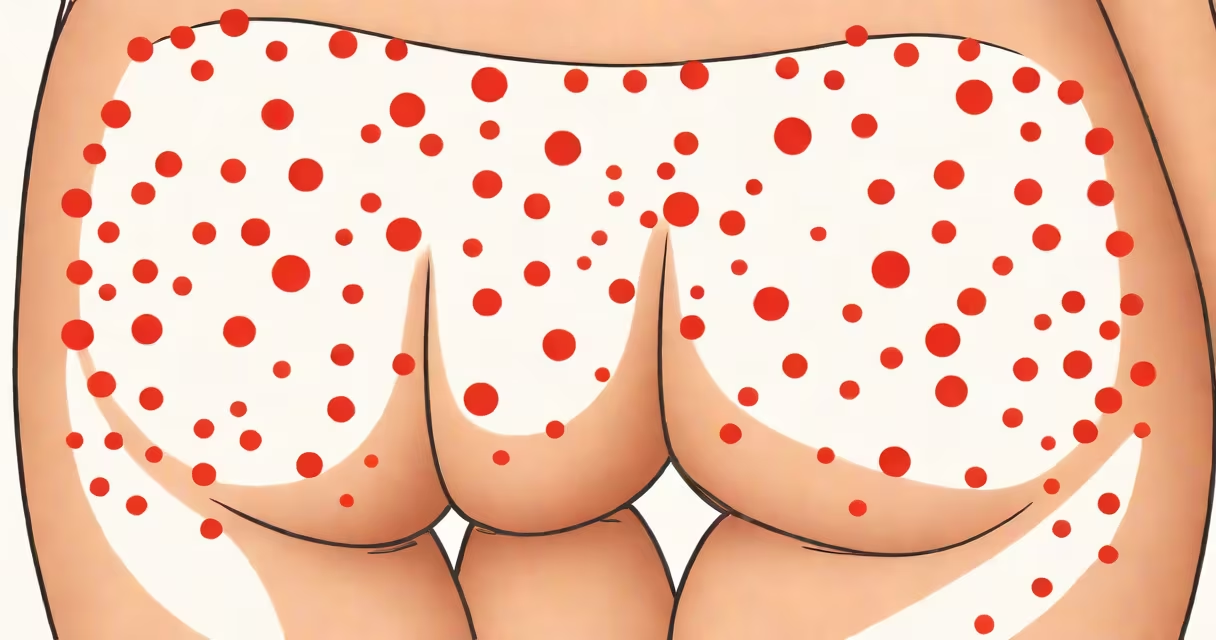
Pimples on the buttocks typically result from clogged hair follicles or bacterial infection, not poor hygiene. They appear as red, swollen bumps or whiteheads and may itch or hurt. These lesions are common and usually harmless, though they can signal underlying skin conditions.
When hair follicles become blocked by dead skin cells, sebum, or debris, bacteria like Staphylococcus aureus can multiply inside, leading to inflammation. This process is known as folliculitis. The buttocks are especially prone due to friction from clothing, sweat retention, and frequent contact with surfaces like gym benches or toilet seats.
According to the American Academy of Dermatology (AAD), folliculitis affects about 1 in 10 people annually. It's not contagious but can spread through shared towels or tight-fitting clothes. A 2021 study in JAMA Dermatology found that 68% of patients with recurrent buttock acne had a history of wearing synthetic workout gear, which traps moisture and increases bacterial growth.
Blocked follicles trigger an immune response. White blood cells rush to the site, causing swelling and pus formation. The bump may start as a small red dot, grow larger, and sometimes rupture. Healing leaves temporary discoloration or scarring in rare cases.
Friction plays a major role. Sitting for long periods, especially on rough or synthetic materials, irritates follicles. Sweat and heat further compromise the skin barrier. A 2019 clinical review in Dermatologic Clinics linked prolonged sitting to increased risk of intertrigo-a fungal or bacterial infection in skin folds.
Personal habits matter. Shaving with dull razors, using comedogenic products, or wiping with harsh wipes can introduce bacteria or cause micro-tears. One patient reported worsening symptoms after switching to a scented body wash; patch testing later confirmed sensitivity to fragrance compounds.
Not all bumps are acne. Differentiating them improves treatment accuracy:
| Type | Appearance | Common Cause | Typical Treatment |
|---|---|---|---|
| Folliculitis | Red, pimple-like bumps around hair follicles; may have pus | Bacteria (S. aureus) or fungus; friction, sweat | Topical antibiotics or antifungals; warm compresses |
| Acne vulgaris | Blackheads, whiteheads, cysts; often oily areas | Excess sebum, clogged pores, C. acnes bacteria | Topical retinoids, benzoyl peroxide; oral antibiotics if severe |
| Hidradenitis suppurativa (HS) | Deep, painful lumps; drains pus; forms tunnels under skin | Genetic predisposition; blocked apocrine glands | Prescription medications; surgery in advanced cases |
HS is often misdiagnosed as severe acne. It affects 1% of the population, primarily young adults, and tends to flare during stress or hormonal shifts. Early signs include persistent, tender nodules that don't respond to over-the-counter treatments.
Non-obvious fact: Pimples on the buttocks aren't always caused by dirt. A 2020 study in British Journal of Dermatology showed that 40% of participants with recurrent folliculitis had normal hygiene practices. The real culprit was often occlusive clothing, not lack of washing.
Most cases resolve within 7-10 days with home care. But see a dermatologist if:
I once treated a client who ignored recurring boils on his glutes for six months. He assumed it was "just sweat." By the time he visited, the infection had spread to the lower back and required IV antibiotics. His case highlights why early intervention matters.
Diagnosis begins with visual inspection and medical history. A swab test may identify bacterial or fungal strains. For HS, imaging like ultrasound or MRI can detect sinus tracts beneath the skin.
Many assume pimples on the buttocks mean uncleanliness. That's false. The AAD states that personal hygiene doesn't correlate with acne severity. In fact, aggressive scrubbing can worsen inflammation.
Another myth: "Popping butt pimples helps." This risks spreading infection. Squeezing forces bacteria deeper into tissue, increasing scarring risk. A 2022 study in Journal of Clinical and Aesthetic Dermatology found that 33% of patients who popped buttock lesions developed secondary infections requiring prescription treatment.
Some confuse folliculitis with sexually transmitted infections (STIs). While both can cause genital rash, STIs like herpes or syphilis usually present with blisters, ulcers, or systemic symptoms. Pimples on the buttocks rarely involve fever or flu-like illness unless complicated.
Wear loose, breathable fabrics like cotton. Change out of sweaty workout clothes within 30 minutes. Wash gym gear after each use with mild detergent.
Use gentle cleansers. Avoid bar soaps with high pH-they strip natural oils. After showering, pat dry with a clean towel; don't rub.
For recurring issues, try a 2% benzoyl peroxide wash. Apply once daily to affected areas. A 2017 trial in Dermatologic Therapy showed a 60% reduction in lesion count after four weeks of consistent use.
If irritation persists, consult a dermatologist. They may prescribe topical clindamycin or oral antibiotics like doxycycline. For resistant cases, isotretinoin may be considered-but only under close supervision due to side effects.
Understanding what pimples on the buttocks mean prevents unnecessary shame and delays in care. They're usually a sign of blocked follicles, not personal failure. Recognizing the difference leads to faster relief and better outcomes.