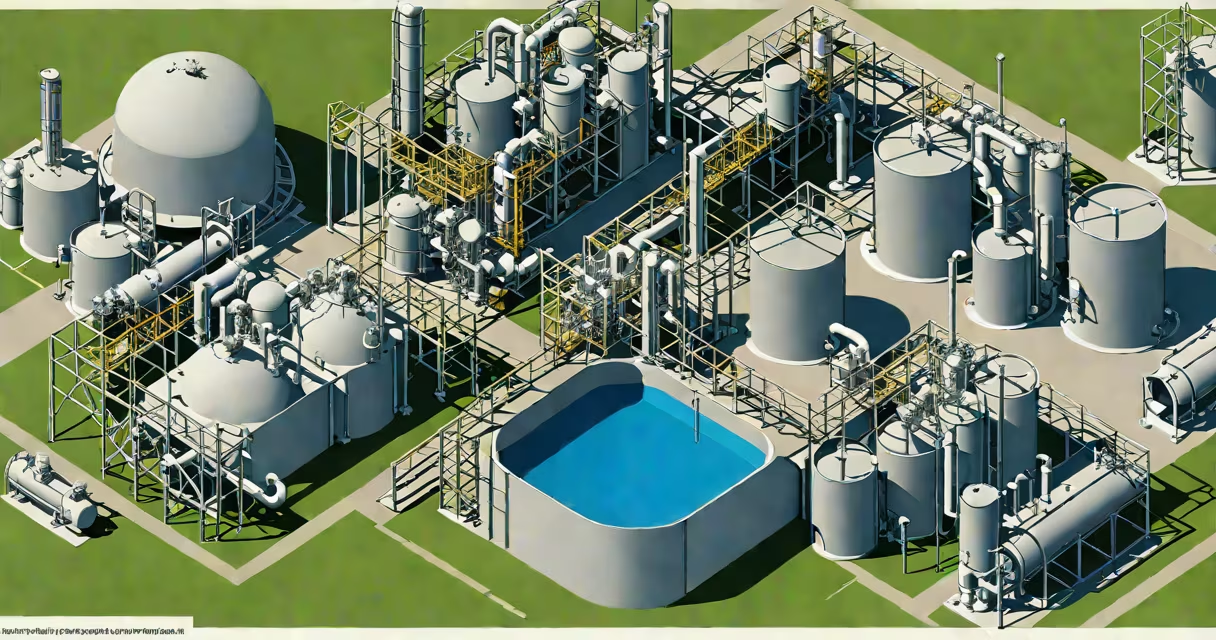
A sewage plant treats wastewater from homes, businesses, and industries to remove harmful pollutants before discharging clean water into rivers, lakes, or oceans. It uses physical, chemical, and biological processes to break down organic waste, kill pathogens, and reduce nutrient levels like nitrogen and phosphorus.
The core function of a sewage plant is to protect public health and environmental ecosystems by transforming raw sewage into safe effluent. Without this treatment, untreated wastewater would carry disease-causing microbes, toxic chemicals, and excessive nutrients that degrade water quality and harm aquatic life.
According to the U.S. Environmental Protection Agency (EPA), over 15,000 publicly owned treatment works (POTWs) operate across the United States, collectively processing more than 34 billion gallons of wastewater daily. These facilities follow federal regulations under the Clean Water Act to ensure consistent performance and compliance.
Treatment begins when raw sewage enters the plant through a network of underground pipes. The first stage is screening, where large solids like rags, plastics, and sticks are removed using metal grates. This prevents clogging and damage to downstream equipment.
Next, wastewater flows into grit chambers, where heavy particles like sand and coffee grounds settle out. These materials are collected and disposed of separately, often sent to landfills or recycled as construction fill.
After grit removal, the water moves to primary sedimentation tanks. Here, gravity allows suspended solids to sink to the bottom, forming sludge. The clarified water above is then pumped to secondary treatment, where aerobic bacteria consume organic matter in oxygen-rich environments. This stage reduces biochemical oxygen demand (BOD), a key measure of pollution.
Sewage plants typically use a combination of three treatment stages: primary, secondary, and tertiary. Each serves a distinct purpose in removing different types of contaminants.
| Treatment Stage | Primary Purpose | Key Methods | Typical Output |
|---|---|---|---|
| Primary | Remove large solids and settleable particles | Screening, grit removal, sedimentation | ~60% reduction in suspended solids |
| Secondary | Degrade biodegradable organic matter | Activated sludge, trickling filters, oxidation ditches | ~90% BOD reduction |
| Tertiary | Further polish water; remove nutrients and trace contaminants | Filtration, disinfection (chlorine, UV), nutrient removal | Meets strict discharge standards |
Some advanced facilities include tertiary treatment, which removes nitrogen and phosphorus to prevent algal blooms in receiving waters. This step often involves chemical addition or membrane filtration. Disinfection with ultraviolet light or chlorine kills remaining pathogens like E. coli and viruses.
As of 2023, the EPA reports that over 80% of U.S. sewage plants perform secondary treatment, while about 40% have tertiary capabilities. Facilities in sensitive watersheds-such as those near estuaries or drinking water sources-are required to meet higher standards.
Many people assume that sewage plants simply "flush away" waste. In reality, they don't eliminate waste-they convert it. Solids separated during treatment are processed into biosolids, a nutrient-rich material used in agriculture or land reclamation.
Biosolids are regulated under the EPA's Part 503 rule, which sets limits on heavy metals and pathogens. A single plant in Orange County, California, treats 100 million gallons of wastewater daily and converts 90% of its sludge into Class A biosolids, suitable for use on farmland and golf courses.
Another misconception is that all treated wastewater is safe to drink. While effluent meets environmental standards, it is not intended for human consumption. The term "reclaimed water" refers to treated wastewater reused for irrigation, industrial cooling, or groundwater recharge-not potable supply.
There's also confusion between sewage plants and stormwater management systems. Storm drains carry rainwater runoff, not sewage. When heavy rains overwhelm sewer lines, combined sewer overflows (CSOs) can release untreated mixtures into waterways. Cities like Chicago and Philadelphia have invested in green infrastructure-like permeable pavements and retention basins-to reduce CSO events.
Located in Washington, D.C., Blue Plains is one of the largest sewage plants in the world. It treats approximately 350 million gallons of wastewater daily from over 2 million residents.
Its process includes:
After treatment, effluent is discharged into the Potomac River. Monitoring shows average reductions of 99% in BOD and 98% in suspended solids. The plant also recovers energy from methane produced during digestion-enough to power 10,000 homes annually.
During a visit in 2022, I observed the control room where operators adjusted flow rates and chemical dosages in real time based on sensor feedback. The precision required to maintain regulatory compliance was evident in the constant stream of data on monitors.
Without sewage plants, urban areas would face severe waterborne disease outbreaks. Cholera, typhoid, and hepatitis A were common in cities before widespread treatment infrastructure was built. Today, the World Health Organization estimates that access to safe sanitation prevents over 400,000 deaths annually worldwide.
Untreated sewage contributes to eutrophication-the over-enrichment of water bodies with nutrients. This causes algal blooms that deplete oxygen and create dead zones. The Gulf of Mexico's dead zone, which spans over 6,000 square miles in summer, is largely driven by nitrogen runoff from agricultural and sewage sources.
Understanding what a sewage plant does helps communities advocate for proper funding and maintenance. Aging infrastructure in many U.S. cities leads to leaks, overflows, and inefficiencies. The American Society of Civil Engineers gave the nation's wastewater systems a grade of D in 2021, citing $271 billion in needed investment over ten years.
What does a sewage plant do? It transforms hazardous waste into environmentally safe output through layered treatment. Its role is foundational to clean water, healthy ecosystems, and resilient cities.