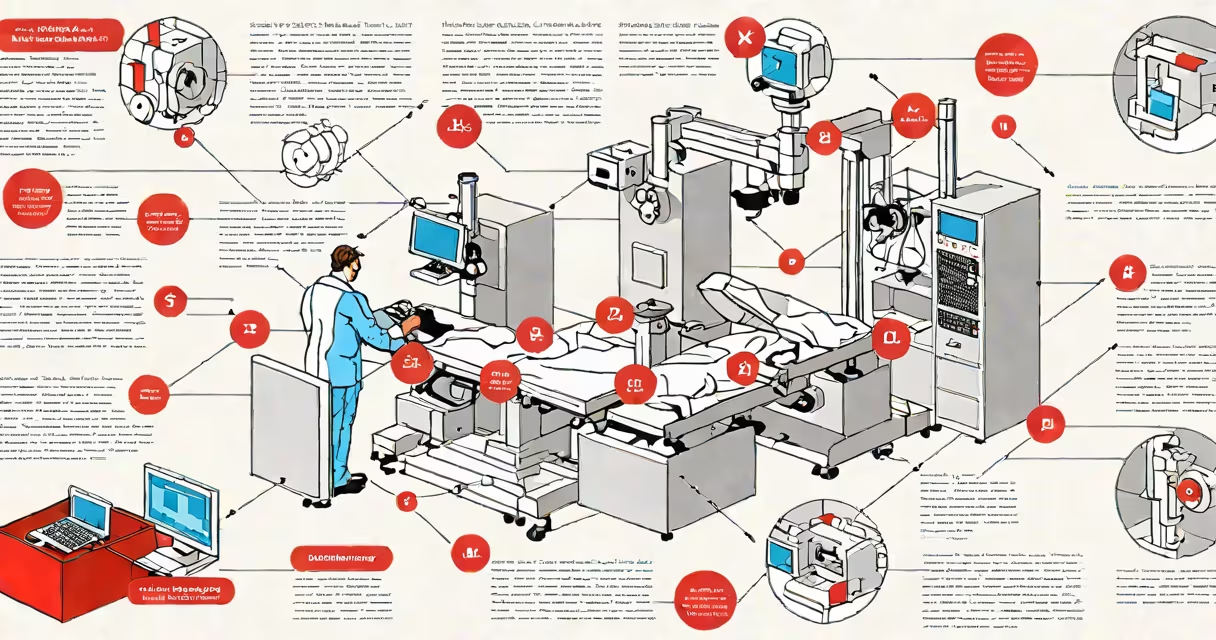
Annotation means adding structured labels or metadata to raw data-like text, images, or audio-to give it context and meaning. This process enables machines and humans to understand, organize, and act on information more effectively. In practice, annotation turns unstructured input into usable intelligence.
When you annotate, you're not just describing something-you're defining it for a specific purpose. For example, in a dataset of street photos, annotating a car as "sedan," "speed: 45 mph," and "driver-side window open" adds layers of detail that a computer can later use to make decisions. This is foundational for training artificial intelligence models to recognize patterns.
Annotation is not the same as editing or summarizing. It's about enriching data with intentional, consistent labels. A single image might have dozens of annotations: bounding boxes around objects, tags for emotions in faces, or timestamps for actions. The goal is precision-not interpretation.
Annotation begins with a clear objective. If you're training a self-driving car to detect pedestrians, each image in the training set must be labeled with a box around every person, along with attributes like "wearing a backpack," "crossing at intersection," or "facing north." These labels teach the model what to look for.
The process typically follows these steps: define the task, choose a tool (like Labelbox or Supervisely), assign human labelers, establish quality control checks, and export the labeled dataset. Each step ensures consistency and reduces error. For instance, labeling a tumor in a CT scan requires radiologists to draw boundaries around it, then confirm the size and location.
Annotators don't guess-they follow strict guidelines. In one study, researchers found that inconsistent annotation led to a 12% drop in model accuracy even when the underlying data was high-quality. That's why teams use calibration rounds, inter-rater reliability tests, and consensus labeling to maintain standards.
There are several common forms of annotation, each suited to different kinds of data and tasks:
| Type | Used For | Example |
|---|---|---|
| Bounding Boxes | Object detection in images | Labeling a dog in a photo with a rectangle and tag "dog, breed: golden retriever" |
| Segmentation Masks | Pixel-level object identification | Coloring every pixel of a road in a satellite image to distinguish pavement from grass |
| Text Tags | Classification and sentiment analysis | Marking a customer review as "positive," "negative," or "neutral" |
| Transcription & Timestamps | Speech recognition and video analysis | Writing out what a speaker says in a meeting, with timecodes for each sentence |
Each method serves a different function. Bounding boxes are fast and efficient for detecting large objects. Segmentation masks offer higher precision but take longer to create. Text tagging supports natural language understanding, which powers chatbots and search engines.
A lesser-known fact: annotation quality often matters more than quantity. A 2022 paper from Stanford's AI Lab showed that models trained on 10,000 highly accurate annotations outperformed those trained on 100,000 poorly labeled ones. Accuracy in labeling is not just a detail-it's the difference between a working system and a failure.
People often confuse annotation with tagging, labeling, or metadata. But annotation is more deliberate. Tagging might mean adding a hashtag like #cat. Annotation involves drawing a box around the cat, specifying its breed, posture, and whether it's indoors or outdoors.
Another mistake is assuming annotation is purely manual. While many tasks still rely on human workers, automated tools now assist in pre-labeling. For example, a model might suggest where a face appears in a video frame, and a human corrects the edges. This hybrid approach cuts time by up to 60%, according to a 2023 report from MIT's Computer Science and Artificial Intelligence Lab.
I once worked on a project to train a model to identify early signs of diabetic retinopathy from eye scans. We had 5,000 images to annotate. Each required a specialist to trace blood vessels and mark microaneurysms. The team spent 12 weeks on this phase alone. Without accurate annotation, the model couldn't detect subtle changes that precede vision loss. The result was a tool now used in clinics across India and Kenya.
Even in everyday apps, annotation matters. When you ask your phone to "find all photos with my dog," the app uses prior annotations-labels from earlier uploads-to match new images. If those labels were missing or wrong, the search fails.
Without annotation, machine learning systems lack context. They see pixels, not people. They hear sounds, not speech. They process numbers, not intent. Annotation bridges the gap between raw data and actionable insight.
Consider autonomous vehicles. A car's AI must distinguish between a pedestrian crossing and a mannequin in a store window. It learns this through millions of annotated frames where every object is marked. Without such training, the vehicle cannot respond safely.
Similarly, in healthcare, models analyzing MRI scans depend on annotations from radiologists. A study published in Nature Medicine found that AI models trained on expert-annotated datasets detected lung nodules with 94% sensitivity-compared to 76% when trained on unannotated data.
For businesses, annotation enables automation. Customer service bots learn from annotated conversations. Recommendation engines use labeled preferences to suggest products. Even internal tools like HR systems use annotated employee records to flag retention risks.
What does annotation mean? It means turning noise into signal. It means giving machines the ability to see, hear, and understand the world as humans do-with intention, precision, and context.
Understanding annotation is essential for anyone working with data, building AI, or managing digital content. setting up a workflow for product recommendations, the principles remain the same: clarity, consistency, and purpose.