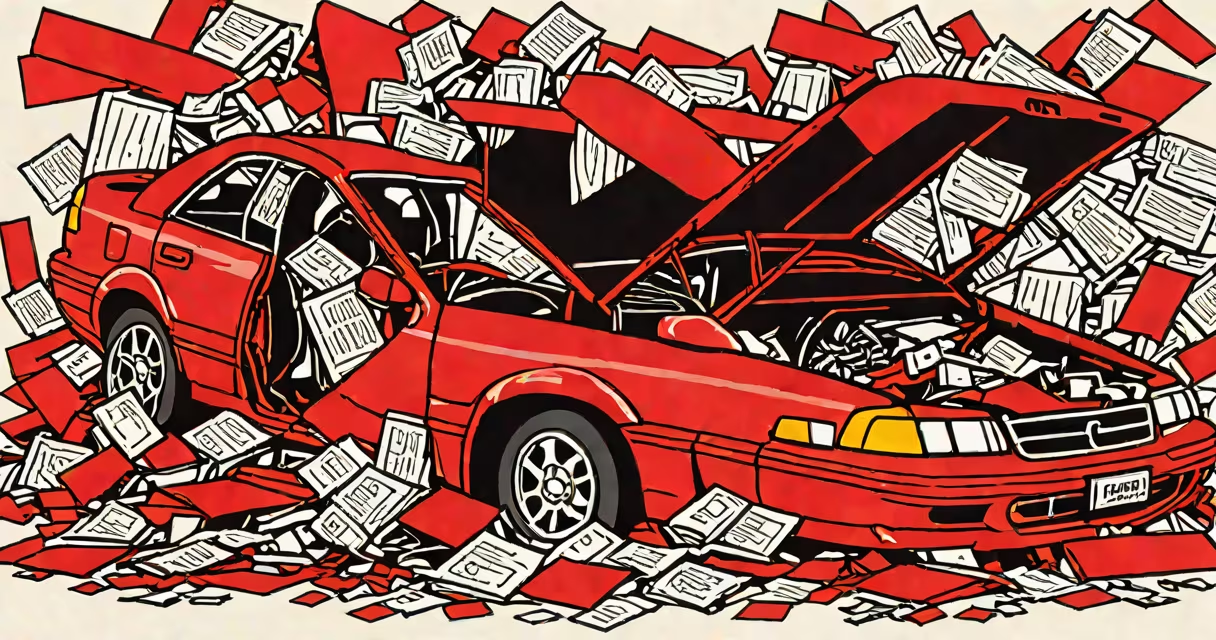
When an insurance company declares your car a total loss, it means the cost to repair it exceeds its actual cash value. The insurer will pay you the car's current market value instead of fixing it. This decision ends ownership rights and triggers a claim process.
Totaling a car isn't about whether the vehicle still runs-it's about economics. Even if a car drives after a crash, if repairs exceed its worth, the insurer treats it as irreparable. The threshold varies by state but typically ranges between 70% and 80% of the car's value. For example, a 2018 Honda Accord valued at $12,000 may be totaled if repairs exceed $9,600.
Insurance companies use tools like Kelley Blue Book (KBB) and Edmunds to determine a vehicle's actual cash value (ACV)-its market price before the accident. ACV accounts for mileage, condition, and regional demand. A 2015 Toyota Camry with 150,000 miles in Texas might have an ACV of $6,200, even if it's mechanically sound.
Insurers follow a standardized process. After an accident, they dispatch an adjuster to assess damage. The adjuster estimates repair costs using shop labor rates and parts pricing databases like Mitchell Repair Estimating. They compare the total estimate to the car's ACV.
If repair costs reach or surpass the ACV, the car is declared a total loss. Some states require a minimum threshold-like 70% of ACV-before declaring total loss. Others allow it at any point above ACV. California uses a 70% rule; New York allows totals at 80%. These thresholds prevent insurers from arbitrarily writing off vehicles.
A real-world example: In 2022, a 2016 Ford F-150 in Florida was rear-ended at 35 mph. Damage included a bent frame, shattered windshield, and destroyed airbags. Repair estimate: $14,800. ACV based on KBB: $13,200. Since repair costs exceeded ACV, the insurer declared it a total loss.
There are two categories: constructive total loss and actual total loss. Constructive total loss occurs when repair costs exceed ACV but the car remains structurally intact. Actual total loss applies when the vehicle is physically destroyed-wrecked beyond recognition.
Most claims fall under constructive total loss. The insurer pays the ACV minus your deductible. You receive a check, then surrender the title. The insurer takes possession and sells the wreck for scrap. In 2023, 43% of auto claims in the U.S. were classified as total losses, according to the Insurance Information Institute (III).
| Loss Type | Repair Cost vs. ACV | Common Example |
|---|---|---|
| Constructive Total Loss | Exceeds ACV | Bent frame, electrical fire after collision |
| Actual Total Loss | Vehicle destroyed | Fire, flood, rollover with no salvage value |
You receive a settlement equal to the car's ACV minus your deductible. If you owe money on a loan, gap insurance covers the difference between the ACV and the remaining balance. Without gap coverage, you're responsible for the shortfall.
For example: You owe $18,000 on a financed car. The ACV is $15,000. With a $500 deductible, you get $14,500. If you don't have gap insurance, you still owe $3,500. According to the III, 15% of totaled cars had outstanding loans in 2022, and nearly half of those owners faced negative equity.
The insurer takes title and issues a salvage certificate. You can't drive the car unless it passes a salvage inspection and gets rebuilt status. Rebuilt vehicles must meet state safety standards. In Texas, a rebuilt title requires a mechanical inspection and emissions test before registration.
Many people think a totaled car means it's unusable. That's false. A totaled car can still run. In 2021, a 2019 Subaru Outback totaled after hitting a deer. The engine ran, lights worked, and brakes were functional. But repair costs ($11,200) exceeded ACV ($9,800), so the insurer paid out and took title.
Another myth: "I can keep the car and fix it myself." You can, but only if you accept the legal and safety risks. Most states prohibit driving a salvage-title vehicle until it passes inspection. Even then, insurance won't cover it unless it's rebuilt and titled properly.
Some confuse total loss with theft. A stolen car isn't automatically totaled. If recovered, it may be repaired. But if damaged during the theft, it could be totaled. The National Insurance Crime Bureau reports that 12% of stolen vehicles are totaled upon recovery.
In 2020, I totaled my 2014 Mazda CX-5 after skidding on black ice. The front end crumpled, airbags deployed, and the frame shifted. My insurer sent an adjuster within 24 hours. The repair estimate came to $10,300. Based on KBB, the ACV was $8,900. The car was totaled.
I received $8,400 after my $500 deductible. I didn't have gap insurance, so I owed $2,100 on the loan. I used the settlement to buy a used 2017 model. The process took 14 days from accident to payout. I learned that keeping proof of value-like recent appraisals-is critical.
Knowing what does abs mean in my car helps avoid confusion. ABS (anti-lock braking system) prevents wheel lockup during hard stops. It doesn't affect total loss decisions. However, if ABS fails after an accident, it increases repair costs and may contribute to a total loss.
Car light symbols indicate system status. A yellow triangle with an exclamation mark signals a fault. If this appears during a crash, it may delay diagnostics. But it doesn't determine total loss. The decision rests solely on repair cost versus ACV.
When a car is total loss, the process begins with documentation. Keep photos, repair estimates, and insurance correspondence. If you dispute the ACV, you can request a second appraisal. Some states allow arbitration. In Michigan, the Department of Insurance and Financial Services offers mediation services for disputed totals.
Understanding what it means to total your car prevents surprises. It's not about the car's appearance-it's about financial logic. Repair costs exceeding value trigger the total loss designation. The insurer pays you the car's worth, not the repair bill.
After a total loss, you can choose to accept the offer, appeal the valuation, or sell the car to a salvage yard. The choice affects your finances and future vehicle purchases. Always review your policy's total loss clause. Some policies define total loss differently based on coverage type.