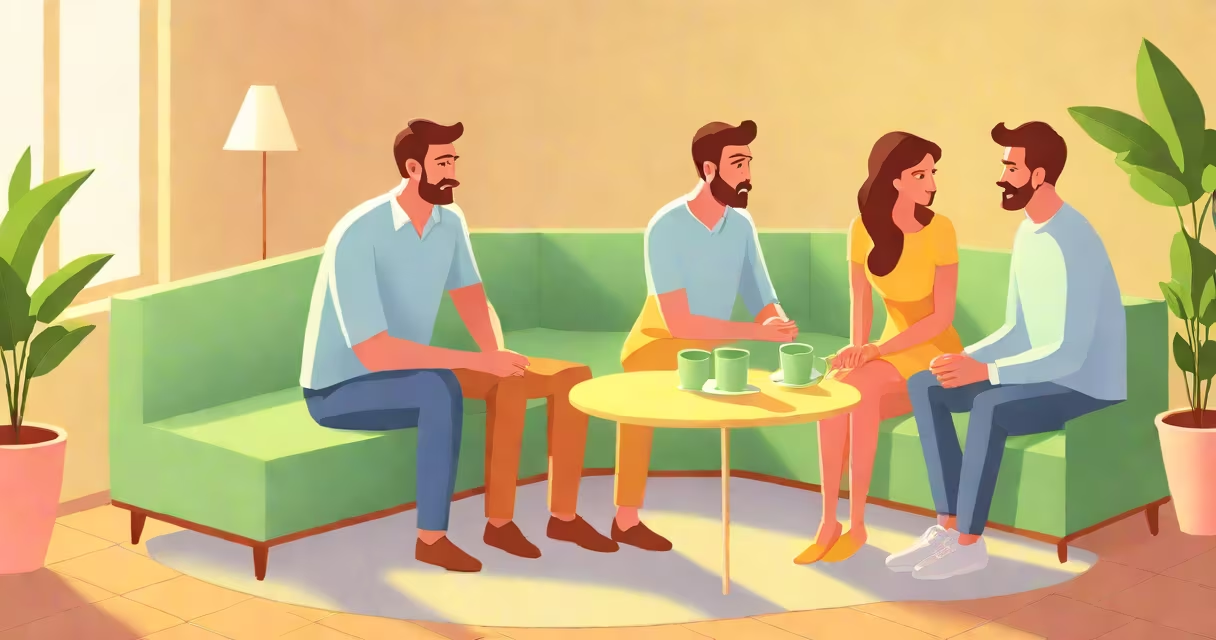
Loving someone means consistently prioritizing their well-being, showing emotional presence, and acting with intention in the relationship. It's not just a feeling-it's demonstrated through trust, shared vulnerability, and long-term investment in the bond.
Love isn't a single gesture. It's a pattern of behavior over time. A person who loves you shows up-not just in moments of joy, but during uncertainty, fatigue, and conflict. They listen without interrupting. They remember small details-the name of your childhood pet, your favorite coffee order, how you react when stressed. These aren't random acts. They're evidence of attention and care.
According to the American Psychological Association, emotional intimacy forms the core of lasting relationships. This isn't about grand declarations. It's about the quiet consistency of being present. When someone loves you, they don't just say "I care"-they act as if you matter, even when no one is watching.
Love manifests in daily choices. It appears in the way someone handles disagreements. Instead of withdrawing or escalating, they stay engaged. They ask, "Can we talk about this?" and wait for your response. They don't weaponize silence or guilt to control outcomes.
Physical touch matters too-but not in the way pop culture suggests. Research from the University of North Carolina found that couples who maintain regular, low-pressure physical contact-like holding hands during walks or resting a hand on your shoulder-report higher levels of relationship satisfaction. The key isn't frequency. It's mutual comfort and consent.
Another sign: they support your goals even when they don't align with their own. If you want to move cities for a job, they don't pressure you to stay. They help you pack. They call you from the airport with a joke. Their happiness isn't tied to your decisions-they celebrate your autonomy.
Psychologist Robert Sternberg's triangular theory identifies three components: intimacy, passion, and commitment. Healthy love includes all three. But people often confuse one for the whole.
| Type | Intimacy | Passion | Commitment | What It Means |
|---|---|---|---|---|
| Consummate Love | High | High | High | Full, balanced relationship. Rare but sustainable. |
| Companionate Love | High | Low | High | Deep friendship with loyalty. Common in long-term partnerships. |
| Infatuation | Low | High | Low | Obsession without depth. Often mistaken for love early on. |
Infatuation feels like fire. Companionate love feels like warmth. Consummate love combines both. If someone says "I love you" but avoids discussing future plans, financial realities, or family dynamics, it may reflect infatuation-not love.
One non-obvious distinction: love doesn't require constant excitement. A study published in *Journal of Personality and Social Psychology* found that couples who reported high satisfaction were those who experienced calm, predictable interactions-like cooking together or walking in silence-more than dramatic moments.
Many people equate love with intensity. They believe a partner must be constantly texting, planning trips, or expressing affection verbally. But emotional labor isn't love-it's performance. True love doesn't depend on volume.
Another error: assuming love means never arguing. Conflict is inevitable. What matters is how it's handled. A loving partner doesn't avoid hard conversations. They don't shut down. They say, "I'm upset. Can we pause and come back to this?" They seek resolution, not dominance.
Some confuse love with dependency. If someone says, "I can't live without you," it's not a sign of devotion-it's a red flag. Healthy love allows space. It doesn't demand constant availability. It respects boundaries. As therapist Esther Perel notes, "The most erotic thing in a relationship is not sex-it's the ability to be close without losing yourself."
I once met a couple who had been together 12 years. They didn't post photos. They didn't have anniversary dates marked on social media. But when I asked the woman what love meant to her, she said: "He remembers my mother's birthday. He calls her every month. He knows how she takes her tea. That's love."
She wasn't describing romance. She was describing consistency. Her partner didn't perform love-he lived it. He showed up for her family, not because he had to, but because he chose to. That's the difference between love and obligation.
Another example: a man whose partner was diagnosed with chronic illness. He didn't leave. He rearranged his work schedule. He learned to administer injections. He sat with her during painful treatments. He didn't say "I'll always be here"-he proved it, day after day. That's love in action.
Love isn't jealousy. It's not possessiveness. It's not controlling access to friends, money, or decisions. Love doesn't isolate. It expands. It invites others in.
It's not the same as obsession. Obsession seeks control. Love seeks connection. One builds walls. The other opens doors.
And love isn't defined by sexual frequency. A 2021 study in *Archives of Sexual Behavior* found that couples who reported high emotional intimacy had better sexual satisfaction-even if they had sex less often. Intimacy precedes desire.
When someone loves you, they don't just say it-they prove it through patience, reliability, and presence. They show up in the small things: remembering your preferences, checking in when you're quiet, offering help without being asked.
Love isn't a state. It's a practice. It's choosing each other, again and again, even when it's easier not to. The real test isn't how someone speaks-it's how they behave when no one is watching.