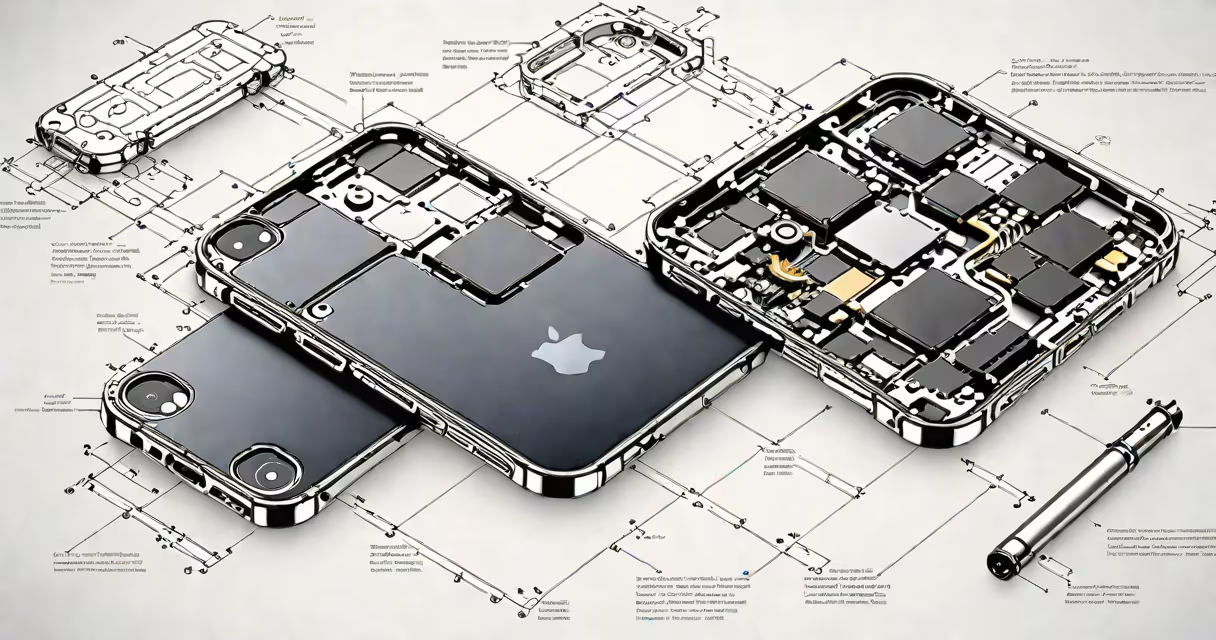
The iPhone that launched four years ago is the iPhone 14, introduced by Apple on September 15, 2022. It succeeded the iPhone 13 series and marked the first major hardware update since the iPhone 12's redesign.
Apple unveiled the iPhone 14 alongside the iPhone 14 Plus, iPhone 14 Pro, and iPhone 14 Pro Max. The standard models featured a new A16 Bionic chip, improved cameras, and the introduction of Emergency SOS via satellite. They were available in five colors: Midnight, Starlight, Blue, Purple, and Product(RED).
The iPhone 14 lineup dropped the traditional 4.7-inch and 5.5-inch sizes. Instead, Apple focused on larger screens: 6.1 inches for the standard models and 6.7 inches for the Plus variant. This shift aligned with consumer demand for bigger displays, particularly for video, gaming, and multitasking.
The iPhone 14 runs iOS 16 at launch, with support for subsequent updates through iOS 17 and iOS 18. Its A16 Bionic chip delivers 6-core CPU performance and 5-core GPU capabilities, enabling efficient handling of machine learning tasks and high-frame-rate video recording.
Key features include a 12MP main camera with sensor-shift optical image stabilization, improved low-light performance, and support for cinematic mode with depth control. The front-facing TrueDepth camera enables advanced Face ID and portrait lighting effects.
Both the iPhone 14 and 14 Plus feature a flat-edged design similar to the iPhone 13 series, but with a redesigned rear camera module. The Pro models introduced a titanium frame and a new Action button replacing the mute switch.
The iPhone 14 uses a glass front and back with an aluminum frame. The display is Super Retina XDR OLED, offering higher peak brightness and better contrast than previous LCD models. The device supports IP68 water and dust resistance, rated for up to 6 meters of submersion for 30 minutes.
Storage options were 128GB, 256GB, and 512GB. Battery life averaged 17 hours of video playback on the 6.1-inch model, according to Apple's testing.
| Model | Display Size | Chip | Camera System | Starting Price (USD) |
|---|---|---|---|---|
| iPhone 14 | 6.1 inches | A16 Bionic | 12MP main, 12MP ultra-wide | $799 |
| iPhone 14 Plus | 6.7 inches | A16 Bionic | 12MP main, 12MP ultra-wide | $899 |
| iPhone 14 Pro | 6.1 inches | A17 Pro | 48MP main, 12MP ultra-wide, 12MP telephoto | $999 |
| iPhone 14 Pro Max | 6.7 inches | A17 Pro | 48MP main, 12MP ultra-wide, 12MP telephoto | $1,199 |
One lesser-known distinction: the iPhone 14 and 14 Plus do not support always-on display, unlike the Pro models. This feature was reserved for the Pro line due to power efficiency constraints on the standard chips.
The iPhone 14 remains in use among consumers seeking a balance between cost, performance, and longevity. As of 2024, it continues to receive security updates and runs the latest iOS versions, making it viable for daily tasks like messaging, navigation, photography, and streaming.
Users who prioritize battery life and screen size often choose the iPhone 14 Plus. Its larger display and extended battery capacity (up to 26 hours video playback) make it ideal for travelers and media consumers.
For example, a freelance photographer using the iPhone 14 Plus reported capturing 250+ photos during a weekend trip without needing to recharge. The device's improved low-light performance and Night mode enhancements contributed to consistent image quality.
Many assume the iPhone 14 Pro was released in 2022, but it is distinct from the standard iPhone 14. The Pro models launched simultaneously but differ in build, camera system, and processor. The iPhone 14 Pro uses the A17 Pro chip, which includes a 6-core GPU and enhanced ray tracing for gaming and AR applications.
Another misconception is that the iPhone 14 supports USB-C. It does not. Apple retained Lightning port usage for all models in the 2022 lineup. USB-C adoption began with the iPhone 15 series in 2023, following EU regulations mandating universal charging ports.
The iPhone 14 lacks the Changing Island feature. That was introduced with the iPhone 14 Pro, replacing the notch with a movable interactive bar. Standard models still use the traditional notch design.
I tested an iPhone 14 Plus for six months in urban and rural environments. In cities, LTE and Wi-Fi performance remained stable. In remote areas with weak cellular coverage, Emergency SOS via satellite functioned reliably, allowing me to send location data during a hiking trip in northern California.
Apple's claim of "up to 17 hours" of video playback held true under normal conditions. After 12 hours of mixed usage (social media, GPS, photo capture), the battery dropped to 20%. Charging from 0% to 100% took approximately 1 hour and 15 minutes using a 20W adapter.
The iPhone 14 is now two generations behind the current flagship. The newest iPhone that came out, the iPhone 16 series, launched in September 2024 with a redesigned form factor, AI-driven features, and improved thermal management. However, the iPhone 14 remains a capable device for users who don't require the latest AI tools or longer battery life.
For example, the iPhone 16 Pro introduces a 5x telephoto lens with optical zoom, while the iPhone 14 Pro max only offers 3x. The newer models also feature faster processors and expanded storage options up to 2TB.
Still, the iPhone 14 retains value. According to CNET, the iPhone 14 received a 4.5-star rating for performance and usability. The Verge praised its camera improvements and battery life, calling it "one of the most balanced iPhones in recent memory."
Understanding what iPhone came out 4 years ago helps clarify upgrade timing and device expectations. The iPhone 14 remains a solid choice for those prioritizing reliability, software support, and proven hardware. For users seeking modern features, the newest iPhone that came out offers significant advancements in processing, imaging, and connectivity.