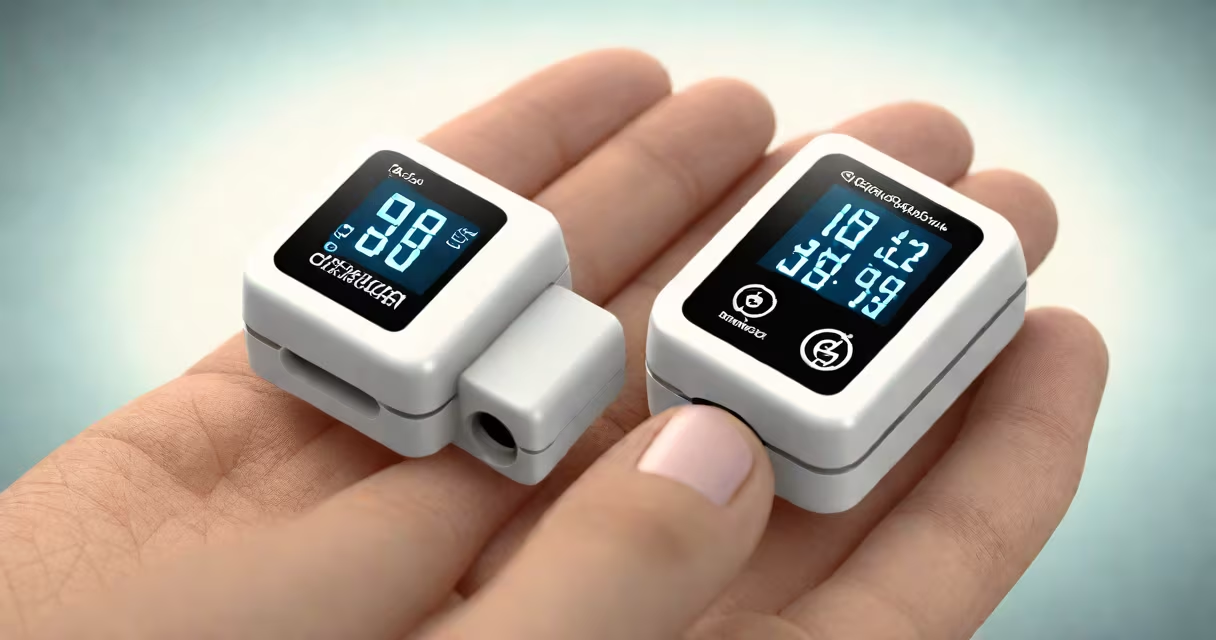
A healthy oxygen saturation level, measured as SpO2, typically falls between 95% and 100% in individuals breathing room air at sea level. This value indicates the percentage of hemoglobin molecules in red blood cells carrying oxygen. Levels below 90% suggest hypoxemia and require medical evaluation.
Oxygen saturation is measured non-invasively using a pulse oximeter-a small device clipped to the fingertip or earlobe. The device emits light through the skin and detects how much light is absorbed by oxygenated versus deoxygenated hemoglobin. Based on this absorption pattern, it calculates the percentage of oxygen-bound hemoglobin.
The American Thoracic Society states that values above 94% are generally considered acceptable for most adults during routine monitoring. However, for people with chronic lung conditions such as COPD, a slightly lower target-around 88% to 92%-may be appropriate to avoid oxygen toxicity. These thresholds are determined by clinical guidelines and individual patient history.
Oxygen enters the body through the lungs, diffuses into the bloodstream, and binds to hemoglobin in red blood cells. Each hemoglobin molecule can carry up to four oxygen molecules. When enough hemoglobin is saturated, the blood delivers oxygen efficiently to tissues and organs.
If saturation drops, tissues receive less oxygen, which can impair cellular function. The brain, heart, and kidneys are especially sensitive to low oxygen levels. Prolonged hypoxia can lead to confusion, rapid breathing, chest pain, or even organ failure.
A real-world example: During a high-altitude hike at 10,000 feet, atmospheric pressure decreases, reducing available oxygen. A person with a baseline saturation of 97% at sea level may see their SpO2 drop to 88% due to reduced partial pressure of oxygen. This decline triggers physiological responses like increased breathing rate and heart rate to compensate.
There are two primary ways to assess oxygenation: arterial blood gas (ABG) testing and pulse oximetry. ABG provides precise measurements of oxygen tension (PaO2) and saturation (SaO2), while pulse oximetry estimates SpO2 based on light absorption.
| SpO2 Range | Interpretation | Common Causes |
|---|---|---|
| 95%-100% | Normal | Healthy lungs, good cardiac output |
| 90%-94% | Mild hypoxemia | Altitude, mild respiratory illness |
| 85%-89% | Moderate hypoxemia | Pneumonia, pulmonary embolism |
| < 85% | Severe hypoxemia | Acute respiratory distress syndrome, shock |
SpO2 readings are influenced by external factors such as poor circulation, nail polish, skin pigmentation, and motion artifacts. A study published in Critical Care Medicine found that pulse oximeters can underestimate saturation by up to 5% in darker-skinned patients due to differences in light absorption. This highlights the importance of clinical context when interpreting results.
Many assume that a reading of 100% is ideal for everyone. In reality, extremely high saturation-above 100%-is often a technical artifact caused by sensor error or poor signal quality. Pulse oximeters cap at 100%, so values reported as 100% do not indicate excess oxygen; they simply reflect maximum detectable saturation.
Another misconception is equating low SpO2 with low oxygen in the body. While low saturation correlates with tissue hypoxia, other factors-such as anemia or carbon monoxide poisoning-can reduce oxygen delivery even when SpO2 appears normal. Carbon monoxide binds to hemoglobin with greater affinity than oxygen, creating carboxyhemoglobin that falsely elevates SpO2 readings. In such cases, pulse oximetry may show 98% saturation, but actual oxygen-carrying capacity is severely impaired.
I once observed this in a patient with suspected carbon monoxide exposure. Their SpO2 was 96%, but symptoms included headache, nausea, and altered mental status. After a blood test confirmed elevated carboxyhemoglobin levels, treatment with hyperbaric oxygen therapy reversed the condition. This case underscores that SpO2 alone cannot rule out oxygen-related pathology.
SpO2 levels consistently below 90% warrant evaluation by a healthcare provider. This threshold aligns with recommendations from the National Institutes of Health (NIH) for identifying clinically significant hypoxemia. Persistent low saturation may signal underlying issues such as asthma exacerbations, pneumonia, pulmonary edema, or heart failure.
For home monitoring, continuous pulse oximetry is useful during respiratory infections like influenza or COVID-19. The CDC advises checking SpO2 every 4 hours if symptomatic. A drop from 95% to 88% over 24 hours may indicate worsening lung function requiring medical intervention.
Individuals with known lung disease should maintain a baseline SpO2 reading. If their usual level drops by more than 5 percentage points, it may signal an acute event. For example, a person whose typical SpO2 is 92% may need urgent care if it falls to 87%.