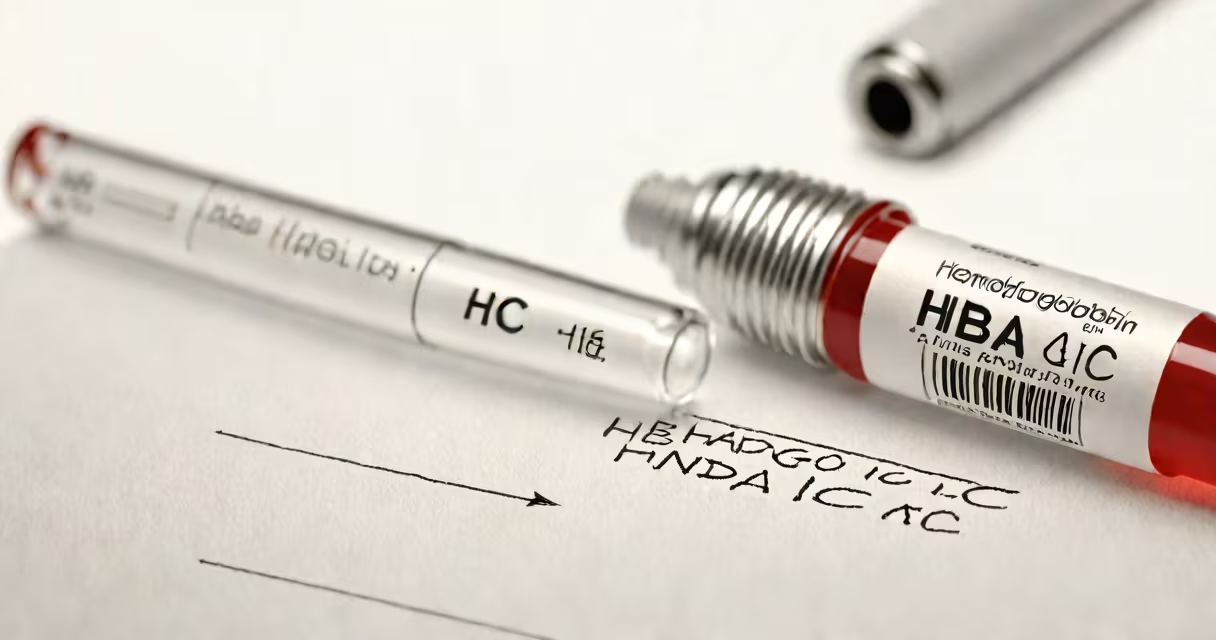
Hemoglobin A1c (HbA1c) is a blood test that measures the percentage of hemoglobin in red blood cells that has glucose attached to it, reflecting average blood sugar levels over the past 2 to 3 months. It's used to diagnose diabetes and monitor long-term glucose control in people with the condition.
The test works because red blood cells live about 120 days. As glucose circulates in the bloodstream, it binds irreversibly to hemoglobin. The higher the blood sugar over time, the more glucose attaches. HbA1c reports this accumulation as a percentage-typically between 4% and 6% in healthy individuals, and above 6.5% indicates diabetes.
For example, a result of 7% means average blood glucose was around 154 mg/dL over the last 90 days. This is not a snapshot like a finger-prick glucose meter-it shows trends. It's especially useful because it doesn't require fasting and avoids daily fluctuations.
When glucose enters the bloodstream, it binds to the beta chains of hemoglobin inside red blood cells. This process is called glycation. The longer glucose remains elevated, the more hemoglobin becomes glycated. Since red blood cells have a fixed lifespan, the amount of glycated hemoglobin reflects average glucose exposure during that period.
Unlike daily glucose checks, which show spikes and drops, HbA1c smooths out short-term changes. A person with high morning sugars and normal evenings may still have a stable HbA1c. Conversely, someone with consistent high readings will show a rising percentage.
According to the American Diabetes Association (ADA), HbA1c values above 6.5% on two separate tests confirm a diabetes diagnosis. Values between 5.7% and 6.4% indicate prediabetes. These thresholds are based on large-scale studies linking HbA1c levels to long-term complications such as retinopathy, neuropathy, and kidney disease.
Results are reported as a percentage. Here's how they're interpreted:
| HbA1c Percentage | Average Blood Glucose (mg/dL) | Interpretation |
|---|---|---|
| Below 5.7% | Below 117 | Normal |
| 5.7% - 6.4% | 117 - 137 | Prediabetes |
| 6.5% or higher | 135 or higher | Diabetes |
Some labs also report estimated average glucose (eAG), which converts the percentage into a familiar mg/dL number. For instance, an HbA1c of 7% corresponds to an eAG of 154 mg/dL. This helps patients relate the result to their daily glucose monitor readings.
One common misconception is that HbA1c reflects recent blood sugar levels. It does not. A single high reading the day before the test won't affect the result. The test aims to capture long-term exposure, not acute changes.
HbA1c is routinely ordered during annual physicals, especially for adults over 45 or those with risk factors like obesity, family history of diabetes, or high blood pressure. It's also used to adjust medication in people already diagnosed with diabetes.
For example, a patient with type 2 diabetes who has an HbA1c of 8.2% may need a change in medication or insulin regimen. The goal is typically below 7% for most adults, though individual targets vary based on age, comorbidities, and risk of hypoglycemia.
According to the National Institute of Diabetes and Digestive and Kidney Diseases (NIDDK), HbA1c testing reduces the risk of diabetic complications by 35% when maintained below 7%. This makes it a key tool in preventive care.
HbA1c is often mistaken for a fasting glucose test. They measure different things. Fasting glucose gives a single-point reading, while HbA1c shows sustained exposure. A person can have normal fasting glucose but high HbA1c due to post-meal spikes.
Another misunderstanding is that HbA1c is interchangeable with continuous glucose monitoring (CGM). CGM provides real-time data and detects patterns like overnight lows or postprandial surges. HbA1c offers a summary of control. Both are valuable, but they serve different purposes.
One non-obvious fact: certain conditions can distort HbA1c results. Hemoglobin variants (like sickle cell trait), chronic kidney disease, and recent blood loss or transfusion can cause inaccurate readings. In these cases, the test may underestimate or overestimate actual glucose control. The ADA recommends using alternate tests like fructosamine or CGM data when HbA1c is unreliable.
I once reviewed a patient's chart where HbA1c was 6.8%, suggesting poor control. But the patient had a rare hemoglobinopathy. Repeating the test with a different method showed a true level of 5.2%. This case highlights why context matters-HbA1c is not always definitive on its own.
HbA1c is not a diagnostic tool for acute conditions like diabetic ketoacidosis (DKA). It cannot detect current high blood sugar episodes or ketones. For that, a random blood glucose or urine ketone test is needed.
It also doesn't replace self-monitoring. Patients still need to check glucose at home to avoid hypoglycemia, especially when taking insulin or sulfonylureas. HbA1c tells you where you've been; daily monitoring tells you where you are now.
While ALT and pH are checked periodically for organ function, HbA1c is part of ongoing management for metabolic diseases. It's not a one-off screen unless prompted by symptoms or risk factors.
For people with type 1 diabetes, HbA1c is monitored every 3 months. For those with type 2 diabetes, it's typically done every 6 months if stable, or more frequently if adjustments are being made.
Hemoglobin A1c is a important component of blood work that reflects long-term glucose control. It's not a daily glucose check, nor is it interchangeable with fasting blood sugar. Its strength lies in summarizing average blood sugar over weeks to months, making it essential for diagnosing diabetes and adjusting treatment plans. When interpreted correctly-with awareness of limitations-it provides clear insight into metabolic health.