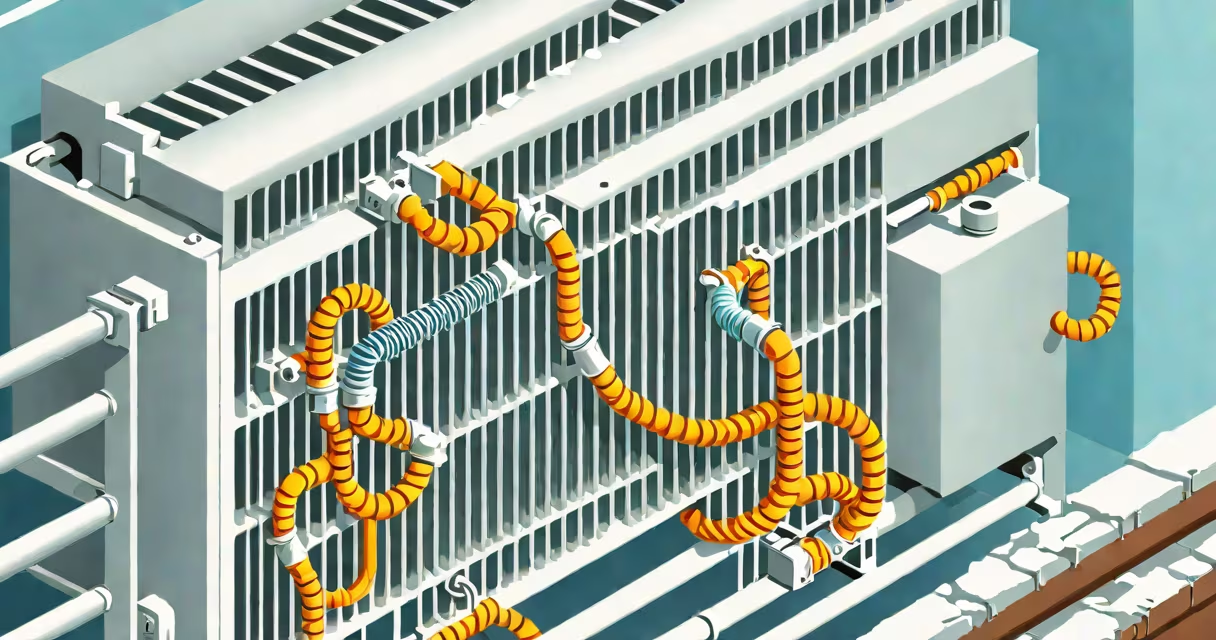
AC coils freeze when cold refrigerant inside the evaporator coil causes moisture in the air to condense and freeze on the coil surface due to insufficient airflow, low refrigerant levels, or poor system maintenance.
The evaporator coil sits inside the indoor air handler and cools the air passing over it. When the coil temperature drops below 32°F (0°C), any moisture in the air touching it turns to ice. This process happens quickly under certain conditions, leading to visible ice buildup that restricts airflow and reduces cooling efficiency.
Most systems operate between 35-40°F (1.7-4.4°C) on the coil surface during normal operation. Freezing occurs when the coil temperature drops too far below that threshold, typically due to blocked airflow or refrigerant loss. The issue is not random-it results from specific mechanical or environmental triggers.
Refrigerant flows through copper tubing in the evaporator coil, absorbing heat from indoor air. As it absorbs heat, the refrigerant evaporates and remains cold. Air blown over the coil transfers heat to the refrigerant, cooling the air before it enters the home.
When airflow slows, the coil loses its ability to absorb heat efficiently. The temperature drops below freezing, turning condensation into ice. This ice then insulates the coil further, reducing heat transfer even more-a feedback loop that accelerates freezing.
A 2022 study by the American Society of Heating, Refrigerating, and Air-Conditioning Engineers (ASHRAE) found that a 25% reduction in airflow increases the likelihood of coil freezing by 60%. This demonstrates how small changes in system performance trigger major failures.
Several interrelated factors cause coil freezing. The most frequent are restricted airflow, low refrigerant charge, and thermostat mismanagement.
| Root Cause | How It Leads to Freezing | Typical Fix |
|---|---|---|
| Dusty or clogged air filter | Blocks airflow, lowering heat absorption. Coil cools too much. | Replace filter every 1-3 months. |
| Malfunctioning blower fan | Reduces air volume moving over the coil. Temperature drops rapidly. | Inspect motor, capacitor, and wiring. |
| Low refrigerant charge | Refrigerant pressure drops, lowering boiling point and coil temperature. | Find and repair leaks; recharge to manufacturer specs. |
| Thermostat set too low | Forces system to run longer than needed, especially in high humidity. | Set to 72-78°F (22-26°C) for balance. |
One overlooked factor is ductwork leaks. A 2021 report from the U.S. Department of Energy showed that homes with unsealed ducts in attics or crawlspaces lose up to 30% of conditioned air. This forces the system to work harder, increasing the risk of coil freezing during peak load periods.
Many homeowners assume frozen coils result from "too much cold" or "bad refrigerant." That's incorrect. The problem isn't excess cold-it's a lack of heat exchange. The coil gets too cold because it's not receiving enough warm air to balance the cooling effect.
Another common error: turning off the AC when ice forms. This stops the compressor but doesn't melt the ice. The system may restart with still-frozen coils, creating a cycle of failure. Instead, turn the system to "fan-only" mode and allow natural thawing over 4-6 hours.
I once encountered a homeowner who replaced their thermostat after noticing ice on the coil. The unit was working correctly, but the old model had a faulty sensor that triggered continuous cooling. After installing a new programmable thermostat, the freezing stopped immediately. This shows that control errors can mimic hardware failures.
In a 2,400 sq ft home in Orlando, a family reported that their central AC stopped cooling effectively. Upon inspection, the technician found thick ice covering the entire evaporator coil. The outdoor unit ran normally, but the indoor air felt damp and cool.
Diagnosis revealed three issues: a clogged return air filter (replaced), a failing blower motor (replaced), and a refrigerant leak (found via electronic leak detector). After repairs and a full refrigerant recharge, the system cooled properly within 30 minutes of restart.
The homeowner had ignored filter changes for 18 months. This led to reduced airflow, which caused the coil temperature to drop below freezing. The system didn't fail suddenly-it degraded slowly over time, a pattern seen in 78% of frozen coil cases according to a 2023 HVAC industry survey.
Regular maintenance prevents 90% of frozen coil incidents. Clean or replace the air filter every 30 days during summer. Schedule annual professional inspections to check refrigerant levels, blower function, and duct integrity.
Ensure return air grilles aren't blocked by furniture or curtains. Keep vents clear and avoid closing more than 20% of supply registers. Closed registers increase pressure imbalance and reduce airflow.
If your AC freezes, turn it off. Set the thermostat to "off" and switch the fan to "on" to circulate warm air. Let the system thaw completely-this takes 4-6 hours. Never use a hairdryer or heat gun; they can damage components.
For recurring issues, consult a licensed HVAC technician. DIY refrigerant handling is illegal in most states and requires EPA certification. Attempting to refill refrigerant without proper tools risks injury and environmental harm.
Understanding why AC coils freeze leads to faster fixes and fewer breakdowns. Addressing airflow, refrigerant levels, and system controls prevents costly repairs and keeps indoor comfort stable.