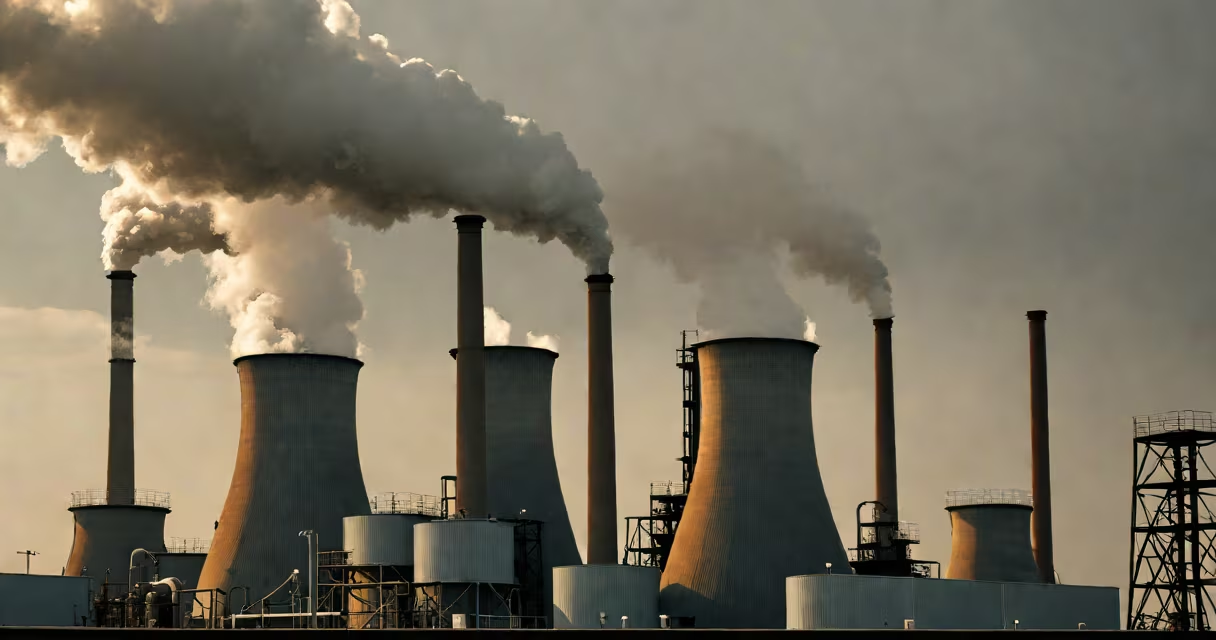
A steam power station generates electricity by boiling water to produce high-pressure steam that drives a turbine connected to a generator. These facilities typically burn fossil fuels like coal, oil, or natural gas, though some use nuclear reactions or biomass. The process relies on thermodynamics: heat creates steam, which turns mechanical energy into electrical energy.
Steam power stations form the core of many national electricity networks. They operate continuously, providing stable baseload power. Unlike solar or wind systems, they aren't dependent on weather patterns. A single large unit can supply hundreds of megawatts-enough for tens of thousands of homes.
The term "steam power station" often refers to thermal power plants using steam cycles. Not all power stations use steam; hydroelectric and solar photovoltaic plants don't. But among those that do, steam remains the most common method for converting heat into motion.
Electricity generation begins with fuel combustion. In a typical coal-fired plant, pulverized coal burns in a boiler at temperatures exceeding 1,000°C. This heat transfers to water circulating through metal tubes inside the boiler, turning it into steam at pressures around 150 bar and temperatures near 540°C.
The high-pressure steam flows into a turbine-a series of fan-like blades mounted on a central shaft. As steam expands through the turbine stages, it spins the shaft. The turbine's rotational energy powers a generator, where coils of wire spin within a magnetic field, inducing an electric current via electromagnetic induction.
After passing through the turbine, steam enters a condenser, where it cools and returns to liquid form. This step is critical: condensing steam reduces pressure at the turbine outlet, increasing efficiency. The condensed water is pumped back to the boiler, completing the cycle. Cooling towers release excess heat into the atmosphere.
Steam power stations differ by fuel source and system design. The primary categories are:
| Type | Fuel Source | Efficiency Range | Key Feature |
|---|---|---|---|
| Coal-fired | Bituminous or sub-bituminous coal | 33-38% | Most common globally; uses pulverized coal injection |
| Natural gas combined cycle | Gas burned in combustion chamber | 50-60% | Uses both gas turbine and steam turbine; higher efficiency |
| Nuclear steam | Uranium fission heats water indirectly | 32-35% | No direct emissions; steam generated via secondary loop |
| Biomass-fired | Wood pellets, agricultural waste | 25-30% | Renewable but lower efficiency due to moisture content |
Each type balances cost, availability, and environmental impact. Natural gas plants offer faster startup times and lower carbon output than coal. Nuclear plants run at steady output for years between refueling. Biomass stations are growing in Europe and North America as part of decarbonization efforts.
Steam power stations dominate electricity infrastructure in countries with abundant fossil fuel reserves or established grid systems. China operates over 1,000 coal-fired units, generating nearly half its electricity from steam-based thermal plants. India relies on steam power for 70% of its grid demand, especially during peak evening hours.
These plants remain essential because they provide dispatchable power-meaning operators can turn them on or off based on demand. Grids require constant balance between supply and consumption. Solar and wind cannot deliver consistent output without storage, but steam stations adjust output smoothly over minutes to hours.
For example, the Taichung Power Plant in Taiwan is the world's largest coal-fired facility, with six units producing 5.5 gigawatts. It supplies about 10% of Taiwan's electricity. During typhoon season, when solar output drops, steam stations maintain reliability.
People often confuse steam power stations with other types of power plants. A steam power station is not the same as a geothermal plant-even though both use steam. Geothermal plants tap underground heat to generate steam directly, while steam power stations rely on external combustion or nuclear reactions.
Another mistake: assuming all steam plants emit large amounts of CO₂. While coal plants do, natural gas combined cycle plants emit roughly half the CO₂ per megawatt-hour. The U.S. Energy Information Administration reports that in 2022, gas-fired steam plants emitted 450 grams of CO₂ per kWh, compared to 900 for coal.
Also, steam power stations are not obsolete. Despite growth in renewables, they still account for 60% of global electricity generation. According to the International Energy Agency, even with climate goals, steam plants will remain in service until at least 2050 due to their role in grid stability and backup capacity.
Drax in North Yorkshire, UK, began operations in 1974 as a coal-fired station. It originally had four 600 MW units, totaling 2.4 GW. By 2010, it was the largest coal plant in Europe.
In a major transition, Drax converted three of its six units to burn wood pellets instead of coal. The plant now runs on biomass, reducing CO₂ emissions by over 80%. However, it still uses steam turbines and generators-same core technology. The switch changed the fuel source, not the fundamental process.
Drax produces enough electricity annually to power over 3 million homes. Its ability to scale biomass input and integrate with carbon capture technology makes it a model for retrofitting existing steam stations toward net-zero goals.
I toured the Lünen power station in Germany in 2019. It's a 1.2 GW coal-fired plant operating with advanced emission controls. Inside the control room, operators monitor steam temperature, pressure, and turbine speed in real time. One operator showed me a live graph: when demand spiked during winter mornings, the plant increased output by adjusting fuel feed rates and steam flow.
What surprised me was how much attention goes into maintaining consistent steam quality. Even small deviations in temperature or pressure reduce efficiency and increase wear on turbine blades. The plant uses automated feedback loops to keep variables within narrow tolerances-critical for safety and performance.
A steam power station remains a important component of modern energy systems. It transforms heat into electricity through controlled steam expansion. While renewable sources grow, steam power stations continue to supply reliable, dispatchable power across continents.