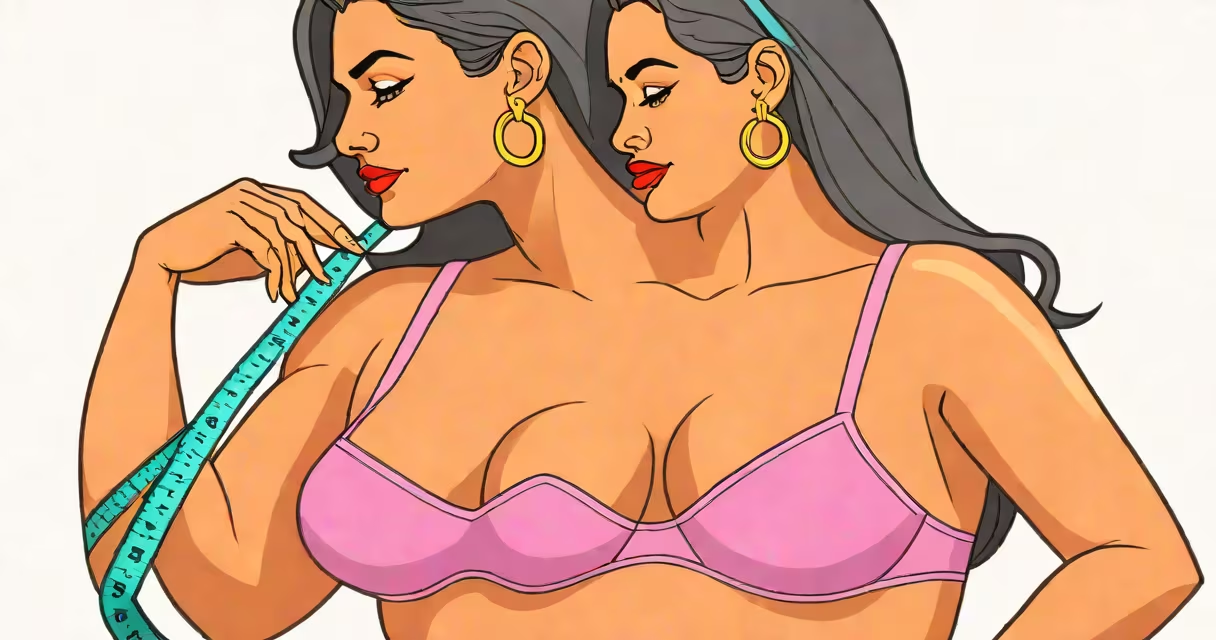
Your breast size is a combination of band size (around the ribcage beneath the breasts) and cup size (the volume of breast tissue above the band). It's expressed as a number followed by a letter-like 34B or 38C-and determines bra fit. Accurate measurement ensures comfort, support, and proper posture.
Bra size is not a direct measure of breast volume. Instead, it reflects two distinct measurements: the underbust (band size) and the bust (over the fullest part of the breasts). The difference between these two numbers defines the cup size. A 2-inch gap equals an A cup, 4 inches equals a B, 6 inches a C, and so on. This system was standardized in the early 20th century and remains in use today.
The U.S. and UK use the same sizing system, though European sizes differ slightly. For example, a 38C in the U.S. corresponds to a 40C in Europe. Always check the brand's size chart, as sizing varies between manufacturers. A 34B from one brand may fit differently than a 34B from another due to differences in cut and stretch.
To find your band size, measure around your ribcage just below the bust, where the bra band sits. Wear a non-padded bra or nothing at all. Round to the nearest even number. If the measurement is 33 inches, round up to 34. If it's 35, round up to 36. This becomes your band size.
To measure the bust, wrap the tape around the fullest part of your chest-usually just above the nipples. Keep the tape level and snug, not tight. Do not pull it in or out. Record this number.
Subtract the band size from the bust size. The result determines your cup size:
For example: If your band size is 34 inches and your bust measures 38 inches, the difference is 4 inches. That makes your size 34D.
Many people assume their breast size is determined solely by cup size. A C cup can be very different in volume depending on the band. A 32C has less volume than a 38C, even though both are C cups. The band size affects fit and support.
Another mistake is measuring while wearing a padded bra. Padded bras add 1-2 inches to the bust measurement, leading to incorrect sizing. Always measure without padding.
Some believe that breast size correlates with health or fertility. There is no scientific evidence linking breast size to reproductive function or disease risk. The National Institute of Health states that breast size varies widely among individuals and is influenced by genetics, weight, hormones, and pregnancy-not health status.
Breast size ranges from AA (very small) to G (large). Sizes beyond F are considered large and often require specialized bra styles. For example, a 40G requires a wide band and deep cup construction to avoid spillage and ensure support.
Body shape matters. Women with larger ribcages or wider shoulders may need extended band sizes. Those with sloping shoulders benefit from wider straps and structured frames. A 38C is common among women with average height and build, but a 38C may feel tight on someone with a fuller frame.
| Bust Measurement | Band Size | Cup Size | Full Size |
|---|---|---|---|
| 36 inches | 34 | B | 34B |
| 38 inches | 36 | B | 36B |
| 42 inches | 38 | C | 38C |
| 46 inches | 40 | D | 40D |
When shopping, try on bras rather than relying on online charts. A 38C from one brand may fit like a 36D from another. Fit is personal. Support is critical-poorly fitting bras contribute to back pain and poor posture.
Ill-fitting bras cause discomfort, chafing, and long-term musculoskeletal strain. According to the American Council on Exercise, 80% of women wear the wrong bra size. Many wear a band that's too loose, leading to inadequate support during movement.
I once measured my own size after years of wearing a 34D. My actual size was 36C. The band was too tight, and the cups were too shallow. After switching to a properly fitted bra, I noticed improved posture and reduced shoulder tension within days.
Measuring correctly prevents common issues: straps slipping, gaps at the front, and visible bulges. These signs indicate a poor fit. A well-fitted bra should sit flat against the chest, with no gaps or wrinkles.
Understanding your breast size begins with precise measurement. Use a soft tape measure and follow the steps above. Once you have your size, explore options that match your body type and lifestyle.
Knowing your breast size is not about appearance-it's about comfort, health, and confidence. A correct fit reduces physical strain and improves daily ease. Take the time to measure properly. The difference is measurable and meaningful.