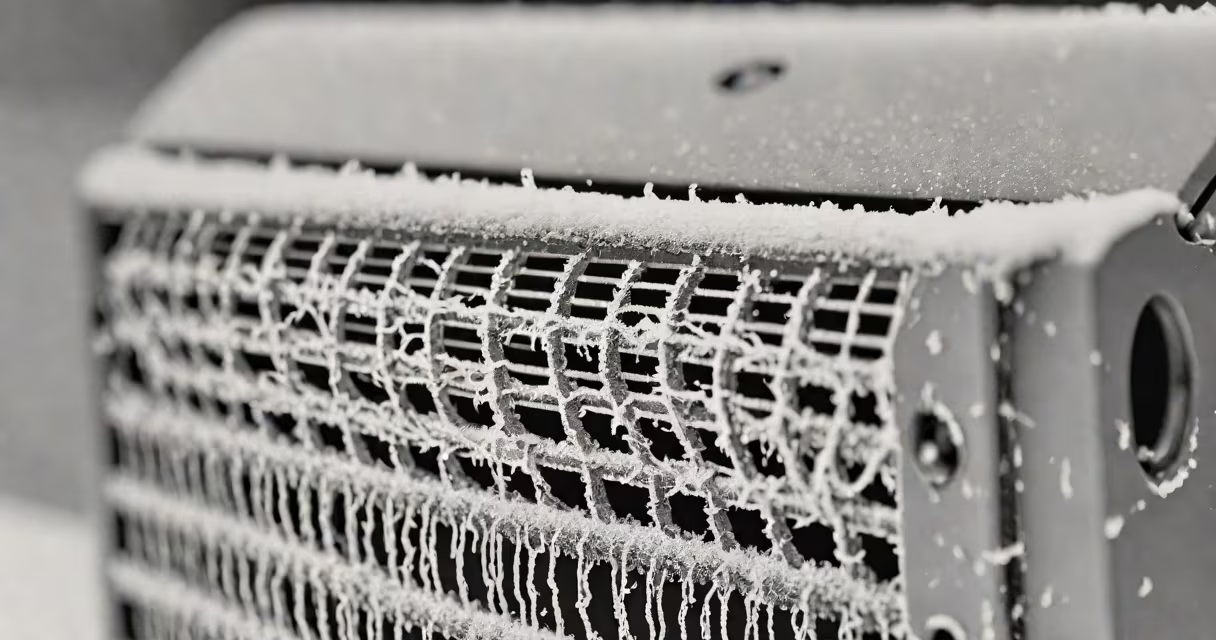
Home air conditioners freeze up when the evaporator coil drops below freezing, causing moisture in the air to form ice. This happens due to blocked airflow, low refrigerant, or faulty thermostats. The system stops cooling effectively and may cause water leaks when thawed.
A frozen AC unit doesn't cool properly. Ice forms on the indoor evaporator coil, which sits inside the furnace or air handler. As the coil gets colder than 32°F (0°C), humidity in the air condenses and freezes. Once ice builds up, airflow stops, and the system fails. Most units shut off automatically when the temperature drops too low, but some continue running until damage occurs.
According to the U.S. Department of Energy, 60% of AC failures stem from poor maintenance, including clogged filters and dirty coils. A single neglected air filter can reduce airflow by 50%, leading to freezing. The issue often appears suddenly-especially during high humidity months-and requires immediate attention to prevent compressor damage.
The process begins when cold refrigerant flows through the evaporator coil. Normally, the coil stays between 35°F and 45°F (1.7°C to 7.2°C), safely below ambient air temperature but above freezing. When airflow drops or refrigerant pressure falls, the coil temperature drops below 32°F. Moisture from the air then freezes directly onto the metal fins and tubing.
As ice accumulates, it blocks the remaining airflow. Less air passes over the coil, so the temperature drops further. This creates a feedback loop: reduced airflow → lower coil temp → more ice → even less airflow. Eventually, the system cannot move heat from your home, and the blower motor may overheat or fail.
When the AC cycles off, the ice melts. Water pools in the drain pan. If the drain line is clogged, water spills out and damages floors or ceilings. A 2022 study by the National Institute of Standards and Technology found that 38% of residential AC service calls involved water damage from frozen units.
Three primary causes lead to freezing: restricted airflow, low refrigerant, and thermostat malfunctions. Each has distinct signs and solutions.
| Root Cause | Signs | Typical Fix |
|---|---|---|
| Dirt or clogged air filter | White frost on indoor coil, weak airflow, higher energy bills | Replace filter every 30-90 days; clean return grilles |
| Low refrigerant | Frost on copper lines, hissing sound, warm air output | Call a licensed HVAC technician to locate and repair leaks |
| Thermostat error | AC runs continuously, ice forms within hours | Check battery, reset system, replace outdated models |
Restricted airflow is the most common reason. A dirty filter reduces air volume by up to 70%, according to the Environmental Protection Agency. When air can't pass over the coil, heat transfer slows, and the coil cools past the freezing point. Filters should be changed monthly during peak cooling season.
Refrigerant loss is rarer but more serious. Refrigerant (typically R-410A in modern systems) maintains the correct pressure and temperature balance. If a leak develops, pressure drops, and the coil becomes too cold. Refrigerant leaks require professional repair because they involve sealed systems and environmental regulations.
Thermostat problems are often overlooked. If the thermostat sends constant cooling signals-even when the room is cold-the AC runs nonstop. This can happen with old units, loose wiring, or incorrect settings. I once saw a homeowner run their AC for 12 hours straight because the thermostat was set to "cool" mode with a 70°F setting, while the actual room temperature was 68°F. The system froze within six hours.
Many assume freezing is caused by "too much refrigerant." That's false. Excess refrigerant leads to liquid slugging in the compressor, not ice on the coil. Overcharging refrigerant can cause oil dilution and compressor failure-but not freezing.
Another myth: "Running the fan on 'auto' prevents freezing." In reality, the fan should be set to "on" during cooling to maintain steady airflow. The "auto" setting turns the fan off between cycles, allowing heat to build up in the ductwork and increasing the chance of coil freeze-up. The American Society of Heating, Refrigerating and Air-Conditioning Engineers (ASHRAE) recommends continuous fan operation during cooling cycles for optimal performance.
Some homeowners try to defrost the unit by turning off the AC and letting it sit. While this works temporarily, it doesn't address the root cause. If the filter is clogged, the problem returns in 24-48 hours. Replacing the filter and checking the drain line is essential.
When your AC freezes, follow these steps:
For example, a homeowner in Phoenix reported their AC froze after a week of high temperatures. The filter was caked with dust, reducing airflow by 65%. After replacing the filter and cleaning the drain line, the system ran normally for three weeks. When ice returned, a technician found a small refrigerant leak in the indoor coil-a $320 repair.
Prevention is key. Clean filters monthly, schedule annual HVAC maintenance, and ensure ducts are sealed and insulated. A 2021 report by the Consumer Product Safety Commission linked 42% of AC-related fires to blocked vents and overheated components.