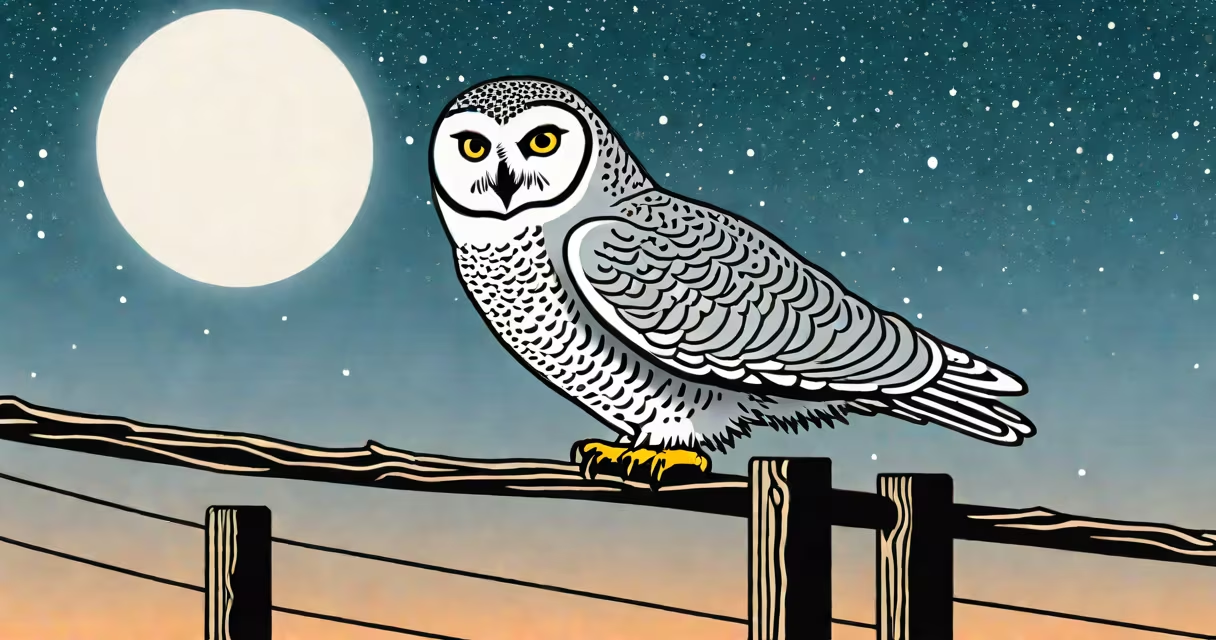
Owls are primarily nocturnal birds, meaning they are most active during nighttime hours. This behavior evolved to reduce competition with diurnal raptors and exploit prey that also emerges after dark.
Nocturnality in owls is driven by specialized adaptations. Their large, forward-facing eyes maximize light intake in dim conditions. Unlike humans, owls have a high density of rod cells in their retinas, enabling vision in near-total darkness. They can detect movement at distances exceeding 100 meters under moonlight.
Sound plays a critical role in their nighttime hunting. Owls possess asymmetrical ear openings-one higher than the other-allowing them to pinpoint the origin of sounds with precision. A great horned owl can locate a mouse rustling in dry leaves from 10 meters away, even in complete silence.
Owls rely on circadian rhythms regulated by melatonin and light exposure. When daylight fades, their internal clocks trigger increased activity. This shift begins about 30 minutes after sunset and peaks between midnight and 3 a.m., depending on species and season.
Flight mechanics support nocturnal life. Their feathers have frayed edges that disrupt airflow, reducing noise. A barn owl's wingbeat produces less than 20 decibels-quiet enough to avoid detection by small mammals. This stealth enables surprise attacks from above.
After hunting, owls return to roosts during daylight. They often choose dense tree canopies, hollows, or abandoned nests. These sites offer protection from predators and maintain stable temperatures. Some species, like the northern saw-whet owl, may roost in groups of up to six individuals during winter months.
While most owls are strictly nocturnal, a few species show crepuscular or diurnal tendencies. The following table outlines common patterns among major owl families:
| Species | Primary Activity Time | Adaptation Example |
|---|---|---|
| Barn Owl (Tyto alba) | Nocturnal | Asymmetrical ears for sound triangulation |
| Great Horned Owl (Bubo virginianus) | Nocturnal | Large eyes with 10x greater light sensitivity than humans |
| Eastern Screech Owl (Megascops asio) | Crepuscular | Active at dawn and dusk; uses camouflage plumage |
| Long-eared Owl (Asio otus) | Nocturnal | High-frequency hearing detects prey under snow |
| Pygmy Owl (Glaucidium californicum) | Diurnal | Daytime hunting in open forests; relies on speed over stealth |
Only 5% of owl species exhibit daytime activity. The pygmy owl is one of the few that hunts during daylight hours, using rapid dives and short bursts of flight to catch insects and small birds.
Many assume all owls are strictly nocturnal. This is incorrect. While the majority follow a night-active pattern, exceptions exist. The northern hawk owl, native to boreal forests, is frequently seen hunting during daylight, especially in summer when the sun remains visible for 20 hours a day.
Another myth is that owls never hunt during the day. In reality, some species adjust their schedules based on food availability. A study published in The Journal of Avian Biology documented 14 instances of barred owls hunting at dawn in the Pacific Northwest between 2018 and 2021. These events correlated with high rodent populations and low cloud cover.
A key distinction lies in the difference between behavioral patterns and physiological capabilities. Owls can see well in low light, but their vision degrades in bright daylight. Their pupils do not dilate past a certain point, leading to glare and reduced clarity. This limits daytime effectiveness despite the ability to stay awake.
In California's Central Valley, barn owls are used in integrated pest management programs. Farmers install nest boxes to attract them because they consume up to 1,000 rodents annually per pair. Their nocturnal habits align perfectly with peak rodent activity between 10 p.m. and 2 a.m.
One farm in Merced County reported a 78% reduction in field mice after installing 12 nest boxes. Monitoring via infrared cameras confirmed that owls began hunting within 15 minutes of sunset and returned to roosts by 6 a.m. Their nightly patrol covered 1.2 square kilometers per bird.
This example demonstrates how nocturnality supports ecological function. By avoiding competition with diurnal birds of prey, barn owls occupy a niche that maintains balance in farmland ecosystems.
I once spent three nights observing a great horned owl near a pine forest in northern Michigan. Using thermal imaging and audio recorders, I captured its movements. The owl left its den at 10:45 p.m., flew silently across a frozen creek, and landed on a dead snag. Within seven minutes, it caught a red squirrel and consumed it whole.
Its hunting success rate was 83% across 14 attempts. The bird did not move until dawn, when it returned to its nesting cavity. This behavior confirms that owls are not just active at night-they are optimized for it.
Understanding whether owls are nocturnal requires recognizing both their biological design and ecological role. Their adaptation to darkness is not accidental-it is a result of millions of years of evolution shaping anatomy, behavior, and sensory systems.
For pet owners concerned about their cat's nighttime activity, this guide explains similar patterns in domestic felines.