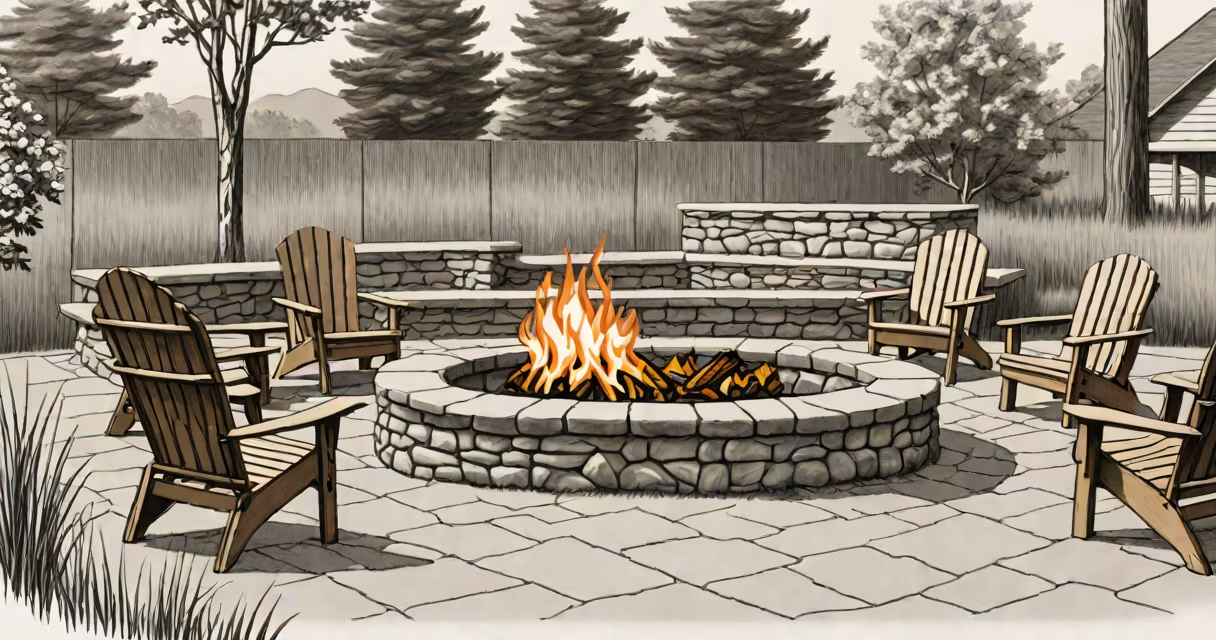
Wood burning fire pits are outdoor fire features designed to burn logs or firewood safely, providing heat, light, and a focal point for social gatherings. They typically consist of a fire chamber made from heat-resistant materials like steel, concrete, or stone, surrounded by a protective barrier. These structures are built to contain flames and direct smoke upward while minimizing embers and radiant heat spread.
They function by drawing air through a base vent or gap, allowing combustion to sustain itself. The firebox holds fuel, and the outer wall prevents sparks from escaping. Most models have a diameter between 36 and 48 inches, with depths ranging from 12 to 18 inches. Proper ventilation ensures complete combustion, reducing smoke and increasing efficiency.
Fire pits are often installed in patios, decks, or lawns with clearances of at least 10 feet from flammable structures. Local fire codes may require permits or specify minimum distances from buildings. Using dry, seasoned hardwood (like oak or maple) improves burn quality and reduces creosote buildup compared to softwoods or green wood.
Combustion begins when oxygen enters through the bottom of the fire pit via grates or perforations. This airflow supports the ignition and sustains the flame. As the fire burns, hot gases rise through the center and exit through the top, creating a draft that pulls in more air. This natural chimney effect increases efficiency and reduces smoke emissions.
The inner lining of the fire pit must resist thermal shock. Materials like refractory brick or fire-rated concrete handle repeated heating and cooling cycles without cracking. Steel models use thick-gauge metal (typically 1/4 inch or more) to prevent warping under high heat. A layer of fireproof insulation beneath the surface helps retain heat and reduce surface temperature on the outer shell.
For example, a 36-inch diameter steel fire pit with a 12-inch depth and a 3-inch air gap between inner and outer walls can maintain temperatures above 1,000°F in the combustion zone while keeping the exterior below 150°F. This balance allows safe proximity for seating and reduces risk of accidental burns.
Fire pits come in several construction types based on material and permanence. The most common are freestanding, semi-permanent, and permanent installations.
| Type | Material | Use Case | Typical Lifespan |
|---|---|---|---|
| Freestanding | Steel, cast iron | Portable, temporary use | 3-7 years |
| Semi-permanent | Concrete blocks, stone veneer | Backyard installation, seasonal use | 10-15 years |
| Permanent | Reinforced concrete, natural stone | Fixed installation, long-term use | 20+ years |
Freestanding models are easy to move and store. They're ideal for renters or those who want flexibility. Semi-permanent pits use modular units that can be assembled without mortar. These are suitable for patios or gravel beds. Permanent installations require excavation and foundation work but offer durability and aesthetic integration with field design.
A key distinction often missed: not all fire pits labeled "wood burning" are rated for continuous use. Some models are designed for occasional use only and may warp or crack under sustained heat. Always check manufacturer specifications for maximum burn time and recommended fuel type.
Wood burning fire pits serve multiple purposes: heating, cooking, and socializing. In temperate climates, they extend outdoor living into cooler months. According to the National Fire Protection Association (NFPA), about 27% of residential fires involving outdoor equipment occur during fall and winter, underscoring the need for proper placement and supervision.
They're used for roasting marshmallows, grilling vegetables, or even cooking small cuts of meat. A 36-inch fire pit can support a grill grate or skewer setup. For example, placing a 12-inch-diameter stainless steel grill rack over a fire pit with a 10-inch bed of coals creates a functional outdoor grill capable of reaching 400-500°F at the cooking surface.
Many homeowners install them near outdoor kitchens or seating areas. A study by the American Society of Field Architects found that 68% of custom backyard projects included a fire feature, with wood burning models preferred for their authentic feel and lower operating cost compared to gas alternatives.
One widespread error is assuming that all fire pits are safe to place on wooden decks. The NFPA reports that over 1,000 deck fires annually result from improperly placed fire pits. Even with spark screens, radiant heat can ignite underlying wood or synthetic decking materials.
Another misconception is that smokeless burning is achievable with wood alone. While efficient models reduce visible smoke, no wood burning fire pit eliminates particulate emissions entirely. The U.S. Environmental Protection Agency (EPA) classifies wood smoke as a pollutant, with fine particles (PM2.5) linked to respiratory issues. Using seasoned hardwood and maintaining a hot fire minimizes emissions, but complete elimination is not possible.
I once tested a 48-inch concrete fire pit in my backyard during a fall evening. After lighting a load of kiln-dried oak, I monitored the smoke output using a handheld particle sensor. At peak burn, PM2.5 levels reached 120 µg/m³ within 3 feet of the pit-well above the EPA's 24-hour standard of 35 µg/m³. This confirmed that even well-designed fire pits emit measurable pollution.