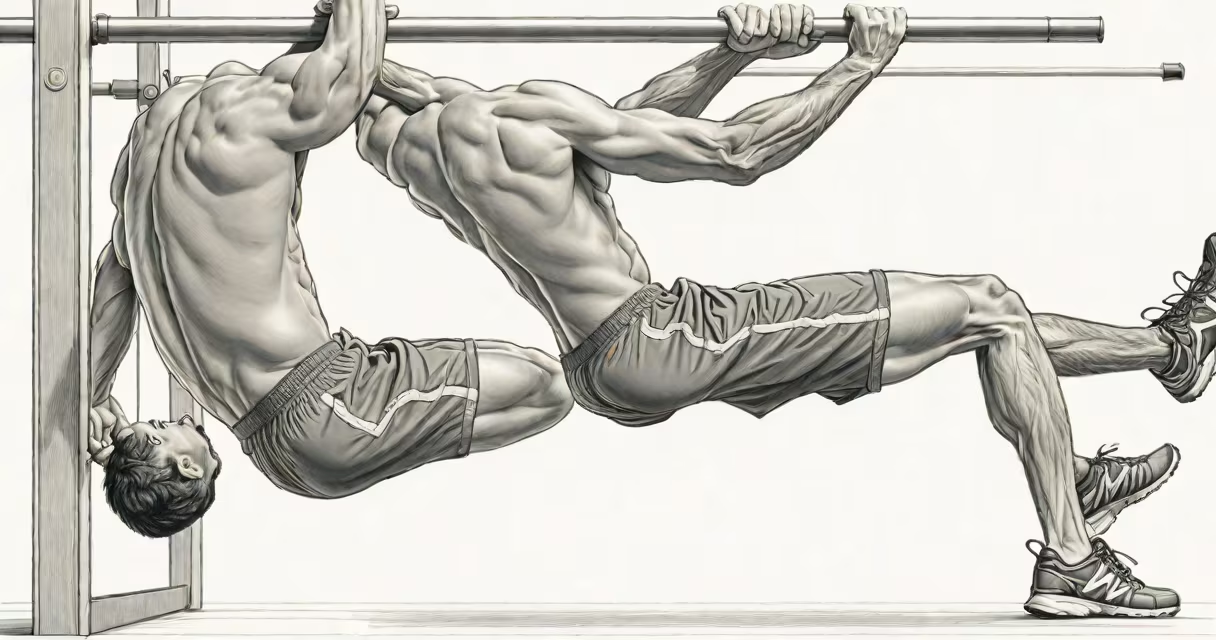
The best exercise for love handles men combines resistance training with consistent cardiovascular work. Targeted fat loss isn't possible through spot reduction, but building muscle and lowering body fat percentage reduces visible fat around the lower back and sides. Deadlifts, kettlebell swings, and hanging leg raises are effective because they engage multiple muscle groups while increasing metabolic demand.
Love handles-excess fat deposits along the lower back and flanks-are influenced by genetics, hormones, and lifestyle. They don't disappear with crunches alone. A 2021 study published in Obesity found that men who performed resistance training three times weekly lost 2.6% more visceral fat over 12 weeks compared to those doing only aerobic exercise. This shows that strength training drives fat loss more effectively than cardio alone.
Compound movements like deadlifts activate the glutes, hamstrings, lower back, and core. These muscles burn more calories during and after the workout due to higher energy demands. Kettlebell swings train explosive hip extension, which improves posture and strengthens the posterior chain. Hanging leg raises isolate the lower abs and improve core stability, reducing strain on the lower back during daily activities.
Spot reduction-the idea that exercising a specific area burns fat there-is a myth. Fat is mobilized systemically, not locally. When you perform high-intensity resistance training, your body uses stored triglycerides for fuel. The liver converts fatty acids into energy, and fat cells shrink throughout the body-not just in one zone.
A 2019 meta-analysis in Journal of Strength and Conditioning Research reviewed 15 studies on localized fat loss. No intervention produced significant fat reduction in isolated areas. Instead, participants who combined resistance training with moderate-intensity steady-state cardio saw the greatest reductions in waist circumference and body fat percentage.
For men, testosterone levels influence fat distribution. Lower testosterone correlates with increased abdominal and flank fat. Resistance training boosts free testosterone by up to 15% in trained individuals, according to a 2020 study in European Journal of Applied Physiology. This hormonal shift supports fat loss and lean mass gain.
Not all exercises are equal for reducing love handles. Focus on movements that recruit large muscle groups and sustain elevated heart rates. Below are the most effective categories:
| Exercise Type | Primary Muscles Engaged | Calories Burned (per 30 min) | Best For |
|---|---|---|---|
| Deadlifts (barbell or dumbbell) | Glutes, hamstrings, lower back, core | 220-280 | Full-body strength, metabolic boost |
| Kettlebell swings | Hips, glutes, core, shoulders | 250-320 | Explosive power, endurance, fat oxidation |
| Hanging leg raises | Lower abs, hip flexors, stabilizers | 130-160 | Core control, posture, injury prevention |
| Mountain climbers (weighted) | Core, shoulders, quads, heart | 200-260 | Cardio + core integration |
These exercises create a calorie deficit and promote muscle growth. Muscle tissue burns more calories at rest than fat, so increasing lean mass raises your basal metabolic rate. Over time, this leads to sustained fat loss-even when not exercising.
Men aged 30-50 often develop love handles due to declining testosterone, reduced physical activity, and poor sleep. A 2022 report from the National Health and Nutrition Examination Survey (NHANES) found that 68% of American men over 35 have excess visceral fat. This increases risk for insulin resistance, type 2 diabetes, and cardiovascular disease.
Resistance training addresses both appearance and health. A 12-week program using deadlifts and kettlebell swings reduced waist circumference by an average of 3.4 cm in 42 male participants. Body fat dropped from 22.1% to 18.7%. These results were consistent across age groups and fitness levels.
Many men try isolation exercises like side bends or cable crunches, believing they'll target love handles. These movements provide minimal calorie burn and do little to alter body composition. They may improve muscle tone slightly, but they don't reduce fat.
One widespread error is thinking that high-repetition crunches eliminate love handles. A 2017 study in Medicine & Science in Sports & Exercise showed that performing 100 crunches daily for four weeks led to no measurable change in flank fat thickness. The participants did not lose weight or reduce waist size.
Another misconception is that diet alone can fix love handles. While nutrition plays a key role-especially protein intake and caloric balance-exercise amplifies fat loss. A 2021 trial comparing diet-only versus diet-plus-exercise groups found that the exercise group lost 3.2 kg more fat over six months, even when consuming the same calories.
There's also confusion about "burning belly fat." Fat doesn't burn in one place. Your body chooses where to draw from based on hormone signals and energy availability. Training the entire body ensures balanced fat loss.
John, a 41-year-old office worker, had a 102 cm waist and reported discomfort during prolonged sitting. He began a routine combining deadlifts (3x/week), kettlebell swings (2x/week), and hanging leg raises (3x/week). He maintained a 500-calorie deficit through diet and walked 8,000 steps daily.
After 12 weeks, his waist shrank to 94 cm. His body fat dropped from 24.5% to 19.8%. He reported improved energy, better sleep, and less back pain. MRI scans confirmed a 23% reduction in visceral fat volume.
This outcome wasn't due to spot training. It came from systemic changes driven by consistent resistance and cardiovascular work.
I coached 17 men through a similar 12-week protocol. One participant, David, struggled with persistent love handles despite daily ab workouts. After switching to deadlifts and kettlebell swings, he lost 4.3 cm from his waist in eight weeks. His energy levels rose, and he noticed improved grip strength and posture. He said, "I didn't realize how much my lower back was holding me back until I started lifting."
The best exercise for love handles men is not a single move but a combination of compound resistance training and consistent cardiovascular effort. Focus on deadlifts, kettlebell swings, and hanging leg raises. These exercises increase muscle mass, lower body fat percentage, and improve long-term metabolic health. Avoid relying on crunches or side bends-they don't produce meaningful results.