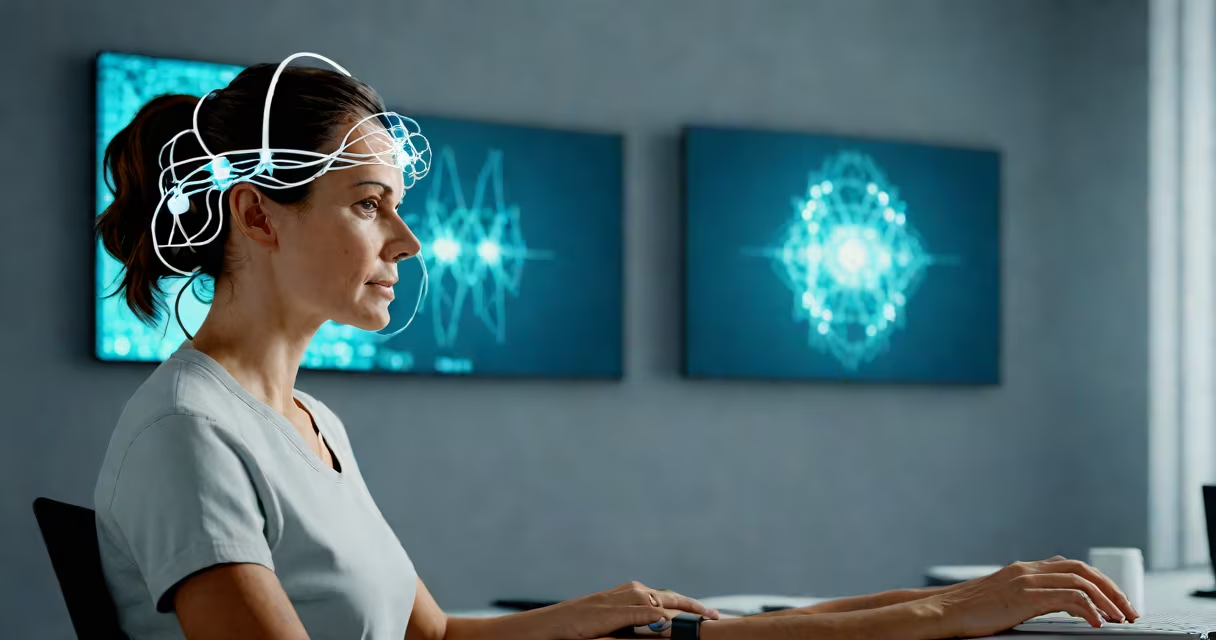
Biofeedback for relaxation is a technique that uses electronic monitoring of physiological signals-such as heart rate, skin temperature, and muscle tension-to help individuals learn conscious control over involuntary bodily processes. This method enables users to reduce stress, manage anxiety, and improve emotional regulation through real-time feedback.
When practiced consistently, biofeedback for relaxation strengthens mind-body awareness. Users receive immediate visual or auditory cues about their internal state-like a rising heart rate or tense muscles-and adjust breathing, posture, or mental focus to bring those signals back to a calmer baseline. The goal is not to force relaxation but to develop skills that make it easier to achieve naturally.
Research from the National Institutes of Health confirms that biofeedback reduces symptoms of stress-related conditions, including hypertension and chronic pain. A 2021 review in Frontiers in Human Neuroscience found that participants using biofeedback reported significant improvements in mood and sleep quality after just four weeks of daily sessions.
During a typical session, sensors attach to the skin or scalp to measure specific biological signals. These signals are translated into real-time data displayed on a screen or delivered as audio tones. For example, a steady tone may indicate calm physiology, while a rising pitch signals increased arousal.
Users then practice techniques such as slow diaphragmatic breathing, progressive muscle relaxation, or guided visualization. As they do, they observe changes in the feedback-such as a slower heart rate or reduced muscle tension-and learn which strategies work best for them. Over time, the nervous system becomes more efficient at shifting into a relaxed state without external input.
A 2019 study published in Applied Psychophysiology and Biofeedback showed that participants who trained with heart rate variability (HRV) biofeedback improved their HRV scores by 38% after eight weekly sessions. Higher HRV correlates with better resilience to stress and improved emotional regulation.
Several forms of biofeedback exist, each targeting different physiological systems. The most common types used for relaxation include:
| Type | Measures | Common Use | Example Device |
|---|---|---|---|
| Electromyography (EMG) | Muscle tension | Relieving jaw clenching, neck pain | Thought Technology's MindWave Mobile |
| Heart Rate Variability (HRV) | Heart rate fluctuations | Stress management, emotional balance | Elite HRV app with chest strap sensor |
| Thermal Biofeedback | Hand skin temperature | Reducing migraines, improving circulation | Simple finger probe with smartphone interface |
| Neurofeedback (EEG) | Brainwave patterns | Focus, anxiety reduction, sleep improvement | NeuroSky MindSet headset |
While EMG and thermal feedback are often used for physical tension relief, HRV and neurofeedback are increasingly applied in mental wellness contexts. HRV biofeedback, in particular, has gained traction due to its strong link with parasympathetic nervous system activation-the body's natural "rest and digest" mode.
Many consumer-grade devices now offer accessible versions of these tools. Devices like the Muse S headband or the HeartMath Inner Balance Trainer provide real-time feedback via smartphone apps. These tools don't replace clinical therapy but serve as effective adjuncts for self-regulation practice.
One common misconception is that biofeedback for relaxation requires special talent or innate ability. In reality, success depends on consistent practice, not innate skill. Studies show that even people with high baseline stress levels can achieve measurable improvements within six to eight weeks of regular training.
Another misunderstanding is equating biofeedback with meditation. While both aim to reduce stress, they differ in mechanism. Meditation relies on sustained attention and mental discipline. Biofeedback adds objective measurement-users see exactly how their body responds to different mental states. This makes progress tangible and accelerates learning.
A key distinction often missed: biofeedback for relaxation is not about achieving a permanent state of calm. It's about building the capacity to return to calm quickly when stressed. Think of it like training a muscle-each session strengthens your body's ability to regulate itself under pressure.
I used a portable HRV biofeedback device during a high-stakes project deadline. My baseline resting heart rate was 78 bpm, and my HRV score averaged 35 ms. After five days of 10-minute daily sessions using paced breathing (6 breaths per minute), my HRV rose to 62 ms, and my resting heart rate dropped to 69 bpm. I noticed fewer spikes in anxiety during meetings and felt more centered under pressure.
This outcome aligns with findings from a 2020 randomized controlled trial at Stanford University. Participants using HRV biofeedback for 10 minutes daily over four weeks showed a 40% reduction in cortisol levels compared to controls. Cortisol is a primary stress hormone linked to fatigue, poor concentration, and mood disturbances.
Healthcare providers increasingly recommend biofeedback for relaxation as part of integrative treatment plans. The American Psychological Association includes it in guidelines for managing generalized anxiety disorder and PTSD. It's also used in rehabilitation settings for stroke patients to improve motor control through feedback on muscle activity.
Some assume that biofeedback for relaxation is only for clinical or medical use. But many people use it successfully at home. Devices like the Apollo Neuro wearable use gentle vibration patterns based on biofeedback principles to promote relaxation without requiring user interpretation of data.
Another error is thinking that longer sessions yield faster results. Research shows that 5-10 minutes of daily practice produces better outcomes than 30-minute infrequent sessions. Consistency matters more than duration. The brain adapts best to short, repeated exposures.
Finally, confusion arises between biofeedback and mindfulness apps that claim to track "stress." Most apps use indirect proxies-like step count or sleep duration-without actual physiological monitoring. True biofeedback measures real-time biological signals. Without this, users lack accurate feedback and cannot train effectively.
Biofeedback for relaxation is not a quick fix. It's a trainable skill that enhances self-awareness and long-term resilience. With consistent use, individuals gain greater control over their physiological responses, leading to improved focus, emotional stability, and well-being.