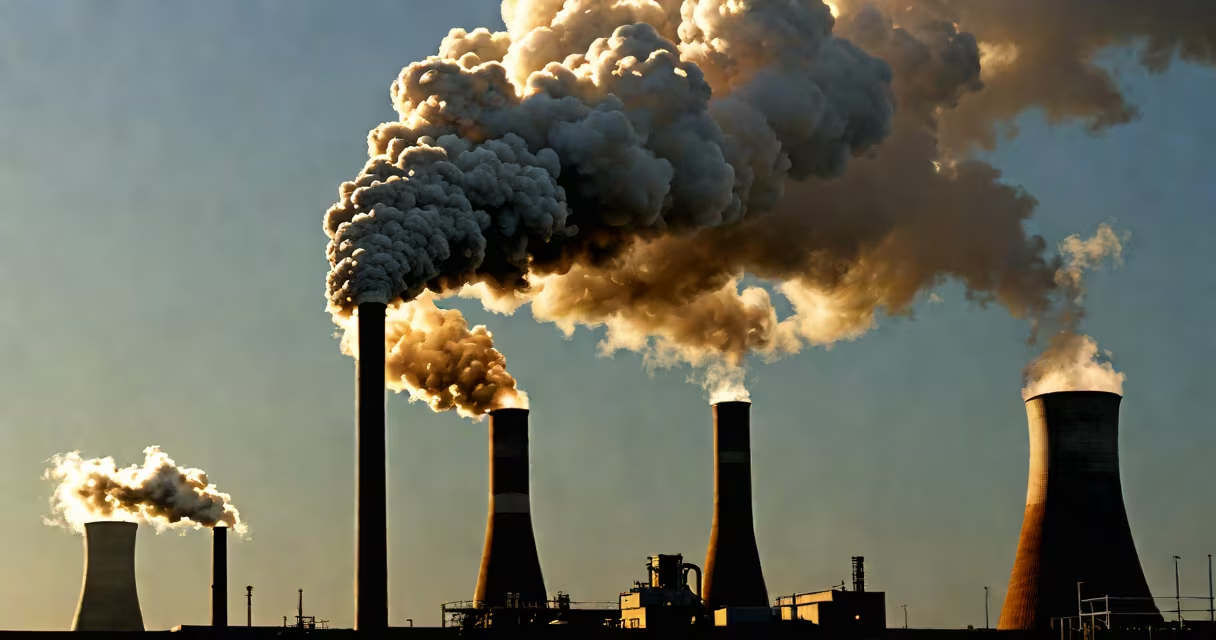
Burning fossil fuels releases carbon dioxide (CO₂), methane (CH₄), nitrous oxide (N₂O), sulfur dioxide (SO₂), nitrogen oxides (NOₓ), and particulate matter into the atmosphere. These emissions result from the chemical reaction between hydrocarbon molecules in coal, oil, and natural gas and oxygen during combustion.
Carbon dioxide is the primary emission. When fossil fuels burn, the carbon atoms in their molecular structure combine with oxygen to form CO₂. For every ton of coal burned, approximately 2.86 tons of CO₂ are released. Natural gas produces about 1.9 tons of CO₂ per ton burned, while oil generates around 3.15 tons per ton burned. These figures come from the U.S. Environmental Protection Agency (EPA) and the Intergovernmental Panel on Climate Change (IPCC).
Sulfur dioxide and nitrogen oxides form when sulfur and nitrogen compounds in fuels react with oxygen at high temperatures. SO₂ contributes to acid rain and respiratory issues. NOₓ forms ground-level ozone and smog. Particulate matter includes fine ash and soot that degrade air quality and harm human health. The World Health Organization (WHO) identifies outdoor air pollution from fossil fuel combustion as a leading environmental cause of premature death globally.
Fossil fuels are hydrocarbons-molecules composed of hydrogen and carbon. During combustion, these molecules break apart and recombine with oxygen from the air. The complete combustion of methane (CH₄), the main component of natural gas, follows this equation: CH₄ + 2O₂ → CO₂ + 2H₂O. This reaction produces CO₂ and water vapor. Incomplete combustion, due to insufficient oxygen, yields carbon monoxide (CO), a toxic gas, and unburned hydrocarbons.
Coal combustion is more complex. It contains impurities such as sulfur and trace metals. When heated, sulfur oxidizes to SO₂. Heavy metals like mercury vaporize and disperse into the atmosphere. A single 500-megawatt coal plant emits roughly 3 million metric tons of CO₂ annually-equivalent to the emissions of over half a million cars.
Industrial processes, transportation, and residential heating account for most fossil fuel combustion. Power plants generate ~40% of global CO₂ emissions from energy use. Vehicles contribute another 15%. Residential heating and manufacturing make up the rest. The Global Carbon Project tracks annual emissions, reporting that fossil fuel combustion released 36.8 billion metric tons of CO₂ in 2022.
The following table outlines key emissions from burning fossil fuels, their primary sources, and typical concentrations in flue gas.
| Emission | Primary Source | Average Concentration in Flue Gas | Environmental Impact |
|---|---|---|---|
| Carbon dioxide (CO₂) | Power plants, vehicles, industrial furnaces | 10-15% | Traps heat, drives climate change |
| Sulfur dioxide (SO₂) | Coal-fired power plants, refineries | 0.1-0.5% | Acid rain, lung irritation |
| Nitrogen oxides (NOₓ) | Internal combustion engines, boilers | 0.2-0.8% | Ozone formation, smog, respiratory disease |
| Particulate matter (PM2.5) | Coal combustion, diesel engines | 0.01-0.1% | Reduced visibility, heart and lung damage |
| Methane (CH₄) | Leaky pipelines, flaring, coal mining | Trace (0.001-0.01%) | High global warming potential (28× CO₂ over 100 years) |
Methane is not a direct product of combustion but leaks from infrastructure. However, when natural gas is flared (burned intentionally), incomplete combustion can release CH₄. The IPCC estimates that 2.5% of natural gas produced worldwide is flared annually, releasing significant amounts of both CO₂ and CH₄.
Many assume that CO₂ is the only harmful emission from burning fossil fuels. This is incorrect. While CO₂ dominates long-term climate impact, pollutants like SO₂ and PM2.5 have immediate health consequences. A 2021 study published in Lancet Planetary Health linked short-term exposure to PM2.5 from fossil fuel combustion to a 12% increase in mortality rates in urban populations.
Another misconception is that all emissions are equal in their effect. Methane, though less abundant than CO₂, has a global warming potential 28 times greater over a century. Reducing methane leaks from oil and gas operations offers faster climate benefits than reducing CO₂ alone.
I once observed a coal plant stack in Ohio emitting thick black smoke during startup. The visible plume was not just CO₂-it contained visible particulates, sulfur compounds, and unburned hydrocarbons. Monitoring equipment confirmed elevated levels of SO₂ and PM2.5 during those moments, even as CO₂ sensors registered normal readings. This showed that combustion efficiency affects multiple pollutants simultaneously.
Consider the Navajo Generating Station in Arizona, which operated until 2019. It burned 1.5 million tons of coal annually. Based on EPA emission factors:
These emissions contributed to regional haze and impaired air quality in the Grand Canyon area. After closure, regional PM2.5 levels dropped by 18% within two years, according to the Southwest Air Quality Management District.
Understanding what burning fossil fuels releases into the atmosphere reveals the full scope of environmental and health risks. CO₂ drives long-term climate change. SO₂ and NOₓ contribute to acid deposition and respiratory illness. PM2.5 causes cardiovascular disease. Methane leakage amplifies warming. Addressing each pollutant requires targeted solutions.