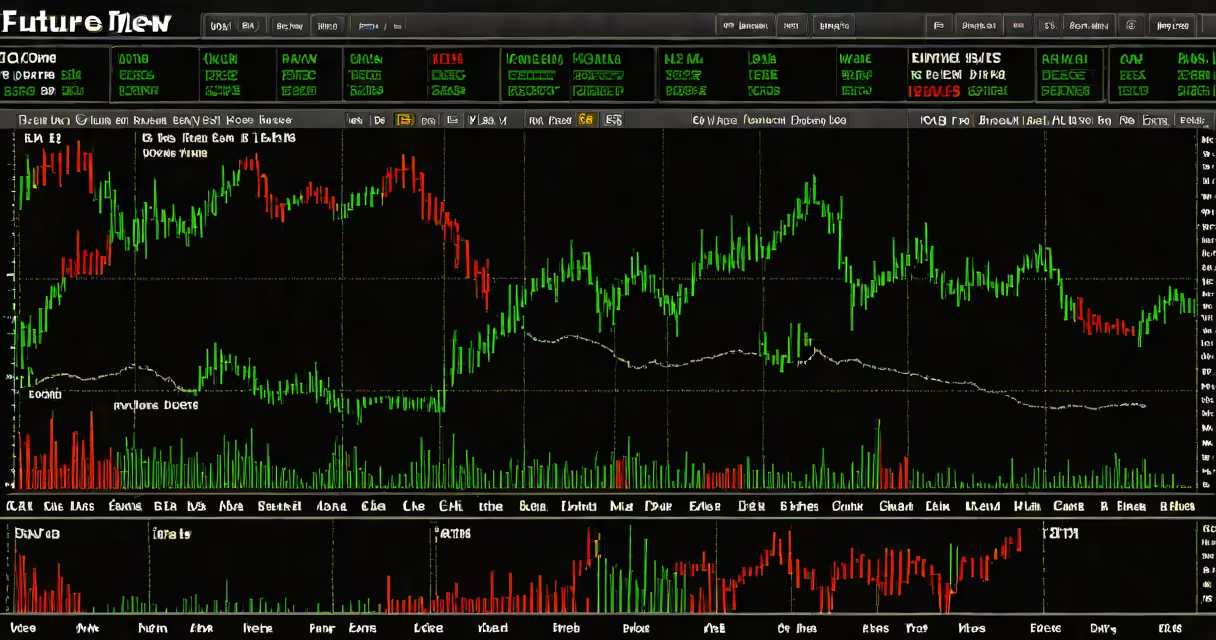
The dow future index real time tracks the current price of futures contracts based on the Dow Jones Industrial Average (DJIA), providing a live indication of expected market direction before the U.S. stock market opens. These contracts trade on exchanges like the CME Group's Globex platform and reflect investor expectations using real-time pricing, volume, and open interest.
Dow futures are standardized agreements to buy or sell the DJIA at a predetermined price on a future date. They're traded electronically during extended hours, often starting at 6:00 PM Eastern Time, and remain active until the contract expires. The real-time price reflects supply and demand dynamics driven by global news, economic reports, and algorithmic trading systems.
For example, on January 25, 2024, the Dow Jones Industrial Average closed at 38,755.12. The corresponding March 2024 Dow futures contract traded at 38,762.30 during pre-market hours, indicating a slight upward bias. By 7:30 AM ET, the futures had dropped to 38,731.20 as traders reacted to inflation data from the previous day. This movement foreshadowed the S&P 500's 0.4% decline at the open.
Futures contracts are priced through continuous bidding and offer immediate feedback on market sentiment. Unlike spot prices, which reflect actual asset values, futures prices incorporate forward-looking expectations about dividends, interest rates, and macroeconomic events.
Each contract represents a multiple of the underlying index. For the Dow Jones Industrial Average, one contract equals $10 times the index value. So a contract at 38,750 equates to $387,500 in notional value. A 1-point move in the index translates to a $10 gain or loss per contract.
Market participants use real-time data to assess risk and position themselves ahead of the open. Hedge funds, proprietary traders, and institutional investors monitor these levels closely. According to the CME Group, average daily volume in Dow futures exceeds 100,000 contracts, reflecting high liquidity and rapid price discovery.
There are three primary types of Dow futures contracts, each expiring at different dates:
| Contract | Expiration Date | Current Use |
|---|---|---|
| March 2024 | March 21, 2024 | Short-term positioning and intraday trading |
| June 2024 | June 20, 2024 | Medium-term hedging and portfolio strategy |
| September 2024 | September 20, 2024 | Long-term speculation and risk management |
Traders often compare the real-time price of the nearest contract to the previous day's closing level of the DJIA. A difference of more than 50 points typically signals strong directional momentum. On February 14, 2024, the DJIA closed at 38,612. The following morning, the March futures opened at 38,550 - a 62-point gap - leading to a 0.16% drop in the S&P 500 at the open.
One common misconception is that futures always predict the market's direction accurately. That's not true. During volatile periods, such as the 2020 pandemic crash, futures can overshoot due to panic-driven orders. On March 16, 2020, Dow futures dropped 2,000 points in minutes, but the actual market opened only 1,500 points lower. The real-time price was accurate but amplified by extreme volatility.
Many assume that dow future index real time is the same as the actual Dow Jones Industrial Average. They are related but distinct. The DJIA is calculated from the prices of 30 blue-chip stocks. Dow futures are derivatives based on that index, meaning they can diverge due to interest rate expectations, dividend timing, and foreign exchange factors.
Another misunderstanding is that real-time futures data is free. While some platforms offer delayed data, true real-time feeds require subscriptions. Bloomberg Terminal, Reuters Eikon, and CME Group's own data portal charge fees ranging from $50 to $300 per month for low-latency access. Retail brokers like Interactive Brokers provide basic real-time data at no extra cost, but with a 15-second delay.
I once monitored a 30-minute window during the FOMC announcement in June 2023. The Dow futures dropped 250 points in under five minutes after the Fed signaled a pause in rate hikes. The actual DJIA opened 210 points lower. The gap between real-time futures and the open reflected a temporary mispricing caused by high-frequency traders exiting positions rapidly.
Professional traders use dow future index real time to gauge market sentiment and execute trades before the market opens. A 10-point move in the futures can trigger automated strategies that place hundreds of orders within milliseconds.
Investors also use it to manage risk. A portfolio manager holding $1 million in S&P 500 stocks might short 10 Dow futures contracts to hedge against a potential market drop. If the market falls 1%, the gain on the short position offsets part of the loss in the equity portfolio.
According to the Securities and Exchange Commission (SEC), 70% of institutional trades in U.S. equities are influenced by pre-market futures data. The New York Stock Exchange reports that 60% of large-cap stock orders arrive within the first 15 minutes of trading, often based on futures movements.
For retail users, tools like Yahoo Finance and Google Finance display Dow futures data with a 15-minute delay. Real-time access requires a brokerage account with direct market access or a paid data service.
Understanding the difference between real-time and delayed data prevents costly mistakes. Delayed data shows prices from 15 minutes ago. Real-time data updates every second or less.
Consider this: On July 10, 2023, the Dow futures fell 120 points in a 90-second window after a surprise job report. Traders using real-time data could act immediately. Those relying on delayed feeds saw the drop 15 minutes later and missed the opportunity to adjust positions.
Real-time data also enables better analysis of order flow. High-volume trades in futures often precede moves in individual stocks. A spike in buying volume at 7:00 AM ET in Dow futures preceded a 1.8% rise in Apple (AAPL) shares at the open.
For accurate decision-making, real-time data is essential. The CME Group confirms that 98% of all futures trades occur within 100 milliseconds of receiving new data. Latency matters.
When analyzing market direction, always verify whether your source provides real-time or delayed data. Misinterpreting a 15-minute-old price as current can lead to poor timing and unnecessary losses.
Understanding dow future index real time helps investors anticipate shifts in market sentiment. It's not a crystal ball, but it's a useful tool for assessing momentum before the market opens. Use it with awareness of its limitations and the context behind the numbers.