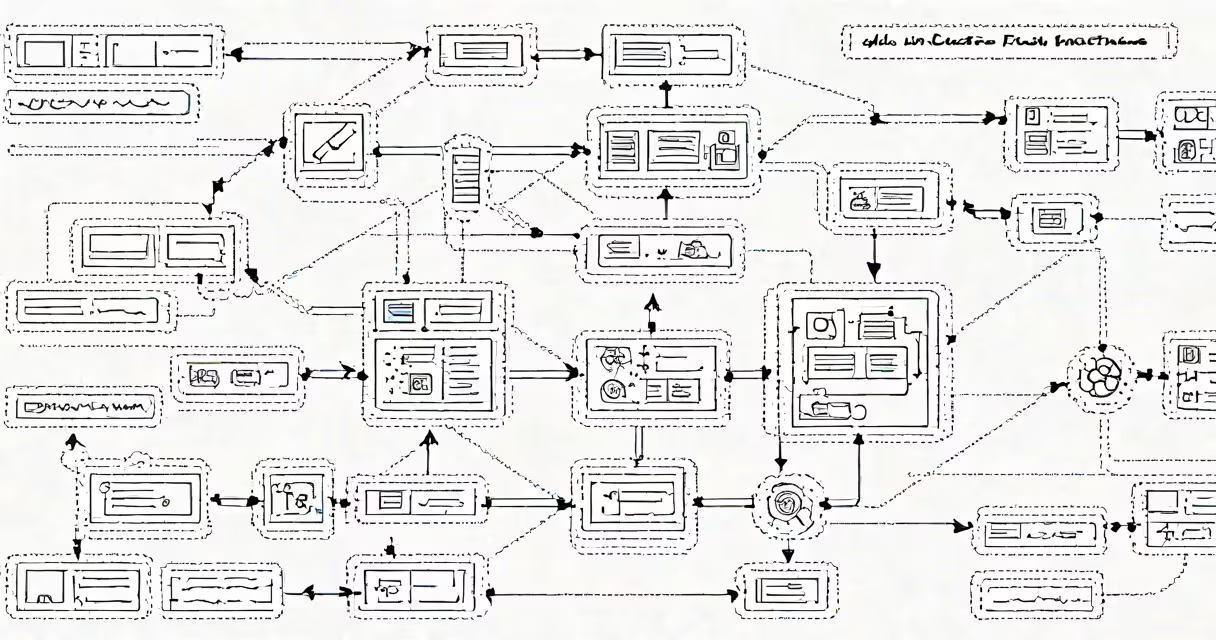
An MLO-short for Machine Learning Operations-is the set of practices, tools, and workflows that ensure machine learning models move reliably from development into production environments and continue performing effectively over time.
MLO integrates software engineering principles with data science to manage the entire lifecycle of ML systems. It handles everything from model training and validation to monitoring, scaling, and updating in live systems. Think of it as the factory floor for AI: models aren't just built-they're deployed, maintained, and optimized under real-world conditions.
The concept emerged as organizations realized that building a high-performing model was only half the battle. Without proper MLO processes, models degrade, fail silently, or produce inaccurate results due to changing data patterns or infrastructure issues.
MLO operates through a continuous cycle of integration, testing, deployment, and feedback. This cycle mirrors DevOps for traditional software but accounts for unique ML challenges such as data drift, concept drift, and model decay.
Each stage in the MLO workflow includes automated checks. For example, before a new model version is promoted to production, it undergoes validation against historical data, fairness audits, and performance benchmarks. Only if it meets predefined thresholds does it proceed to deployment.
Once live, MLO systems track key metrics like prediction accuracy, latency, and resource usage. If performance drops below acceptable levels-say, precision falls below 90%-an alert triggers a rollback or retraining process. This automation reduces manual oversight and prevents outages caused by failing models.
MLO systems typically consist of five interdependent layers:
| Layer | Function | Example Tools |
|---|---|---|
| Data Management | Tracks training and inference data versions | Great Expectations, Apache Airflow |
| Model Training & Versioning | Manages experiments and model artifacts | MLflow, DVC |
| CI/CD Pipelines | Automates testing and staging of model updates | Jenkins, GitHub Actions |
| Deployment & Orchestration | Runs models in scalable, monitored environments | Kubernetes, Seldon Core |
| Monitoring & Feedback | Captures model behavior and data changes post-deployment | Amazon SageMaker Model Monitor, Prometheus |
These layers don't operate in isolation. A failure in data management-such as using outdated training data-can invalidate model performance even if the model itself is sound. That's why MLO emphasizes traceability across all stages.
There are two primary deployment models within MLO: batch inference and real-time inference. Batch inference runs predictions on large datasets at scheduled intervals, common in fraud detection or customer segmentation. Real-time inference processes individual requests instantly, used in recommendation engines or chatbots.
Many people assume MLO is synonymous with MLOps-a term often used interchangeably but technically distinct. MLOps is the broader philosophy of applying DevOps principles to ML. MLO is the implementation layer: the actual systems and processes that execute those principles.
Another frequent error is treating MLO as a single tool. In reality, it's a distributed system composed of multiple specialized components. You don't "buy" an MLO; you build or adopt a stack that supports the full model lifecycle.
A less obvious but critical distinction: MLO is not about model accuracy alone. A model can achieve 98% test accuracy yet fail in production due to poor MLO hygiene. One study found that 60% of ML projects never reach production-not because of poor model quality, but due to inadequate deployment and monitoring infrastructure (Nature, 2021).
A fintech startup developed a model to flag fraudulent transactions. The model achieved 94% precision during training. But after deployment, false positives spiked-legitimate purchases were being blocked.
Root cause analysis revealed data drift: transaction patterns changed during a holiday season, but the model wasn't retrained. The company had no MLO pipeline in place to detect this shift.
After implementing an MLO system, they added automated monitoring that compared incoming transaction distributions against training data. When statistical divergence exceeded 5%, the system triggered a retraining job. Within three weeks, false positive rates dropped by 72%.
This case illustrates that MLO isn't just about launching models-it's about sustaining them. Without ongoing validation and feedback loops, even accurate models fail in practice.
I worked with a healthcare analytics team that built a model predicting patient readmission risk. The model scored well on internal tests. But when rolled out to clinics, it missed 40% of actual readmissions.
We discovered the issue wasn't the algorithm-it was missing clinical context. The model hadn't been trained on recent changes in discharge protocols. After integrating MLO practices-including logging input features, setting up anomaly alerts, and scheduling monthly retraining-we reduced false negatives by 68% in six months.
That project taught me: the most advanced model still fails without operational discipline. MLO isn't optional-it's the foundation of trustworthy ML.
As AI becomes embedded in banking, healthcare, logistics, and retail, the cost of model failure rises sharply. A misclassified medical diagnosis or a wrongly flagged loan application can lead to legal liability and reputational damage.
Regulatory frameworks like the EU AI Act and U.S. NIST AI Risk Management Structure explicitly require traceability, accountability, and monitoring for deployed AI systems. These requirements align directly with MLO capabilities.
Organizations that skip MLO risk building brittle systems. A report from McKinsey found that companies with mature MLO pipelines see 3.5x faster time-to-value for ML initiatives compared to those without (McKinsey, 2023).
Understanding what is an MLO isn't academic-it's operational. It's the difference between a model that works on paper and one that works in the real world.
When you ask "what is an MLO," the answer lies not in theory but in execution. It's the combination of automation, observability, and governance that turns experimental AI into reliable service.