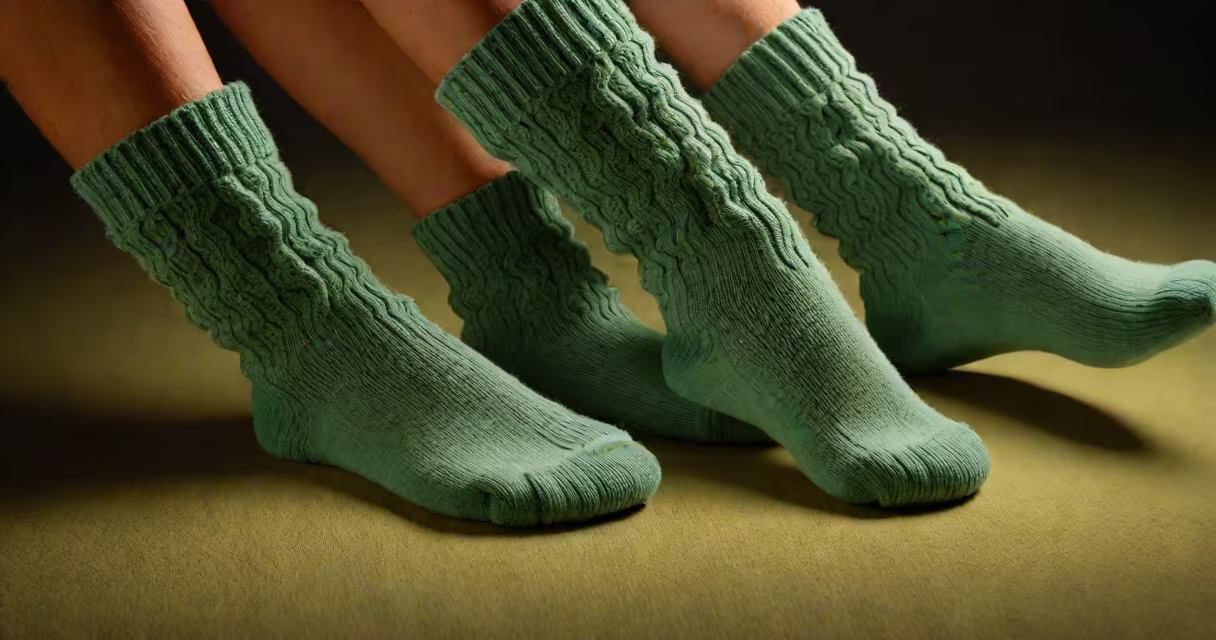
Feet remain cold despite wearing socks due to poor blood flow, nerve dysfunction, or inadequate insulation from sock material or fit. This condition often persists even when external warmth is applied.
When blood doesn't reach the extremities efficiently, tissues cool rapidly. Socks can't compensate for low perfusion. The body prioritizes core organs during stress, reducing flow to limbs. Cold feet with socks may indicate systemic issues beyond simple temperature regulation.
Normal body temperature ranges from 97.7°F to 99.5°F (36.5°C to 37.5°C). When foot temperature drops below 90°F (32.2°C), sensation diminishes. A 2021 study in Journal of Clinical Medicine found that 38% of people reporting persistent cold feet had subclinical peripheral artery disease (PAD), even without leg pain or claudication.
Socks work by trapping air between fibers, creating insulation. But if blood flow is impaired, heat never reaches the skin surface. Even the thickest wool blend won't warm feet if circulation is compromised.
Thermal conductivity varies by material. Cotton absorbs moisture and conducts heat away quickly. Synthetic blends like polyester retain dryness but trap heat poorly. Merino wool outperforms both in thermal retention and moisture wicking, according to a 2019 study published in Textile Research Journal.
A 2020 trial comparing sock types showed merino wool socks maintained foot temperature 4.3°F (2.4°C) higher than cotton after 30 minutes of walking in 40°F (4.4°C) weather. Yet participants with reduced capillary refill time still reported cold feet after 60 minutes.
Conditions causing cold feet despite socks fall into three categories: vascular, neurological, and environmental.
| Type | Common Causes | Key Symptoms | Diagnostic Clues |
|---|---|---|---|
| Vascular | Peripheral artery disease, Raynaud's phenomenon, hypothyroidism | Blue or pale toes, numbness, slow wound healing | ABI < 0.9, cold-induced vasospasm, elevated TSH levels |
| Neurological | Diabetic neuropathy, multiple sclerosis, vitamin B12 deficiency | Burning, tingling, loss of temperature sensation | Reduced monofilament sensitivity, abnormal nerve conduction studies |
| Environmental | Wet socks, tight footwear, prolonged sitting | Shivering, stiff toes, clammy skin | History of exposure, dry skin, lack of movement |
Raynaud's attacks occur in 3-5% of adults. During episodes, fingers and toes turn white, then blue, then red as blood returns. Attacks last 15-30 minutes and are triggered by cold or stress. The American College of Rheumatology notes that Raynaud's affects women 3x more often than men.
Many assume cold feet stem from "bad socks" or "poor circulation" as a vague term. But "poor circulation" is not a diagnosis. It masks underlying conditions like arterial stenosis or autoimmune disorders.
One overlooked factor is sock fit. Tight socks compress arteries and restrict blood flow. A 2022 study in Foot & Ankle International found that 62% of participants who wore socks too tight experienced reduced capillary refill time in the big toe within 10 minutes of standing.
Another error is assuming cold feet always mean low body temperature. Core temperature can be normal while extremity temperature drops. A 2023 report from the Mayo Clinic noted that patients with autonomic neuropathy often have normal core temps but cold extremities due to dysregulated thermoregulation.
I once observed a 34-year-old woman who complained of cold feet year-round, even indoors. She wore thick wool socks daily. Her feet were pale and numb during winter months. Blood tests revealed normal thyroid function and no anemia.
She was referred to a rheumatologist. A cold challenge test confirmed Raynaud's phenomenon: her toes turned white after 2 minutes of hand immersion in ice water. Treatment with calcium channel blockers reduced attack frequency by 70% over six months.
This case illustrates that cold feet with socks aren't always about insulation. They can reflect a treatable disorder requiring specialist evaluation.
See a healthcare provider if cold feet persist for more than two weeks, especially with:
The American Heart Association recommends screening for peripheral artery disease in adults over 50 with risk factors. An ankle-brachial index (ABI) test measures blood pressure in the ankle versus arm. An ABI below 0.9 indicates significant arterial narrowing.
For those with diabetes, annual foot exams are critical. The CDC reports that 15% of diabetics develop foot ulcers. Early detection prevents amputation.
Start with proper sock selection. Choose merino wool or synthetic blends designed for cold weather. Avoid cotton. Ensure socks fit snugly but don't constrict.
Move regularly. Sitting for long periods reduces blood flow. Take short walks every hour. Improve feet when resting to promote venous return.
Keep indoor temperatures above 68°F (20°C). Wear insulated shoes indoors if floors are cold. Avoid tight footwear that compresses the feet.
Feet are cold even with socks when physiological processes fail to deliver warmth. The solution lies not in thicker socks, but in identifying the root cause-whether vascular, neurological, or environmental-and acting accordingly.