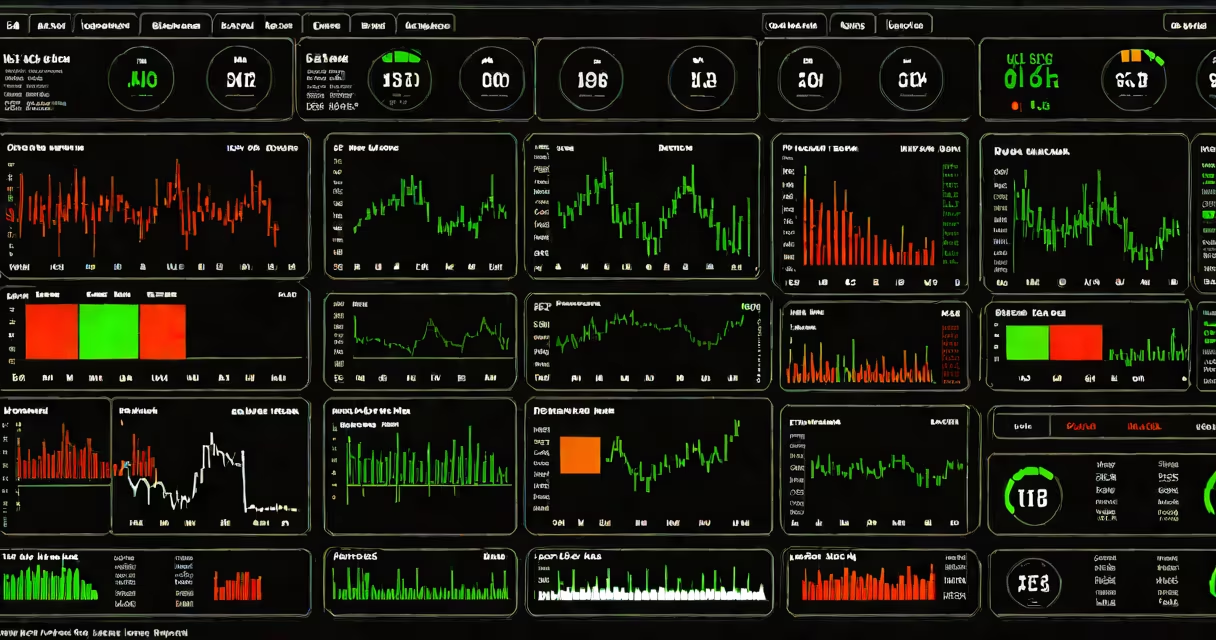
get stock quotes retrieves current and historical pricing data for publicly traded companies, including bid/ask spreads, last sale prices, volume, and market capitalization. This information is essential for investors tracking performance, executing trades, or analyzing market trends.
Stock quotes originate from exchanges like the New York Stock Exchange (NYSE) and Nasdaq. When a trade occurs, the exchange broadcasts the transaction price and volume to data vendors. These vendors aggregate and distribute the data through APIs, websites, and trading platforms. The speed and accuracy of this flow determine whether a quote is considered real-time or delayed.
For example, a quote for Apple Inc. (AAPL) might show $184.67 as the last price, a change of +1.2%, and 2.1 million shares traded in the last five minutes. This data updates every few seconds during market hours (9:30 AM to 4:00 PM Eastern Time). Delayed quotes-common in free services-can lag 15 to 20 minutes.
get stock quotes relies on standardized data feeds from exchanges and third-party providers. The NYSE uses the Consolidated Tape System (CTS), which routes trades across multiple venues. Nasdaq operates its own feed via the Nasdaq TotalView system. Both systems publish trades and quotes in real time, but access requires licensing or subscription fees.
Publicly available tools like Yahoo Finance, Google Finance, and Bloomberg.com pull data from these feeds through licensed aggregators. For developers, APIs such as Alpha Vantage, IEX Cloud, and Polygon.io offer programmatic access to historical and real-time quotes. A single API call to Polygon returns the latest quote for Tesla (TSLA) with JSON output:
{
  "symbol": "TSLA",
  "price": 214.87,
  "change": 3.21,
  "change_percent": 1.52,
  "volume": 14_230_987,
  "timestamp": 1717234567
}
These responses are generated within milliseconds of a trade, enabling algorithmic traders to act before human users see the update.
Not all stock quotes are equal. They differ in timing, completeness, and cost. The table below outlines key categories:
| Type | Update Frequency | Source | Typical Cost | Use Case |
|---|---|---|---|---|
| Real-time | Milliseconds to seconds | Exchange direct or licensed vendor | $100+/month | High-frequency trading, institutional analysis |
| Delayed (15 min) | 15 minutes behind | Free public feeds | Free | Individual investor monitoring, educational use |
| End-of-day | After market close | Exchange archives | Free or low-cost | Backtesting strategies, long-term analysis |
Traders use get stock quotes to make entry and exit decisions. A swing trader might set a buy order when a stock's price drops below its 20-day moving average and the volume spikes. Without accurate quotes, the order could execute at a worse price due to slippage.
Investors analyze quotes to assess valuation. A P/E ratio above 30 for a company like Nvidia (NVDA) suggests high growth expectations. If the stock price falls 5% in a day while volume remains flat, it may signal weak demand rather than panic selling.
One non-obvious distinction: quotes don't always reflect actual trades. A "last sale" price can be from a single transaction, while the "bid" and "ask" represent standing orders. On March 14, 2023, GameStop (GME) showed a bid of $17.20 and ask of $17.45, but the last sale was $17.30. This spread indicates limited liquidity-few buyers and sellers at those levels.
Many assume all stock quotes are instantaneous. In reality, even major platforms like Yahoo Finance display delayed data unless users pay for premium access. According to the Securities and Exchange Commission (SEC), delays under 15 minutes are acceptable for public dissemination, but they do not guarantee accuracy or completeness.
Another error: confusing quotes with news. A quote reflects price action. News-like a CEO resignation or product recall-drives price changes. A quote for Meta (META) rising 4% on January 18, 2024, coincided with a report about AI integration in Instagram. The quote responded to the event, not the other way around.
I once tested the difference between free and paid data during a market flash crash. Free tools showed a 10% drop in S&P 500 futures. Paid feeds from Interactive Brokers updated within 0.3 seconds, revealing the move reversed in 12 seconds. The delay misled users into thinking a sustained decline had occurred.
For automation, use the Alpha Vantage API. Sign up at alpha-vantage.co, get a free key, and run:
GET https://www.alphavantage.co/query?function=GLOBAL_QUOTE&symbol=AAPL&apikey=YOUR_KEYThis returns the latest quote for Apple. Parse the response to extract the price and change. Integrate this into a script that sends alerts when a stock moves more than 2% in a minute.
get stock quotes is not just a tool-it's a window into market behavior. building a trading bot, accurate, timely data separates informed decisions from guesswork.