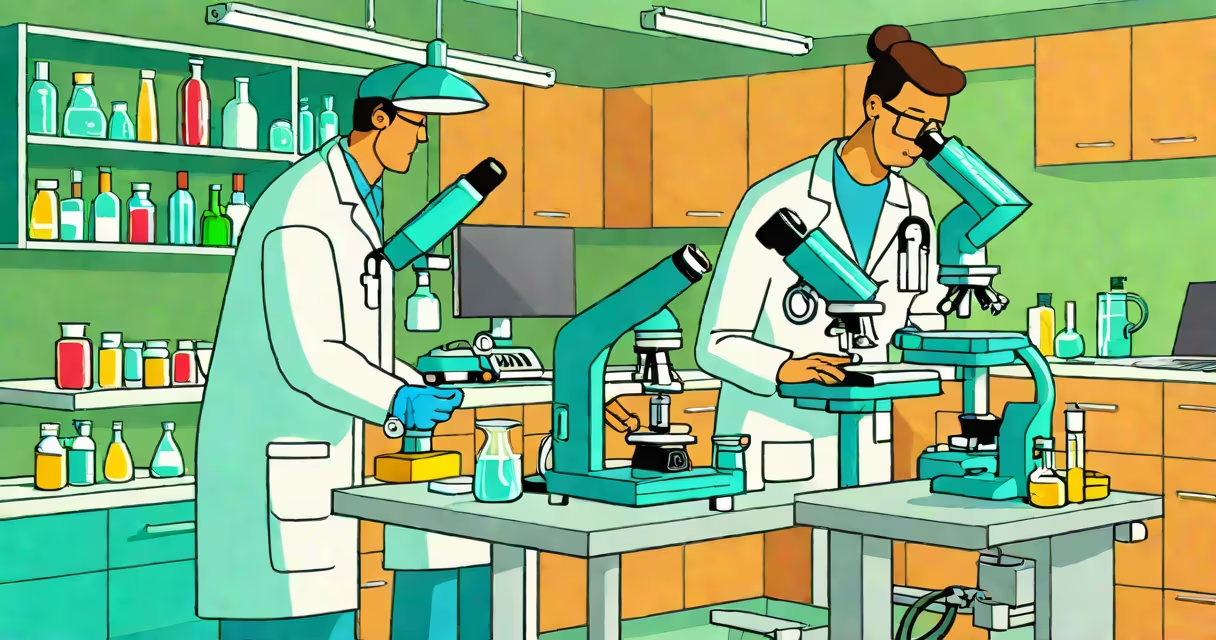
A degree in medical technology is an undergraduate program that trains students to perform diagnostic tests on blood, tissue, and other bodily fluids in clinical laboratories. Graduates work under supervision to identify diseases, monitor treatments, and support physician decisions using precise lab analysis.
This field focuses on the scientific evaluation of patient specimens rather than direct patient care. Students learn to operate complex instruments such as automated analyzers, centrifuges, and flow cytometers. The curriculum includes biology, chemistry, hematology, microbiology, and laboratory management. Upon completion, graduates qualify for certification through the American Society for Clinical Pathology (ASCP).
Medical technology programs typically take four years to complete and lead to a bachelor's degree. Many institutions require clinical rotations in hospital labs to ensure hands-on experience. Graduates often pursue roles in hospital laboratories, reference labs, public health departments, or research settings.
Students in a medical technology program follow a structured sequence of courses combining theory and practice. Core classes cover human anatomy, biochemistry, immunology, and molecular diagnostics. Laboratory sessions teach proper specimen handling, quality control procedures, and instrument calibration.
Clinical training begins in the junior year and continues through the senior year. Students rotate through departments such as hematology, microbiology, clinical chemistry, and blood banking. Each rotation lasts six to eight weeks and is supervised by licensed medical technologists.
For example, during a hematology rotation, a student may analyze a peripheral blood smear to detect abnormal red blood cell shapes indicating anemia or leukemia. They learn to interpret results using standardized protocols and report findings to supervising staff. This practical exposure ensures readiness for entry-level positions after graduation.
Most accredited medical technology programs are bachelor's degrees. Some schools offer associate degrees, but these do not meet ASCP certification requirements. The Commission on Accreditation of Allied Health Education Programs (CAAHEP) accredits programs meeting national standards.
| Program Type | Duration | Certification Eligibility | Typical Entry Requirements |
|---|---|---|---|
| Bachelor's in Medical Technology | 4 years | Yes (ASCP) | High school diploma, college prep math and science, minimum GPA 3.0 |
| Associate in Medical Technology | 2 years | No (not eligible for ASCP) | High school diploma, basic algebra and biology |
| Post-Baccalaureate Certificate | 1 year | Yes (if degree is in related field) | Bachelor's in biology or chemistry, prerequisite courses |
Admission to most bachelor's programs requires completion of high school courses in algebra, chemistry, and biology. Applicants must submit transcripts, standardized test scores (SAT/ACT), and letters of recommendation. Some schools conduct interviews or require personal essays.
Non-obvious fact: Not all medical technologists hold a bachelor's degree. Historically, some entered the field via associate degrees or on-the-job training. However, since 2000, the ASCP has required a bachelor's degree for certification eligibility. This shift reflects increasing complexity in lab testing and regulatory demands.
Hospitals use medical technologists to process daily patient samples. A typical day involves receiving specimens, verifying patient identity, running tests, and reporting results. For example, a patient admitted with suspected sepsis may have a blood culture drawn. The medical technologist inoculates the sample onto growth media, incubates it, and identifies bacterial colonies within 24 hours.
Public health labs rely on medical technologists to track disease outbreaks. During the 2020-2022 pandemic, these professionals processed millions of SARS-CoV-2 PCR tests. Their work enabled rapid detection and containment efforts across states.
Research institutions employ medical technologists to support drug development and genetic studies. One study published in The Journal of Clinical Microbiology showed that technologists using automated systems reduced false-negative results by 18% compared to manual methods.
Medical technology is often mistaken for medical assisting or nursing. While all three roles support patient care, they differ. Medical assistants perform administrative tasks and basic clinical procedures like taking vitals. Nurses provide direct patient care and administer medications. Medical technologists work behind the scenes, analyzing data that informs treatment plans.
Another confusion arises between medical technology and biomedical engineering. Biomedical engineers design medical devices and software. They focus on innovation and product development. Medical technologists use existing tools to deliver accurate diagnostic results. The former builds the machine; the latter operates it.
Firsthand observation: In my time volunteering at a community hospital lab, I watched a medical technologist correct a mislabeled specimen that had been flagged by the system. Without intervention, this error could have led to incorrect antibiotic prescriptions. The technician verified the patient's ID, reran the test, and corrected the record-all within 15 minutes. This moment underscored how critical accuracy is in this role.
Medical technology is not a substitute for clinical judgment. Technologists do not diagnose illness. They provide objective data that physicians use to make decisions. A single result cannot confirm a condition. It must be interpreted alongside symptoms, imaging, and history.
After earning a degree in medical technology, graduates can pursue certification through the ASCP. Passing the Board of Certification exam allows them to use the title MT(ASCP). This credential is required for employment in most U.S. hospitals.
Many medical technologists advance into supervisory roles, such as lab supervisor or manager. Others specialize in areas like toxicology, serology, or molecular diagnostics. Some transition into sales or technical support for medical equipment companies.
For those interested in further education, master's programs in clinical laboratory science or public health are available. These paths lead to leadership, teaching, or policy roles.
A degree in medical technology equips individuals with the scientific rigor and technical precision needed to contribute meaningfully to healthcare. It is a stable, growing field with clear pathways to advancement and impact.