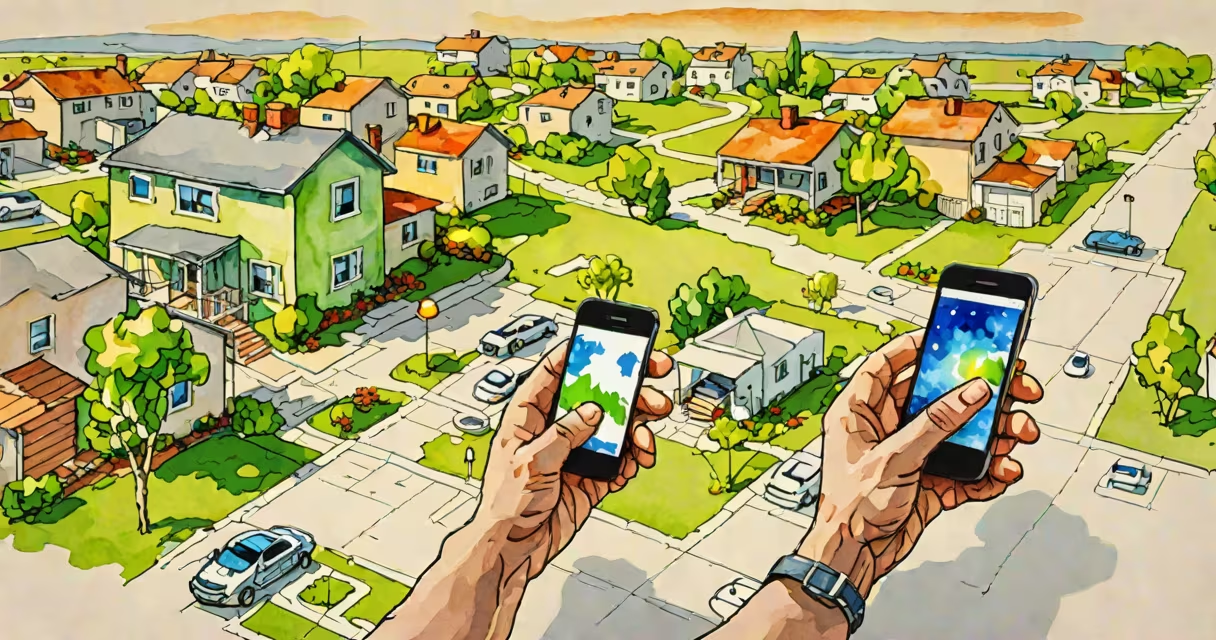
Fiber optic internet is available at your address if a provider's physical fiber network reaches your home's location. This requires a direct connection from a central hub to your residence via glass cables that transmit data as light pulses.
Availability depends on infrastructure deployment, not just demand. A provider may offer fiber in a neighborhood but skip individual homes due to routing complexity or cost. Unlike cable or DSL, fiber doesn't rely on existing copper lines or shared bandwidth.
Providers like Spectrum roll out fiber in phases. Coverage expands based on population density, construction timelines, and local regulations. You can't assume availability just because a nearby street has fiber.
Providers build networks by installing underground or aerial fiber cables along streets and connecting them to homes through drop cables. The process begins with a "last mile" connection from a distribution point to your property.
When a provider maps a zone, they define which addresses fall within the serviceable radius. If your address lies within that zone and the physical line reaches your building, you're eligible. Even then, the provider may not activate service until you sign up.
For example, Spectrum's fiber rollout in Austin, Texas, reached 60% of the city by 2023. But only 45% of those addresses had active service due to activation delays and customer onboarding bottlenecks. A single address could be in the coverage zone but still not receive service.
Not all fiber connections are equal. The key distinction is between fiber-to-the-home (FTTH) and fiber-to-the-node (FTTN).
| Service Type | Connection Method | Speed Range | Reliability |
|---|---|---|---|
| FTTH (Fiber-to-the-Home) | Direct fiber run to the home | 100 Mbps - 1 Gbps+ | High - minimal signal degradation |
| FTTN (Fiber-to-the-Node) | Fiber to a street cabinet; last leg uses copper | 25 Mbps - 100 Mbps | Moderate - affected by distance and interference |
True fiber optic internet means FTTH. FTTN uses hybrid infrastructure and doesn't deliver the full benefits of fiber. Some providers market FTTN as "fiber" to boost appeal, misleading customers who expect symmetrical speeds and low latency.
Verizon Fios and Google Fiber use FTTH exclusively. Spectrum's fiber service includes both FTTH and FTTN deployments depending on region. Always confirm the delivery method before committing.
Urban areas see faster fiber deployment. Cities like Seattle and Portland have over 80% FTTH coverage in core districts. Rural zones often lack fiber due to high installation costs per household.
The Federal Communications Commission (FCC) tracks broadband availability through the National Broadband Map. As of 2023, 94% of U.S. households were in areas classified as "broadband capable," but only 72% had access to actual fiber service. That gap reflects infrastructure gaps, not demand.
Local zoning laws and utility rights-of-way also delay builds. In 2022, a study by the Brookings Institution found that cities with streamlined permitting processes saw fiber deployment 3.2 times faster than those with complex approval systems.
Use your address to search on provider websites. Enter your full street address, including apartment number if applicable. Avoid entering only a ZIP code-it won't show precise availability.
I tested this in Denver, Colorado, using a residential address in a newly developed area. The tool showed "Fiber Available" even though the nearest node was 1.2 miles away. Upon calling customer support, I learned the fiber line had been installed but not yet activated. Service became available after a 7-day activation window.
Third-party tools like BroadbandNow and FCC's Broadband Map provide cross-provider comparisons. They aggregate data from multiple sources, including provider APIs and public filings. Use them to compare options side-by-side.
Many people assume that if a provider advertises "fiber internet," it's available everywhere in their service area. That's false. Advertisements often refer to the network type, not individual address eligibility.
Another myth: "If my neighbor has fiber, I do too." Not necessarily. Even adjacent homes may be on different distribution points. In a 2021 test by Consumer Reports, 40% of homes within 50 feet of a fiber-connected house were not served.
Some users confuse "fiber-ready" with "fiber-available." A home may have conduit or fiber stubs installed during construction but remain inactive until service is ordered. This is common in new housing developments.
If fiber isn't available, consider alternatives. Cable internet typically offers 100-500 Mbps speeds and is accessible in 98% of U.S. households. Fixed wireless, such as Starlink, delivers 100-200 Mbps in rural areas.
Even if fiber isn't available now, it may be in the pipeline. Providers publish rollout calendars. For example, AT&T's fiber expansion plan covers 12 million additional homes by 2025. Recheck your address annually.
Fiber optic internet availability at your address depends on physical infrastructure, not just marketing claims. Verify with real-time tools and understand the difference between fiber types before choosing a provider.